Sympathy Tower Tokyo

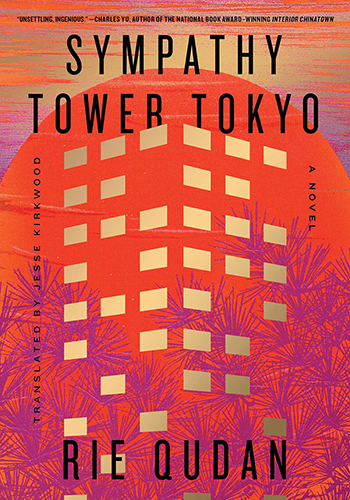
Rie Qudan’s short novel Sympathy Tower Tokyo, which was awarded an Akutagawa Prize in 2023, is a story about language, generative AI, and the culture war discourse surrounding the construction of a fictional prison facility in a high-rent area of Tokyo’s Shinjuku district. 

Sara Machina is an artist and architect who wants to win the bid to design and build the eponymous “Sympathy Tower Tokyo,” a prison right in the middle of metropolitan Tokyo that will operate according to a utopian vision of providing state-mandated shelter to “homo miserabilis,” or people driven by economic precarity to commit crimes because they had no other options, Les Misérables style.

The main problem, in Sara’s eyes, is the name of the building, which is written in English and a mouthful to pronounce: Shinpashii Tawaa Toukyou. It’s also somewhat meaningless, Sara reflects, as are a number of other politically correct English terms that have replaced native Japanese expressions. Amusingly, she provides a list that includes examples such as negurekuto (neglect), which has replaced the formal term ikuji hōki (child abandonment) in public discourse.

Most of these loanword expressions don’t really change the meaning or public perception of the concept itself, but some do. “Homo miserabilis” is one such (fictional) example, having replaced the word hanzaisha, meaning “criminal.” Which is all well and good, Sara admits, but she still can’t envision a structure called “Sympathy Tower Tokyo.” If the building were to have a name that was more euphonic in Japanese, that would be a different story.

An appropriate name is provided by a beautiful young man who goes by “Takt,” a loanword from German used for an orchestra conductor’s baton. Takt became Sara’s casual boyfriend after she saw him through the display window of a luxury fashion store in Aoyama and point-blank asked him out; and, despite the difference in their ages, he does genuinely care for her.

While Sara frets over the intricacies of language, Takt has no qualms about using AI-built, the novel’s version of ChatGPT, to address any questions he might have. Despite his casual use of AI to understand the world and communicate with other people, Takt naturally and organically comes up with the expression Tōkyō-to Dōjō-tō (Tokyo City Sympathy Tower), which rolls off the tongue “like a spell from Harry Potter” and turns out to be exactly the inspiration Sara needs. 

Sara’s design wins, and the tower is built on prime real estate for everyone to see. It is, she says, “the answer to the question posed by Zaha Hadid’s Olympic Stadium.” 

Sara narrates the first and fifth chapters of the novel, while Takt narrates the second and fourth. The third chapter belongs to Max Klein, an American journalist covering Japan who’s gone freelance after being accused of making racist cultural generalizations. Takt is charmed by Max and begins adopting his speech patterns, while Sara (bless her heart) is mainly concerned about Max being fat and stinky and sweaty.

Max himself is a budget version of Hunter S. Thompson who seems to want to “tell it like it is” but unfortunately doesn’t possess the political acumen to make it as a mainstream reporter. In particular, Max is frustrated by what he sees as the tendency of Japanese officials (and Japanese people in general) to use smooth and politically correct language to mask their actual views and agenda.

While Max’s tirade is admittedly gauche, it seems to partially echo the author’s own views regarding excessive linguistic masking, which she expressed succinctly in an interview with The Guardian (here):  

“There are people all around you who you would never think hold discriminatory views but actually do hold those views. A lot of Japanese people, on the surface, they know how to act in a way that makes them seem welcoming of diversity. And this discrepancy between what people think on the inside and what they say is a very distinctive feature.”

In other words, language is political, but the degree to which “correct” language can shape or reshape society is debatable. This question calls to mind the online conversations in 2022 surrounding Tetsuya Yamagami, the man who assassinated Shinzō Abe and attracted immediate widespread sympathy. While the murder itself was shocking, Yamagami’s motives were faultless. How, then, would it be appropriate to talk about him? Is someone like Yamagami truly a “criminal,” or rather a “homo miserabilis”? Regardless, the language we use to refer to people who commit crimes doesn’t change the fact that we feel compelled to incarcerate them, “Sympathy Tower Tokyo” though their prison may be. 

Sara Machina was the victim of an assault that was never punished or even acknowledged, and she can’t quite reconcile herself to rhetorical towers built with politically correct language. Max goes five steps farther and expresses open disdain for the sort of wokeness that dictates that people who caused so much suffering to others aren’t properly treated like criminals but are instead allowed to live rent-free in a gorgeous luxury tower.

In the middle is Takt, the son of a high-profile “homo miserabilis” who ultimately decides to become a PR representative for the tower. Perhaps because he’s so used to consulting AI-built, his speech soon becomes just as smooth and beautiful as his face. When he begins to write about Sara Machina’s architectural genius, however, he finds that AI is insufficient, yet he can find no words in himself. This is fine with Sara, who (relatably) doesn’t wish to be perceived after becoming the target of sustained abuse on social media. 

The plot summary I’ve given here doesn’t begin to do justice to the actual conflict of Sympathy Tower Tokyo, which revolves almost entirely around language. Both English-language and Japanese-language journalists have made a big deal about how “a portion of this award-winning novel was written by ChatGPT,” but this description is painfully misleading. When characters in the novel engage with AI-built, the program’s text was in fact generated by AI, as is appropriate. Although Qudan never has her viewpoint characters make a definitive statement about LLMs, the “smoothness” of machine-generated text is positioned as a mirror to the sort of “politically correct” language used by public officials to disguise and downplay critical issues in contemporary Japanese society.  

In any case, Jesse Kirkwood’s translation is brilliant, and I very much appreciate the brief and informative “Translator’s Note” at the beginning of the book. Also, for what it’s worth, though the diegetic AI-built text may have been generated by an LLM, I didn’t get the sense that it was translated by one. If there’s any criticism to be directed at Sympathy Tower Tokyo, it’s that its emotional core is ephemeral and difficult to pin down. Perhaps ironically, the characters aren’t sympathetic; rather, their role is to serve as viewpoints along a spectrum of opinion. Still, Sympathy Tower Tokyo is a remarkably playful and intellectually stimulating book, and you can’t help but admire Qudan’s boldness in standing up and speaking to the current moment of culture war discourse.
The Place of Shells

Mai Ishizawa’s short novel The Place of Shells, which was awarded an Akutagawa Prize in 2021, follows a Japanese woman pursuing her PhD research in European art history at a university in the German town of Göttingen. For a year and a half, she’s shared an apartment with a fellow grad student named Agatha, as well as Agatha’s dog Hector.

Around the late-summer Obon festival, when the spirits of the dead visit the world of the living, the narrator talks to her old classmate Sawata, who studied art history with her as an undergrad at a university in Sendai and currently works as a museum curator. Over Skype, Sawata tells her that their friend Nomiya will be visiting Göttingen for a brief period. This is odd, the narrator admits, as Nomiya disappeared during the March 2011 tsunami and has been presumed dead for nine years.

Nomiya’s sudden appearance isn’t the only strange thing happening in Göttingen. One of the town’s landmarks is its Planetenweg, where memorials representing the sun and planets are placed according to scale. Now that Pluto is no longer a planet, however, its memorial has been sighted in odd places, seemingly at random. In addition, Agatha’s dog Hector has been digging up mysterious bits of rubbish in the forest, and each discarded item is connected to the secret memories of the people in the narrator’s circle of friends. To make matters even more bizarre, the narrator painlessly begins to grow a set of human teeth on her back.

The Place of Shells doesn’t really have a plot, and none of these surreal occurrences are mysteries to be solved. Instead, the narrator reflects on the nature of memory as she comes to terms with the March 2011 tsunami and what she lost in the disaster, as best illustrated by this passage toward the end:

What I had been afraid of was the distortions of memory caused by emotions and the passing of time. That was where forgetting began. What my feet had felt as they went tramping around that seaside town, the scenes my eyes had taken in, the smell of the sea that rushed into my nose – these memories didn’t remain with me as raw sensations, but morphed into a distant narrative. That oblivion concealed more than just the dead who hadn’t returned to land.

As the narrator comes to terms with the constructed nature of her memories of trauma, she encounters a number of ghosts that manifest in cozy apartments and relaxed strolls through the beautiful German town. For most of us, the ghosts of the past have little to do with darkness or shadows; rather, they walk casually beside us during the day. While giving the reader a beautiful environment to explore through careful and attentive prose, Ishizawa encourages reflection on grief as refracted through the passage of time.

I’d also like to mention an aspect of this novel that was immensely appealing to me personally. For various reasons, my frame of intellectual reference is skewed away from Europe, and I’ve always wanted someone who doesn’t assume a thorough knowledge of Christianity to teach me about Western art history. The Japanese narrator (and, I suppose, the academic author speaking through her) presents an accessible discussion of her research on German artistic portrayals of Christian saints that I found fascinating. The Place of Shells is a meditation on art as much as it is on memory, and I feel as though I gained a more grounded and relatable perspective on the sort of medieval European art that I always passed by without understanding in museums.

In doing a bit of research of my own, I realized that each of the women in the narrator’s circle of friends has a connection to her saintly namesake that Ishizawa communicates through imagery both mundane and fantastic. Over the course of the story, the narrator makes something of a pilgrimage through overlapping systems of symbols in a way that mirrors her own academic study of religious art. If a reader were to draw a map of these symbols, I imagine that the constellations would be quite dense, but I found it satisfying simply to follow that narrator’s meanderings without imposing a definitive sense of meaning.

Mai Ishizawa reminds me of Yoko Ogawa in her ability to create a subtle sense of atmosphere through mundane descriptions of calm and lovely places that gradually become eerie through an accumulation of otherworldly imagery. I’m also reminded of the quiet and gentle surreality of Haruki Murakami’s 1982 novel A Wild Sheep Chase, especially in terms of the narrator’s time in the woods and proximity to historical palimpsests overlaid onto daily life.

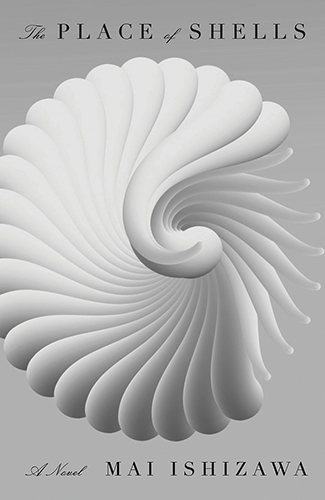
The Place of Shells is a slow novel to be savored. A spiraling shell is an apt analogy for the style of narration, which only gradually approaches its central theme through ever-smaller circles. Ishizawa’s writing, which Polly Barton has translated with pitch-perfect clarity, is gorgeous and well worth taking a page at a time as the reader, like the narrator, softly explores a world made beautiful and strange through art and memory. 

Hunchback

Saou Ichikawa’s 2023 novella Hunchback is a striking work of fiction and a major contribution to the literature of disability. Ichikawa’s brutally honest depiction of her disabled protagonist’s physicality is magnetically compelling and thrusts the reader into a world where the conveniences of the able-bodied cannot be taken for granted.  

Shaka is a resident of Group Home Ingleside, a private care facility established by her wealthy parents. Shaka owns the facility, and she collects income from several rental properties in the investment portfolio she’s inherited. In addition, she’s sitting on a trust fund so large that it has to be distributed across several banks.

Despite her wealth, Shaka’s disability confines her to a small studio apartment. While working on a PhD in Disability Studies, Shaka amuses herself by vent-posting on Twitter in between sessions of writing hardcore pornography. She donates her income to the food banks that serve unhoused people, sometimes directly and sometimes in the form of bulk orders of seasoning. Even homeless people deserve food that tastes good, she reasons.

Even as she emphasizes with the disadvantaged, Shaka describes the reality of her own physicality in painstaking detail. Because of muscular atrophy, she’s unable to breathe on her own. Due to social distancing during Covid, leaving the care facility is out of the question. Her PhD coursework is entirely online, and she digitizes academic texts with the aid of a book scanner, as it’s impossible for her to hold heavy books for long periods of time.

And why shouldn’t we have digital copies of books, Shaka demands. When the literati bemoan the digitalization of the written word, who does that benefit, exactly? Shaka’s litany of complaints against the ableism of academia is one of the many currents of anger that drive Hunchback forward. Shaka’s anger breaches the surface at regular intervals, forcing the reader to think critically about the entrenched ableism of the world many of us take for granted.

Despite being engaged in a life of the mind, Shaka has one dream – to become pregnant and then get an abortion. While she’s not particularly interested in the fantasy sex she narrates in her shallow and disposable smut stories, there’s something about the particular physicality and “human-ness” of pregnancy that she finds intriguing.

A golden opportunity falls into Shaka’s hands when a young male caretaker named Tanaka reveals that he’s been stalking her on Twitter and secretly reading her erotic fiction. Unfortunately, Tanaka is the worst sort of incel. Not only can he not get a girlfriend, he only became a caretaker because he couldn’t cut it in the corporate world. In his eyes, he’s just as failed by society as Shaka – who, he snaps, enjoys wealth most people could never dream of.

Out of mutual hatred, Shaka and Tanaka orchestrate a tryst. As you might imagine, it doesn’t end well. Suffice it to say that, if you’re looking for an uplifting message, you won’t find it here.

The end of Hunchback mirrors its beginning, with a prolonged description of a sexual encounter. The book’s closing scene is ostensibly narrated by Tanaka’s sister, who takes on a sense of personal responsibility for her brother’s crime of murdering a disabled woman in a care facility by literally choking her to death with his cum. 

I can’t help but suspect that this is once again Shaka writing erotica, albeit with a slightly more literary bent. The scenario is still improbable, but now she’s writing more for herself, fleshing out the characters (so to speak) by imbuing them with personalities and backstories.

Her encounter with Tanaka may have been an abject failure, but Shaka still desires “human” experiences and contact with the broader world. After all, writing – even writing erotica – is about so much more than coming up with a story and posting it online. Shaka never becomes a softer or kinder person, nor would I want her to. What she gains is motivation to be more present in the outside world as she sharpens her insight and hones her craft. 

Ichikawa writes based on her own experience as a disabled person, and Shaka’s voice is focused, specific, and driven. Shaka’s narration pulls the reader through the story with sharp observations and darkly comedic drama, and the steady forward momentum is just as entertaining as it is compelling. In many ways, Hunchback reminds me of Convenience Store Woman, and I’d recommend this book to readers who are receptive to unexpected charm and aren’t afraid to have their comfortable perceptions of reality challenged.

May You Have Delicious Meals

Junko Takase’s 2022 novella May You Have Delicious Meals is a small human drama about workplace bullying. It’s also a critique of Japanese corporate culture that simultaneously pokes holes in the iyashikei “comfort” reading meant to help people deal with stress. Contrary to what bestselling Japanese novels about cats and coffee shops would have you believe, it turns out that lovingly prepared homemade food cannot, in fact, fix a toxic workplace environment.

Ashikawa is a sweet young woman who transferred to a branch office in Saitama, a suburb of Tokyo, after facing harassment at her previous post. Due to her lingering trauma, Ashikawa has requested a reasonable accommodation – that she not be expected to work overtime. To make up for the inconvenience to her coworkers, she regularly brings homemade desserts to share with the office.

Ashikawa is not the hero of this story. In fact, her perspective is entirely absent.

The majority of the novella is narrated from the point of view of Nitani, Ashikawa’s secret boyfriend. Nitani has allowed Ashikawa to latch onto him, but he has no respect for her at all. He hates sweet food, and he thinks Ashikawa’s baking hobby is annoying. The only reason he tolerates her is because she seems like the sort of attractive and agreeable woman that a man in his position should be dating.

Nitani is friendly with an older female colleague named Oshio. Oshio resents Ashikawa, whom she feels gets special treatment. Why should Ashikawa have a lighter workload and be spared stressful job responsibilities just because she bakes cookies?

During a late-night drinking session, Nitani and Oshio decide to bully Ashikawa, resolving to throw away her desserts uneaten in trash cans that everyone can see. Oshio gives up on this bullying fairly early on, but she still ends up taking the blame when other people at the office surreptitiously start to join in. No one ever suspects Nitani, least of all Ashikawa herself.

I get the feeling that Penguin might be attempting to market May You Have Delicious Meals as a social comedy, but this is misleading. All of the characters are unpleasant, and the situation is deeply awkward. Takase’s story contains sharp social critique, but it’s not funny. Perhaps this novella might be described as cringe comedy, except without the comedy; it’s just cringe.

Nitani is a piece of work, and I hate him. He’s super gross. If you’ve ever worked in an office, you’ve probably encountered this exact type of guy – someone who hates women but still expects them to sleep with him. Takase’s portrayal of this species of greasy slimebag is immaculate.  

Oshio is much more relatable. Even though she’s not the primary viewpoint character, I still feel that this is her story. Oshio is critical of Japanese workplace culture, but she grits her teeth and deals with the unpleasantness of overtime, useless paperwork, angry phone calls, and branch office transfers. If she weren’t doing the work, she reasons, it would be unfair to the person forced to pick up her slack. Still, her coworkers aren’t her family, and she resents Ashikawa for cluelessly attempting to blur the necessary line between personal and professional.   

In the end, Oshio has the right of it. No matter how friendly a workplace pretends to be, the pretense of comradery isn’t going to stop the bullying and scapegoating that arise from stress and overwork. The ice-cold “fuck all y’all” speech Oshio gives at the end of the book isn’t quite theatrical enough to be cathartic, but still. Good for her.

Meanwhile, Ashikawa’s “happy ending” is chilling. I’m sure that circumstances seem rosy from her perspective. The person whom she assumes is the office bully has been vanquished, and her romantic relationship with her coworker is openly acknowledged by everyone in the office. Since the reader has seen these developments through Nitani’s hateful eyes, however, we’re painfully aware that Ashikawa is delusional about how the people around her actually feel.

May You Have Delicious Meals is the polar opposite of feel-good books about food and friendship. Reading Junko Takase’s prickly little workplace drama makes you feel awful, and that’s the point. It’s bleak, it’s disheartening, and it’s a brilliant piece of writing. I have nothing but appreciation for May You Have Delicious Meals, which is a much-needed antidote to the mindlessness and absurdity of the current trend of cutesy Japanese comfort novels.

ハンチバック

Saō Ichikawa’s ハンチバック (Hunchback), which won the prestigious Akutagawa Prize for emerging writers, is about a woman with a congenital spinal condition who lives in a group home and posts her secret desires and frustrations on Twitter. It’s an amazing story and a brilliant piece of writing.

The protagonist, Shaka Izawa, has been provided for by her wealthy parents. Although she doesn’t need the money, Shaka works as a freelance writer, mainly penning reviews for stores and restaurants she’ll never be able to visit in person. She also writes explicit erotica, a selection of which opens the novella.

Hunchback is written in a playful and accessible style, but it asks serious questions about disability. Why shouldn’t Shaka create erotica? Why shouldn’t she experience desire? Why shouldn’t she have sex? These questions become less abstract when one of Shaka’s caretakers discovers her secret writing account, and she presents him with a proposition – she’ll pay him to have sex with her.

I was so intrigued by Shaka’s story that I read Hunchback (which is ninety pages long) in one sitting. Ichikawa’s description of the daily life of someone with severe mobility impairments is honest yet compassionate, and her anger at Japanese society’s ingrained ableism is powerful and resonant.

Cannibals

Shinya Tanaka’s prizewinning novella Cannibals is a harrowing story of how poverty enables a cycle of abuse and assault. The writing and translation are beautiful, but the book is often difficult to read.

In the brutally hot summer of 1988, a 17-year-old boy named Toma is forced to confront the blood he’s inherited from his father, who beats his stepmother and sleeps with various women in their working-class neighborhood along the banks of a polluted river.

To his disgust, Toma realizes that he, too, receives gratification from physical violence, and he struggles to process what this means. Meanwhile, tensions at home threaten to reach a breaking point when Toma’s stepmother confides that she intends to leave his father.

The neighborhood river is never far from the story, and Tanaka’s virtuoso description of its eventual flood is incredible; the violence of the rushing waters is a necessary cleansing and catharsis.

The damage caused by the flood also serves to deny any complacency with violence that the reader may have developed through identification with the narrator. Still, I can’t help but feel that perhaps the author may have taken this violence too far for my own taste, especially as a reader who tends to be critical of how visceral depictions of assault often obfuscate thematic resonance through shock.

Cannibals is a prime example of what feminist scholar Chizuko Ueno has termed “men’s literature” (as opposed to the more commonly used expression “women’s literature”), which delves into specifically gendered issues that may not by sympathetic to a wider audience. The problem I once had with books like Cannibals is that there were so many of them in translation, especially in relation to the exclusion of similarly disturbing stories written by women. Now that there’s a greater diversity of Japanese fiction in English translation, it’s easier to read something like Cannibals on its own terms instead of seeing the explicit misogyny of the characters as a reflection of the implicit sexism of the publishing industry.

In the end, I think Cannibals might be better suited to a college-level literature class than pleasure reading, at least for most people. Without the context of the masculinity narrative of the 1980s that Tanaka is pushing back against in a frankly heroic style, there’s a danger of Cannibals coming off as almost voyeuristic of working-class poverty and sexual violence. Regardless, I appreciate this novella, and I’m grateful it’s been skillfully translated and lovingly published in a beautiful paperback edition with a striking cover design.

A Perfect Day to Be Alone

Nanae Aoyama’s novella A Perfect Day to Be Alone chronicles a year in the life of a young woman named Chizu who moves in with an elderly relative named Ginko after her mother accepts a teaching position in China.

Aoyama deftly captures the reality of a relationship between a flighty 20-year-old girl and a mature 71-year-old woman. There are no heart-to-heart talks or life lessons, just a lot of sitting around and chatting about nothing in particular.

Chizu breaks up with one boyfriend and starts a casual relationship with another, but this relationship goes nowhere. The same could be said of Chizu’s job at a kiosk at a suburban train station. Aside from a vague desire to save money, Chizu has no goals or ambitions.

Rather, the story is completely interstitial, a chapter between chapters of Chizu’s life. A Perfect Day to Be Alone brought me back into my own 20-year-old headspace with an immediacy that would be difficult to achieve through a story with more of a plot.

Nothing happens in A Perfect Day to Be Alone, but I enjoyed getting to know Chizu and Ginko, whose characters are sketched out and then defined with subtle touches. I appreciate the opportunity to spend time in their company, which is supremely chill and relaxing.

The Woman in the Purple Skirt

Japanese Title: むらさきのスカートの女 (Murasaki no sukāto no onna)
Author: Natsuko Imamura (今村 夏子)
Translator: Lucy North
Publication Year: 2019 (Japan); 2021 (United States)
Publisher: Penguin Books
Pages: 216

The Woman in the Purple Skirt begins as a charming set of observations about a woman who lives in a quiet neighborhood. It soon becomes clear, however, that there is something creepy about the narrator, who calls herself The Woman in the Yellow Cardigan.

The specificity of the narration raises many questions. Why is the narrator so obsessed with the Woman in the Purple Skirt? How is she able to observe her so closely? Is she stalking this woman? Or is she perhaps talking about herself in third person? Is she making up a fantasy version of herself, or is she projecting her personality onto a real woman? If so, why? Who is the Woman in the Purple Skirt? Who is the Woman in the Yellow Cardigan?

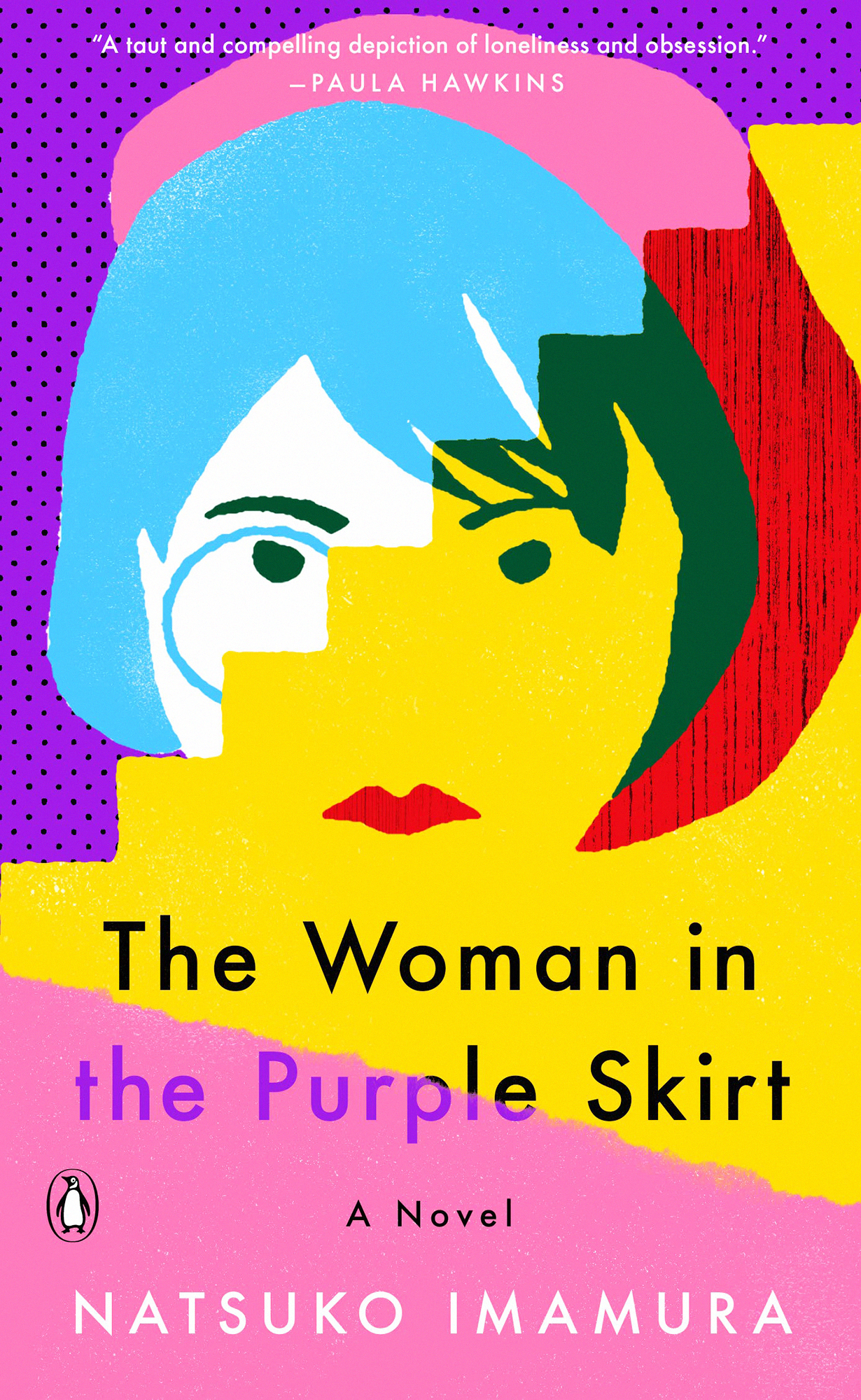
The Woman in the Purple Skirt isn’t suspense, necessarily, and it’s certainly not the “thriller” that the publisher seems to be trying to market it as, but the experience of reading this story is unsettling. The novella won the prestigious Akutagawa Prize, which is awarded to work from emerging writers that pushes boundaries and has a certain air of being “literary.” Despite the stylish chick lit cover of the American edition, the plot of The Woman in the Purple Skirt is almost depressingly mundane.

After a series of temp jobs that she quits after only a few days, the Woman in the Purple Skirt finds employment as member of the cleaning staff at an upscale hotel. She seems to be having an affair with one of her supervisors, and rumors spread that her salary is disproportionately high. At the same time, certain imbalances in inventory cause her coworkers to suspect that she is stealing. As the atmosphere at work becomes more hostile, the woman’s relationship with her supervisor also deteriorates. Meanwhile, the narrator, who is also a supervisor on the hotel’s cleaning staff, continues to glide through the life of the Woman in the Purple Skirt like a shadow.

This story is banal, but the subtle uncanniness of the narration forces the reader to view these normal events in normal lives with a sense of unease. The prose is sparse, the language is simplistic, and the affect is almost completely flat. Lucy North’s translation is reminiscent of Raymond Carver, especially in terms of dialog. Like Carver’s short fiction, the themes that emerge from beneath the placid surface of the narration are distressing: economic precarity, alienation, and the dangers of aging without a social network or financial safety net.

Despite its engagement with contemporary social issues, there’s nothing about The Woman in the Purple Skirt that requires specialist cultural knowledge, as the experience of struggling with loneliness while making minimum wage is equally shitty everywhere. I’d recommend this novella to anyone who enjoyed (or was at least moved by) Convenience Store Woman, as well as anyone concerned with urban anomie who entertains doubts about the ethics of low-wage work.

Because of the intriguing questions it raises and the unfortunate relatability of the discussion it’s likely to inspire, I would also recommend The Woman in the Purple Skirt as a text in a class on contemporary Japanese fiction. In addition, I think the novella might work well as a text for upper-level Japanese language classes, as its polished yet accessible prose evades the deliberate opacity of most Akutagawa Prize-winning work. Imamura has a field day with the narrative ambiguities made possible by the Japanese language, so it might be interesting to read the original side-by-side with North’s translation, which makes a number of tough decisions that nevertheless read as smooth and effortless.

Acclaimed author Natsuko Imamura’s first work to appear in English translation is short enough to be read in the span of an hour, but it’s worth spending time with. It’s difficult to say that a book as genuinely creepy as The Woman in the Purple Skirt is an enjoyable read, but the novella is a darkly shining jewel of literary fiction that invites and rewards analysis and introspection.

Ground Zero, Nagasaki

Ground Zero Nagasaki

Title: Ground Zero, Nagasaki
Japanese Title: 爆心 (Bakushin)
Author: Seirai Yūichi (青来 有一)
Translator: Paul Warham
Publication Year: 2014 (America); 2006 (Japan)
Publisher: Columbia University Press
Pages: 182

Although Seirai is a relative newcomer to the Japanese literary scene, having won the Akutagawa Prize for his story collection Seisui (Holy Water) in 2001, he was born in 1958 and was 47 years old when Ground Zero, Nagasaki was first published in November 2006. Although its stories are all set in contemporary Japan, Ground Zero, Nagasaki is deeply engaged with themes of personal and historical legacy.

Each of the six stories in this collection is about the physical and emotional damage suffered by Christians living in Nagasaki in the wake of the atomic bombing. The memory of the atomic bomb is extremely subtle in most of the stories, but it’s never completely absent. Even more powerful than any real or imagined trauma generated by the bomb, however, are the moral dictates of Christianity, which demands that its adherents bear witness to suffering.

The second story, “Stone,” is narrated from the perspective of the brother of a Diet member who is being forced to resign from office because he hired his girlfriend as his secretary. While his brother is giving a talk to local business association at a hotel in Nagasaki, the narrator, a 45-year-old man who calls himself “Adam,” waits in the lobby, where he is approached by a female journalist named Shirotani. Adam is on the autism spectrum, and his conversation with Shirotani is almost frustratingly elliptic.

It gradually becomes clear that Adam’s mother is dying. She has sent Adam to intercept his brother in order to ask that the politician care for him, as he can’t live by himself. Shirotani, who has a brother like Adam, is sympathetic, but the author does not allow this story to become sentimental. Instead, the reader is hit with the full force of Adam’s sexual attraction as he fantasizes about the journalist: “If she wouldn’t marry me, at least I could carry her smell around with me. I would bury my face in her panties and inhale her woman’s scent to my heart’s content” (33). Adam’s mother has punished him for such thoughts in the past, asking him how he could dare to entertain such un-Christian notions “‘after our ancestors went to the stake with pure thoughts and prayers on their lips'” (32).

Adam’s brother Kutani is caught in a the grips of a similar moral vise. He entered politics for the most noble of reasons: to ensure that a doctrine of peace was represented at the highest levels of the Japanese government. The woman with whom he has cheated on his wife had come to him looking for a job after her husband’s family cast her out with her newborn son, who was born severely handicapped. Kutani explains to Adam that he initially wanted to help her as he wants to help all of his constituents, but that he couldn’t help falling in love with her. He says: “‘As long as I had her in my arms, nothing else mattered. Even if war had broken out and nuclear bombs were exploding all over the world, I probably wouldn’t have cared'” (41). His adherence to Christian doctrine, which has guided him along his path as a politician, allows no leeway for his identity as an individual. His affair with his secretary is merely an indication of a deeper emotional dissonance that has also estranged him from his mother and brother, who need him to be a person instead of a politician.

As Kutani struggles with his conscience in the penthouse suite of the hotel where he will offer his resignation, his brother is overwhelmed by feelings he doesn’t understand. After Adam leaves the hotel, he is afraid that his body will turn to stone in response to the emotional overload as it has in earlier catatonic episodes triggered by stressful situations. The story ends with Adam begging God to not leave him alone without a family and without ever having experienced intimacy, his longing for comfort inseparable from his sexual desire.

Another story that I found especially trenchant is “Shells,” which is also told from the perspective of a highly unreliable narrator. Six months ago, the narrator’s daughter Sayaka suddenly came down with a fever and ended up dying of a brain hemorrhage. Since then, he has become convinced that the ocean has been rising during the night, covering entire sections of the city and leaving behind cowrie shells and other assorted sea creatures in his highrise apartment. His delusions became so powerful and persistent that his wife has left him and his brother has placed him under outpatient psychiatric care.

While walking in his neighborhood one day, the narrator encounters an old man named Nagai who tells him that his late sister used to be friends of a sort with Sayaka. His sister had become senile, and the narrator’s daughter was the only one who would listen to her rambling stories. The narrator, overcome with gratitude, invites Nagai back to his apartment, where the old man tells him that his sister spent her entire life trying to forget the day of the atomic bomb, when she was forced to leave her siblings behind in a burning house as she fled with her mother. Nagai’s sister had once spoken to him about the sea of flames engulfing the city, saying, “‘I wish the sea would wash over it all,'” suggesting that she wished her memories would be washed away as well (146).

The narrator, who has his own fantasies of the sea, feels a connection with this woman, but he is terrified of losing his memories, specifically his memories of his daughter and the love he felt for her, which he describes as “the best and brightest, the truest feeling I have ever had” (117). He realizes that the shells that the ocean leaves behind for him every evening after the flood recedes are akin to physical manifestations of his memories, but this insight does not weaken his conviction that the city of Nagasaki sleeps under the waves every night. He tries to convince Nagai that his visions are real but fails. The story ends with his understanding that the saltwater coming in from the bay is not a purifying force like the Biblical deluge but rather indicative of a spiritual wasteland in which God allows the innocent to suffer and perish.

Obviously Ground Zero, Nagasaki is not light reading, and I found that I had to let a week or two pass between the stories, each of which stayed with me long after I had closed the book. Reading Seirai feels a lot like reading Ōe Kenzaburō, yet his style is pellucid where Ōe’s is confoundedly literary. Seirai’s narrators are not philosopher poets citing The Great European Male Thinkers in casual conversation, but this does not make them any less complex and compelling; their proximity to the mundane and mimetic “realness” serves to emphasize how the lasting reverberations of Nagasaki’s violent history have touched the lives of even the most unassuming of its citizens.

I would be remiss if I did not conclude this review by stating that Ground Zero, Nagasaki has the best book design I have seen in a long time. A faded image of the black circle on the cover, an inverse of the red rising sun of the Japanese flag, is on every page of the book, a reminder that the proverbial gross insult to human dignity in the room can never be ignored. Each chapter begins with a progressive series of diagrams illustrating how to fold an origami crane, indicating that somewhere inside this terrible mess is hope. These illustrations suggest that the reader, by sharing the experiences of these stories with the author, is in effect performing a symbolic act of prayer resembling the dedication of a chain of paper cranes to the atomic bomb victims. Kudos to designer Julia Kushnirsky!

Is Ground Zero, Nagasaki worth the $35 asking price for the hardcover? Yes, I think so.

Will the stories in this book be of interest to anyone outside of the academic field of Japanese literary studies? Absolutely. It’s not easy to read this book, but that’s a major part of what allows it to dig so deeply into the reader.

Review copy provided by Columbia University Press.

Manazuru

Title: Manazuru
Japanese Title: 真鶴 (まなづる)
Author: Kawakami Hiromi (川上弘美)
Translator: Michael Emmerich
Publication Year: 2010 (America); 2006 (Japan)
Publisher: Counterpoint
Pages: 218

To return to the issue of sexism in literature (hopefully for the last time before laying it temporarily to rest), I think that, even as a book written by a man should not be automatically dismissed as sexist, so should a book written by a woman not be lauded simply because it was written by a woman. Take Manazuru, for instance. I love Kawakami Hiromi. For example, I think her 1998 collection of short stories, Kami-sama, was an imminently enjoyable exercise in magical realism, successful not only in its popular appeal but also in its critical reception. Her 1996 debut novel, Hebi o fumu, easily deserved all of the attention (like the Akutagawa Prize) that it won. Manazuru, on the other hand, is just plain boring.

The premise of the novel seems promising. Its protagonist is a writer named Kei, who lives in Tokyo with her mother and teenaged daughter. Her husband vanished twelve years ago, and now Kei finds herself inexplicably drawn to the seaside town of Manazuru. She is lead not only by her intuition but also by the ghost of a woman who occasionally appears and has conversations with her, albeit in a mostly antagonistic and cryptic way. Even though Kei is having an affair with a married man, she is still haunted by the memory of her husband, and she believes the key to his disappearance lies somewhere in Manazuru. Meanwhile, her daughter starts spending more and more time outside of the house, finally running away to meet someone whose identity she will not reveal. From this description, it would seem that several mysteries are afoot, each as compelling as the next.

Unfortunately, Manazuru is not the least bit interested in resolving any of these mysteries. What happened to Kei’s husband? We never find out. Who is the ghost that follows Kei around? We never find out. Who did the daughter run away with? We never find out. Answers are suggested in Kei’s garbled stream of consciousness narration, but then they are just as quickly dismissed. Did Kei kill her husband? Is the ghost that follows her around her husband’s dead lover? Did Kei’s daughter meet the ghost of her father? Maybe… But probably not.

In Manazuru’s defense, its plot is not its raison d’être. Its focus instead lies in the depiction of the mind of its protagonist in all of its complexity and confusion. Kei does not seem to know what she wants but is still searching for something, all the while immaculately and poetically detailing her experiences of drifting through life. Her thoughts give weight and meaning to the mundane, and she turns activities like riding the train into an art. Most of the novel is concerned with the details of her everyday life, like putting away her family’s winter clothes with her mother:

Handling so many different fabrics, heavy clothes, light clothes, makes my palms feel silky. I rise quietly, take the folded material from here to there. Bend down, lay it in a box. Fabric brushing against fabric, making the merest sound. Two women, one getting on in years, one starting to get on in years, pacing among the fabrics. With the tips of my fingers, I tear off the paper tag the cleaners stapled to the label last year. Replace the paper that lines the drawer, fold the old paper, throw it out. Straighten the new paper in the drawer, pile in the different materials, layer upon layer.

The same attention to style and detail is carried over into more dramatic moments, such as when Kei wanders around Manazuru, lead by a ghost in the middle of a storm. Such a narrative style drains such scenes of any sense of urgency, however, especially since Kei never seems to accomplish anything. The back of the book describes the novel as “a meditation on memory – a profound, precisely delineated exploration of the relationships between lovers and family members.” Indeed, if you’re into contemplative prose about the love and family lives of women, I suppose it doesn’t get much better than Manazuru.

Even if the front of the book didn’t declare it a “Recipient of the 2010 Japan-U.S. Friendship Commission Prize for the Translation of Japanese Literature,” I think I still might have gotten the feeling that this book was published because of its close proximity to the stereotype of Japanese women’s writing: meandering novellas about the feelings of women who pay more attention than is absolutely necessary to flowers, plants, and the changing seasons. Kawakami has written work that is playful, creative, and fiercely intelligent. I wonder, then, why such a very very serious and very very emotional and very very “literary” (in a very, very outdated sense of the word) book of hers is the first to appear in English translation. Michael Emmerich is a brilliant translator, as always; but, after his 2009 translation of Matsuura Rieko’s wonderfully subversive The Apprenticeship of Big Toe P, I feel that his talent has been somewhat wasted with a boring and rather vacuous book like Manazuru.

To return to the issue of fiction and gender, I was thinking about creating a new category for my reviews: “Women Writers.” However, reading Manazuru has convinced me that a writer should not be judged according to his or her gender; and, furthermore, that the reification of the gender of an author is not something I particularly wish to engage in and perpetuate. For the time being, then, I am going to hold off on the creation of this category and allow female writers to stand on equal ground with their male counterparts without being branded as “Women Writers” and having to bear all the cultural baggage that comes with the label.