Bad Girls of Japan

Title: Bad Girls of Japan
Editors: Laura Miller and Jan Bardsley
Publication Year: 2005
Publisher: Palgrave Macmillan
Pages: 222

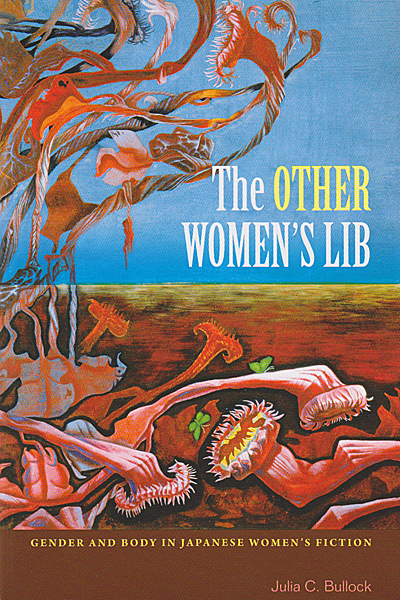
Every once in awhile I will demand, in my ignorance, why no one has published an article about some facet of Japanese culture that really deserves an article. It usually turns out that, in fact, someone has published an article; and, occasionally, it turns out that all of the articles I have ever wanted to read have been published in one book. My most recent of such discoveries is Bad Girls of Japan, which was published in hardcover in 2005 and paperback in 2007. Why hadn’t I read it before this past weekend? That’s a good question. Perhaps I had thought to myself, what do I care about Abe Sada or Yoshiya Nobuko? Perhaps I had thought to myself, how academically rigorous can a short collection of twelve-to-fifteen page essays actually be? Did I mention that I can be extremely ignorant sometimes?

Bad Girls of Japan is a compilation of eleven short articles (plus a separate introduction, conclusion, and bibliography) about, as the title suggests, Japanese bad girls, with “bad” meaning “defying mainstream notions of proper female conduct” and “girl” being a term of female empowerment, apparently. Rebecca Copeland begins the collection with an essay about the demonic women of Japanese folklore, such as the yamamba, or carnivorous mountain witch, and the jilted lover turned giant snake monster from the Dōjō-ji myth that has come down to us by way of a famous Nō play. Other essay topics include geisha, Meiji schoolgirls, kogal, and shopping mavens like Nakamura Usagi – as well as the aforementioned Abe Sada (whose erotic escapades were sensationalized by films like In the Realm of the Senses) and Yoshiya Nobuko (whose Hana monogatari – flower tales – more or less established the shōjo narrative style).

In short, Bad Girls of Japan is all about women who have become the vortexes generating major cultural currents in modern and contemporary Japan. As such, it reads like an alternate cultural history informed by various academic focuses and disciplines. Since the essays are short, each writer has been forced to say the most important things about her topic in the most efficient way possible, but none of these essays sacrifices theoretical nuance (or footnotes). Furthermore, in a book designed to upset common ideas concerning Japanese culture, it is appropriate that none of the essays makes any sort of culturally essentializing overgeneralizations, either.

Because of its essay length and broad range of topics, Bad Girls of Japan does feel a bit like an introductory textbook, but it’s a very intelligent textbook, and the excellent editing ensures that it’s easy to read, as well. As a result, I think this essay collection is one of the rare academic books that will appeal to non-academics, and it would be an excellent choice of reading material for someone who doesn’t know very much about Japan but wants to learn more. I especially recommend this book to pop culture fans interested in moving beyond archetypes and stereotypes. It’s a quick, fun read, and it paints a lively and vivid picture of the past one hundred years of Japanese cultural history. To respond to my own initial doubts concerning this book, then, one should care about women like Abe Sada and Yoshiya Nobuko not merely because they were interesting people who told interesting stories, but also because of what their stories reveal about Japan and its relation to the rest of the world as it made its way through the twentieth century.

By the way, that hypothetical essay I always wanted to read about sex in josei manga is in here too, and I think Gretchen Jones does a great job of addressing the possibility of female pleasure and agency lurking within all the graphic rape. I just wish her chapter were longer, which I suppose is something I could say about everything in the book…

Zaregoto, Book 1: The Kubikiri Cycle

Title: Zaregoto, Book 1: The Kubikiri Cycle
Japanese Title: クビキリサイクル 青色サヴァンと戯言遣い
(Kubikiri cycle: Aoiro savant to zaregoto-zukai)
Author: NISIOISIN (西尾 維新)
Translator: Greg Moore
Publication Year: 2008 (America); 2002 (Japan)
Publisher: Del Rey
Pages: 332

I am not a big fan of NISIOISIN (who I am going to refer to as “Nisio” for my own convenience). I didn’t get a terribly good impression of him from what I had read of his work before, which was limited to Death Note: Another Note, a collection of three short stories based on the manga xxxHOLiC (you can find my review of that one here), and the short story “Magical Girl Risuka” in the second English edition of the literary magazine Faust. Judging from these stories, Nisio is obsessed with the concept of genius. Of course, genius and its practical applications are fascinating, which is why characters like Sherlock Holmes and Tony Stark are so appealing. Nisio’s problem, however, is that he amps the asshole factor of Holmes and Stark all the way up to eleven and turns it directly towards the reader. When I read his work, I feel like he’s attacking me personally for being so stupid and incompetent, unlike his collection of beautiful geniuses. I think there’s perhaps an element of tsundere at play here, and perhaps it’s my fault for not being Nisio’s target audience, but there’s an even more annoying problem with his recurring descriptions of genius. I am going to call this problem the Hannibal Lecter paradox. Sure, it’s easy to say that a character has an IQ of 250, but it’s a bit tricky to write such a character if the author himself falls within a more normal range of intelligence, and most authors – including Nisio – fail.

I myself may not be the sharpest tool in the shed; but, if someone is going to tell me (or at least my reader-vehicle protagonist) that I’m stupid, I would at least prefer for that person to be interesting and intelligent, not a poorly-written, bloated mass of anime clichés. Zaregoto, Book 1: The Kubikiri Cycle is filled with many such bloated masses; but somehow, it works. In the same way that one angry bird is annoying, yet hundreds of angry birds are epic, Zaregoto is so ridiculously cliché that somehow it ends up being awe-inspiring. Are you ready to play cliché bingo? Let’s go!

Mild-mannered and unassuming teenage male protagonist who has secret depths of inner strength, Ii-chan, is friends with a beautiful teenage girl who is such a genius that she has trouble taking care of herself. She is a super-elite international computer hacker who builds her own super-amazing hardware and software and prefers the virtual world to the real world, you see. Anyway, this beautiful girl genius, Kunagisa Tomo, is invited to a small island inhabited by an outcast daughter of a very rich family. This outcast rich girl, Akagami Iria, is herself young, beautiful, and a genius. Since she either can’t or chooses not to leave her island, she invites all sorts of other geniuses to come to her. It just so happens that all of the other geniuses who visit her are also young, female, and beautiful. All of these gorgeous geniuses are cared for by Akagami’s (young and beautiful) trio of maids, who are sisters and hyper-talented at martial arts, among many other things. Everything is going well on Wet Crow’s Feather Island as the geniuses compare the sizes of their respective penis envy by taking turns telling Ii-chan what a stupid idiot he is, but suddenly! Someone is murdered! And we don’t know who did it! And then the prime suspect herself is murdered! In a locked room!

It gets worse from there, but I imagine my point has already been made. My mind boggles at how Nisio was able to hit so many of the high-profile mystery and anime stereotypes all at once. I kept reading just to see what would come out the bag next, and I was never disappointed. What is even more interesting about the book, however, are its logic puzzles. I’m not sure whether our narrator Ii-chan is deliberately unreliable or just an idiot; but, in either case, Sherlock Holmes he is not. He almost never notices anything for himself, and other characters are constantly pointing things out to him. What Ii-chan is good at doing, however, is taking all of this information, putting it together, and analyzing it. Along the way, he explains classic logic flaws and paradigms to the reader, which is fun in a Michael Crichton “this is how science works” sort of way.

None of this helps him solve the mystery, however, because the mystery itself is beyond ridiculous. Let it suffice to say that several people on the island are in the habit of amusing themselves by switching identities. And by “several people,” I mean “almost everyone.” (I kept expecting Ii-chan to pull off his pants and surprise everyone by being a beautiful girl genius himself, but alas, it didn’t happen.) There is no way that the reader can figure any of this out, so one must simply follow the twists and turns of the story developments and its various revelations along with the narrator. The dénouement of the mystery is so convoluted that it ceases to make any sense whatsoever about halfway through, but the identity of the killer at the core of the tangles of plot thread is actually quite interesting, especially as a conclusion to Nisio’s fetishistic focus on genius.

I will be honest. I bought Zaregoto because it was on sale for three dollars at an anime convention, and I read it because my plane back home from said convention was delayed for a few hours. Under those circumstances, which allowed me to read the book all the way through in one sitting while fueled by sleep deprivation and gallons of cheap coffee, I enjoyed it immensely. The translation is smooth and polished, and the illustrations by take are a very nice touch. This novel is the first in a nine-volume series, and it thus leaves certain plotlines open, like Ii-chan’s past and his budding romantic relationship with Kunagisa. The second volume of the series was released in English translation earlier this summer, but I’m not sure if I enjoyed the first volume enough to seek it out. But if I find it on sale for three dollars at another anime convention, I will definitely grab it.

Summer, Fireworks, and My Corpse

Title: Summer, Fireworks, and My Corpse
Japanese Title: 夏と花火と私の死体 (Natsu to hanabi to watshi no shitai)
Author: Otsuichi (乙一)
Translator: Nathan Collins
Publication Year: 2010 (America); 1996, 2001 (Japan)
Publisher: Haikasoru
Pages: 350

I don’t know why I haven’t reviewed anything by Otsuichi yet. Tokyopop has released two collections of his short stories (Calling You in 2007 and GOTH in 2008), and Haikasoru released the collection ZOO, which is a major bestseller in Japan and ended up getting its own film adaptation, around this time last year. It might be that I haven’t reviewed his work before now because, even though his stories are fun and creative, they tend to be hit or miss. Also, they fall squarely into the genre of horror, which has gradually eroded away into “Dark Fantasy” or “Thriller” in the American market (the back cover of my paperback copy of Stephen King’s most recent novel, which involves murder, rape, cannibalism, and mass asphyxiation, tells me that it is “Fiction”). However, the majority of Otsuichi’s stories are pure shock horror of the type that might be found in magazines like Black Static or Macabre Cadaver, which might explain the “hit or miss” factor and also makes them difficult to review. If you like horror, you’ll like Otsuichi. If you don’t like horror, why would you want to read him?

The three stories in Summer, Fireworks, and My Corpse are still horror, but I feel like two of them are fleshed-out enough (what a lovely analogy for horror fiction) to appeal to a wider audience. The title story, which is seventy pages long, tells the story of a murder from the perspective of the dead person, who is surprisingly nonchalant about the whole thing. Being dead, however, she’s able to follow the thoughts and movements of her best friend, who inadvertently killed her, and her friend’s older brother, a budding sociopath who helps his sister hide the body. The pair isn’t exactly professional in their cover-up operation, so there are a lot of delightfully suspenseful moments in which they are almost, almost found out. The surprise ending is morbid but equally playful. The setting of the story, the forest surrounding a Shintō shrine, is used to full advantage. I think those small forests are the closest thing to a Shakespearean green world in contemporary Japanese fiction; every time one pops up in a story, you know that something weird and exciting is going to happen. (Another good example might be found in the manga Tenken, which is absolutely brilliant and should be read by everyone.) Not just the suspense and the setting but everything about the story is well executed, and it’s hard to believe that Otsuichi made his literary debut with it while still in high school.

The following story, “Yuko” (優子), is the usual Otsuichi fare. It’s short, grisly, and doesn’t make a whole lot of sense. If you’re the sort of manga fan or Lolita fashionista who’s into the mock horror and period trappings of titles like Yuki Kaori’s Godchild, though, you’ll dig the gothic atmosphere and the creepy, creepy doll parts.

And then there’s the two hundred page novella Black Fairy Tale (暗黒童話), which was published five years after the other two stories in a separate volume. For me, this story is the best part of the collection. The narrative switches between a traditionally styled fairy tale and a more modern one, which is itself told from several points of view. The main point of view is that of a high school student named Nami, who loses her memory along with her left eye in a freak accident. She receives an eye transplant and gradually realizes that she can see the memories of the eye’s former owner if exposed to certain triggers. The blurb on the book’s cover makes it seem like this element of the story is its primary source of horror, in an I see dead people sort of way; but, as Nami has lost her own memories, she can only live her life though borrowed memories, and she becomes emotionally attached to the scenes of someone else’s life that she sees through the transplanted eye, which belonged to a college student named Kazuya. Since Nami has effectively become a different person than she was before her accident, her school friends and family distance themselves from her, so she drops out of school and uses the savings left behind by her former self to travel to Kazuya’s hometown, a backwater village called Kaede. As with the shrine forest of Summer, Otsuichi makes good use of his setting in this small mountain town, perfectly capturing both the charm and the pathos of rural Japan.

Black Fairy Tale is more than a travel novel, however. Of course Nami wants to visit the places and meet the people she has seen through the eye’s memories, but she also knows that its former owner was murdered for seeing something he shouldn’t have. The reader knows this too, as the narrative shifts between Nami’s story and that of a man who has the ability to keep living things alive, no matter what he does to them. He uses this ability to experiment on the human bodies he keeps in his basement, which are somehow able to maintain their lives and their consciousness despite the terrible things that have been done to them. Nami knows that, if she finds the house whose basement she has glimpsed through her transplanted eye, she will be able to rescue the people there and also avenge Kazuya. There is obviously a great deal of suspense in Black Fairy Tale, but it’s handled in a more sophisticated and effective way than it is in Summer. The character development is much stronger, as well. The separate narrative threads are woven skillfully throughout the story, and the story’s various themes and systems of visual imagery mirror each other artfully. Black Fairy Tale is undoubtedly a horror story, but it’s also put together in a fairly literary way, and it appealed to me and stayed with me in a way that Otsuichi’s previously translated work has not.

In other words, the collection Summer, Fireworks, and My Corpse should be fun for both fans of horror and fans of fiction in general, and I don’t feel bad about recommending it to anyone. My only regret is that I didn’t write about it in time for Halloween…

Permitted and Prohibited Desires

Title: Permitted and Prohibited Desires:
Mothers, Comics, and Censorship in Japan

Author: Anne Allison
Publisher: University of California Press
Publication Year: 1996
Pages: 213

I am not a fan of theory. To be perfectly honest, I find the vast majority of it, from Barthes to Foucault to Kristeva to Butler, very difficult to read. The ideas are interesting, certainly, but the contexts often feel dated, and the language is occasionally impenetrable. I suppose this is an occupational hazard, though, as specific terminology is needed to express certain ideas, and the names of theorists are useful as metonymic signifiers of certain strains of thought. Also, although pure theory can sometimes come across as bogwash, its application to more textually grounded studies helps to both deepen and widen the scope of the topic, making something like pornographic manga, for example, relevant to the non-specialist.

In Permitted and Prohibited Desires, anthropologist Anne Allison applies gender and cinema theory to adult manga, arguing that its pornographic elements attest more to the weakness of men than they do to the exploitation of women. Allison reacts against the position of feminists like Andrea Dworkin, who argues that pornography is always misogynistic, and Catherine MacKinnon, who treats pornography as both a reflection and cause of gender inequality, in order to argue for a more nuanced view of how gender functions within pornography, which restricts male social and sexual roles perhaps even more than it restricts those of women.

In the erotic manga that Allison discusses, women are indeed penetrated, gazed upon, and reduced to a spectacle against their will, but men are often absent or unnecessary. Allison demonstrates that the male position of dominance is undermined by the fact that the man is often unable to obtain consent from the woman, as well as by the fact that his genitals are never directly shown but instead replaced with inanimate substitutes like baseball bats and soda bottles. Many scenarios do not feature men at all but leave a woman or pair of women to their own autonomous devices. When the two sexes are paired, however, the display of aggressive female desire often leaves the man impotent, thus driving him to lash out violently at his partner. In other words, the pornographic manga that Allison discusses betrays a strong stake in maintaining a fiction of male domination. It also goes out of its way to construct a clear opposition between male and female sexual identities. Although the man’s position as aggressor and voyeur is meant to empower him, the necessity of his resort to violence suggests that his gaze is not as powerful as it might seem.

Allison does not challenge the notion that the Japanese social order is inherently phallocentric, but she argues that its economic and organizational structures put an enormous burden on men. She sees the brutalized women of pornographic manga as representing real women – such as the potential sexual partners who make themselves unavailable to the reader, or the wives and mothers who are perceived as single-handedly managing a household in which men have become irrelevant. However, these fictional women also stand in for other things that chain males to patriarchal societal expectations, such as entrance exams and companies that require infinite hours of overtime. Allison states that the relatively open acceptance of erotic manga, which are published so as to be easily consumed during a commute, functions as a pressure release valve that allows men to indulge in superficially subversive fantasies before then returning to their primary roles as workers. Pornographic manga thus provide an escape for men, but the escape is only temporary and belies numerous fears of male impotence and powerlessness.

Fun stuff, right? Actually, oddly enough, it is. Allison writes in a very accessible style; and, when she refers to critical literature to make her argument, she draws out and pinpoints exactly what she is referring to. She will never merely cite the Freudian understanding of castration anxiety but rather delve into it in detail, explaining how it differs from a Lacanian understanding and how both understandings relate to the manga narrative in question. As a result, I feel like I learned a lot from Permitted and Prohibited Desires that had nothing to do with manga or Japan. Also, for readers who might not be familiar with the visual conventions of Japanese pornography, the book is filled with well-chosen illustrations that are sufficiently not safe for work. Sometimes a picture is worth a thousand words, after all.

But don’t let me fool you into thinking that discussions of erotic cartoons, adult manga, and censorship laws are all this book has to offer. Sandwiched between chapters on fictional fantasy women are two essays on Japanese motherhood that had previously been published elsewhere to great acclaim. According to the book’s introduction, these two chapters, “Japanese Mothers and Obentōs” and “Producing Mothers,” are based on Allison’s own experience as a mother of two young children while doing research in Japan. Although the purpose of these two chapters is to show how women are almost coerced into becoming good mothers by school regulations concerning everything from uniforms and homework to the prepared lunches children must bring to school with them, the author’s descriptions of her own hardships and surprises are fairly entertaining as stories in and of themselves. These chapters are aptly illustrated with images from Japanese magazines that showcase the obentō lunchboxes that constitute such a large symbolic portion of the relationship between mother and child in Japan. Allison ties these two chapters into the larger theme of the book with a highly relevant discussion of mother-son incest fantasies, which she uses to show how both parties are bound to state ideology even in pornography.

Although Allison’s application of psychoanalytic theory to erotic manga reveals many aspects of the psychology of the male reader, it neglects to take into account the position of female readers, either of pornography marketed towards men or of josei manga, which can be equally pornographic. Allison’s study of pornographic manga is highly useful in its analysis of how women are constructed in narratives written by men and for men, but I feel that work still needs to be done on how women are characterized in narratives written by and for women. Also, Permitted and Prohibited Desires discusses real women primarily in the context of “traditionally” accepted roles like housewife and caregiver. Allison succeeds in showing how these roles have been fetishized by Japanese media and educational superstructures, but she also risks the perpetuation of this fetishization by arguing that it is only through their mothers that men in Japan are able to enter into adulthood. The roles of women as sexual objects and as mothers are given primacy in Permitted and Prohibited Desires, but obviously these roles are far from the only roles occupied by both real and fictional women in Japan. Nevertheless, I feel that this book serves as an excellent foundation for the study of female characters in manga, and it can be easily supplemented by the numerous works that have followed in its wake – one of the most recent being the newest issue of the U.S.-Japan Women’s Journal, which collects a handful of essays on shōjo manga written by Japanese academics.

Before I wrap up, I must admit that I am writing this review partially in response to the recently published essay collection Manga: An Anthology of Global and Cultural Perspectives edited by Toni Johnson-Woods. The essays in this book cover a wide range of topics, but they are less analytical than descriptive, explaining manga to an audience that has presumably never seen or read one before. The book also succumbs to one of my personal pet peeves, the italicization of Japanese words that have become common in America, such as anime, manga, shōjo, and shōnen. This stylistic decision is disconcerting not only because the introduction attempts to argue that manga are a truly global phenomenon (using evidence like a picture of a section of bookshelves clearly labeled “Manga” in a Borders book store), but also because such words are used so frequently in all of the essays. I was hoping that this collection would be to the study of manga what Susan Napier’s Anime is to the study of Japanese animation, but it’s just basic information presented in a somewhat unprofessional manner. That’s a harsh judgment, I know, but my disappointment is commensurate to my expectations. In the end, I still find myself searching for the perfect book about manga, but Permitted and Prohibited Desires will do well enough for now.

The Stories of Ibis

Title: The Stories of Ibis
Japanese Title: アイの物語 (Ai no monogatari)
Author: Yamamoto Hiroshi (山本 弘)
Translator: Takami Nieda
Publication Year: 2010 (America); 2006 (Japan)
Publisher: Haikasoru
Pages: 423

After reading Melinda Beasi’s essay Twilight and the Plight of the Female Fan, I reached a strange epiphany. It’s okay if I don’t like Twilight! It’s okay if I don’t like Black Bird! It’s okay that I am never, ever going to enjoy reading manga like DearS and My-HiME! I am simply not the intended audience – and that’s okay. The point of Beasi’s essay is that fans should not judge other fans for being fans, even if they don’t personally enjoy the work that has inspired fannish behavior. Beasi has made this argument elsewhere, concerning shōjo manga and again concerning the Twilight fandom, and I agree with her. My own personal problem, however, is exactly the opposite. I do not get upset when people denigrate my interests; what upsets me is when I’m derided for not liking something that someone else feels I should.

One of my weak points in this regard is young adult fiction. I used to love it, but I’m almost ten years past sixteen and am beginning to find myself growing impatient with the tropes of both American and Japanese novels written for teenagers. Certainly, not every book written for a younger audience can be The Golden Compass or Harry Potter and the Chamber of Secrets, but I still hold everything else to the same standard. This applies to Japanese light novels as well. Books like Nishizaki Megumi’s adaptation of Hot Gimmick and Coda Gakuto’s Missing series make me grind my teeth in frustration. Thankfully, there are young adult novels in Japan that are every bit as good as anything found in the West, and The Stories of Ibis is one of them.

The Stories of Ibis is pure science fiction directed at a presumably teenage audience, and it can boast everything that is fun about young adult fiction. The prose is clear and concise while still being creative. The narrative is very forward-driven without neglecting character development. Stereotypes are clearly referenced but then played with and expanded upon. Finally, the overall mood of the book is refreshingly positive. As science fiction goes, The Stories of Ibis is overwhelmingly utopian, but there are still lots of quests and uncertainties to keep the reader engaged.

As the title suggests, The Stories of Ibis is a collection of six short stories and two longer stories connected both by theme and by a frame narrative. The theme is the reality of virtual reality and, by extension, the power of fiction. Ibis, a humanoid robot blessed with artificial intelligence, tells these stories to the narrator of the frame story, one of the last human beings on earth. In the narrator’s world, humans fear and distrust robots, and the narrator travels from outpost to outpost, spreading tales of humanity’s glory before the rise of artificial intelligence. The narrator is wounded in an encounter with Ibis, who had been searching for him, so she reads him fiction as he recovers. In between stories (in short segments marked as “Intermission”), Ibis and the narrator discuss the stories, and their relationship gradually changes and deepens.

The first six stories are short, with each barely thirty pages in length. Only one of them is hard science fiction, and only one is strongly anime-flavored. The other four are set in more or less the present day and the present reality. All six deal with artificial intelligence or the reality of a virtual, fantasy world in some way. They’re all enjoyable; but, in my mind, the standout is the first story, in which people who only know each other through a Star Trek themed role playing site try to save one of their online friends from committing suicide in real life. The seventh and eighth stories are considerably longer than the first six, spanning one hundred pages each. I read a short review in Neo magazine that claimed that the two final stories made the book feel unbalanced, but I have to disagree. The final two stories are like a main course after an appetizer, and they are both excellent. Yamamoto reels his readers in with the first six stories and then lands us with the final two.

“The Day Shion Came” is about a nursing robot that whose programming has been implanted with a kernel of artificial intelligence. The robot is given over to a young human nurse to train as the two go through their rounds at a senior care facility. Certain A.I. clichés apply to this story, but they are not the ones you would suspect, and they are challenged and reworked in surprising ways. If there is a literary genre of magical realism, then “The Day Shion Came” might be termed science fictional realism, as everything about it is simultaneously fantastic and mundane. The final story is the story of Ibis herself, who draws together all of the “Intermission” segments by explaining the history of the frame narrator’s world. A remarkable feature of this story is the language that the A.I. entities use to communicate with each other. It’s both interesting and intelligent, but never overused or explicated at length. I won’t attempt to describe it here, but let it suffice to say that I have no idea how the translator was able to handle it so successfully. I tip my hat in admiration of her efforts.

In the final evaluation, The Stories of Ibis is a wonderful book for both young adult readers and adult readers who enjoy good young adult fiction. It’s neither too sci-fi nor too “Japanese” to put off people who aren’t fans of either “genre,” but I think it will still appeal to fans who are familiar with the tropes presented. In other words, like any good young adult novel, The Stories of Ibis attains the perfect balance of intelligence, accessibility, and creativity – and you don’t even have to feel embarrassed for enjoying it.

Manazuru

Title: Manazuru
Japanese Title: 真鶴 (まなづる)
Author: Kawakami Hiromi (川上弘美)
Translator: Michael Emmerich
Publication Year: 2010 (America); 2006 (Japan)
Publisher: Counterpoint
Pages: 218

To return to the issue of sexism in literature (hopefully for the last time before laying it temporarily to rest), I think that, even as a book written by a man should not be automatically dismissed as sexist, so should a book written by a woman not be lauded simply because it was written by a woman. Take Manazuru, for instance. I love Kawakami Hiromi. For example, I think her 1998 collection of short stories, Kami-sama, was an imminently enjoyable exercise in magical realism, successful not only in its popular appeal but also in its critical reception. Her 1996 debut novel, Hebi o fumu, easily deserved all of the attention (like the Akutagawa Prize) that it won. Manazuru, on the other hand, is just plain boring.

The premise of the novel seems promising. Its protagonist is a writer named Kei, who lives in Tokyo with her mother and teenaged daughter. Her husband vanished twelve years ago, and now Kei finds herself inexplicably drawn to the seaside town of Manazuru. She is lead not only by her intuition but also by the ghost of a woman who occasionally appears and has conversations with her, albeit in a mostly antagonistic and cryptic way. Even though Kei is having an affair with a married man, she is still haunted by the memory of her husband, and she believes the key to his disappearance lies somewhere in Manazuru. Meanwhile, her daughter starts spending more and more time outside of the house, finally running away to meet someone whose identity she will not reveal. From this description, it would seem that several mysteries are afoot, each as compelling as the next.

Unfortunately, Manazuru is not the least bit interested in resolving any of these mysteries. What happened to Kei’s husband? We never find out. Who is the ghost that follows Kei around? We never find out. Who did the daughter run away with? We never find out. Answers are suggested in Kei’s garbled stream of consciousness narration, but then they are just as quickly dismissed. Did Kei kill her husband? Is the ghost that follows her around her husband’s dead lover? Did Kei’s daughter meet the ghost of her father? Maybe… But probably not.

In Manazuru’s defense, its plot is not its raison d’être. Its focus instead lies in the depiction of the mind of its protagonist in all of its complexity and confusion. Kei does not seem to know what she wants but is still searching for something, all the while immaculately and poetically detailing her experiences of drifting through life. Her thoughts give weight and meaning to the mundane, and she turns activities like riding the train into an art. Most of the novel is concerned with the details of her everyday life, like putting away her family’s winter clothes with her mother:

Handling so many different fabrics, heavy clothes, light clothes, makes my palms feel silky. I rise quietly, take the folded material from here to there. Bend down, lay it in a box. Fabric brushing against fabric, making the merest sound. Two women, one getting on in years, one starting to get on in years, pacing among the fabrics. With the tips of my fingers, I tear off the paper tag the cleaners stapled to the label last year. Replace the paper that lines the drawer, fold the old paper, throw it out. Straighten the new paper in the drawer, pile in the different materials, layer upon layer.

The same attention to style and detail is carried over into more dramatic moments, such as when Kei wanders around Manazuru, lead by a ghost in the middle of a storm. Such a narrative style drains such scenes of any sense of urgency, however, especially since Kei never seems to accomplish anything. The back of the book describes the novel as “a meditation on memory – a profound, precisely delineated exploration of the relationships between lovers and family members.” Indeed, if you’re into contemplative prose about the love and family lives of women, I suppose it doesn’t get much better than Manazuru.

Even if the front of the book didn’t declare it a “Recipient of the 2010 Japan-U.S. Friendship Commission Prize for the Translation of Japanese Literature,” I think I still might have gotten the feeling that this book was published because of its close proximity to the stereotype of Japanese women’s writing: meandering novellas about the feelings of women who pay more attention than is absolutely necessary to flowers, plants, and the changing seasons. Kawakami has written work that is playful, creative, and fiercely intelligent. I wonder, then, why such a very very serious and very very emotional and very very “literary” (in a very, very outdated sense of the word) book of hers is the first to appear in English translation. Michael Emmerich is a brilliant translator, as always; but, after his 2009 translation of Matsuura Rieko’s wonderfully subversive The Apprenticeship of Big Toe P, I feel that his talent has been somewhat wasted with a boring and rather vacuous book like Manazuru.

To return to the issue of fiction and gender, I was thinking about creating a new category for my reviews: “Women Writers.” However, reading Manazuru has convinced me that a writer should not be judged according to his or her gender; and, furthermore, that the reification of the gender of an author is not something I particularly wish to engage in and perpetuate. For the time being, then, I am going to hold off on the creation of this category and allow female writers to stand on equal ground with their male counterparts without being branded as “Women Writers” and having to bear all the cultural baggage that comes with the label.

Hard-Boiled Wonderland and the End of the World

Title: Hard-Boiled Wonderland and the End of the World
Japanese Title: 世界の終りとハードボイルド・ワンダーランド
Author: Murakami Haruki (村上春樹)
Translator: Alfred Birnbaum
Publication Year: 1993 (America); 1985 (Japan)
Publisher: Vintage
Pages: 400

Upon re-reading my reviews of Lala Pipo and Audition, I realized that sexism in narratives penned by male authors has been one of my major preoccupations during the past few months. I suppose I have been reacting, in part, to a school of thought that seems to hold that anything written by a man is inherently sexist, whereas anything written by a woman must be feminist. This way of thinking is flawed for several reasons (one of the most obvious being that if gender is performative, then the act of writing gender is exponentially so), and I object to it because it unthinking dismisses the work of several of my favorite authors as unworthy of attention. Are powerful female characters in books like Gerald’s Game, Rose Madder, and Dolores Claiborne to be automatically labeled as sexist creations simply because Stephen King is male?

Another writer that I feel often comes under unfair criticism is Murakami Haruki, who is ridiculed by one faction of thinkers (like Miyoshi Masao and Ōe Kenzaburō) for being too accessible and not literary enough while at the same time attacked by another faction (of mainly French and American scholars) for being a stereotypical representative of the male-dominated literary establishment. In either case, I am confounded by the intensely negative evaluation of his work as politically disengaged, sexist, or, most damningly, just not very well-written or enjoyable in general.

Hard-Boiled Wonderland and the End of the World is one of my favorite novels, ever, not simply because it’s very, very fun to read, but also because it’s intensely engaged with several social and philosophical issues that have become increasingly relevant since it was first published in 1985. What is an individual’s relation to a global government and economy that he cannot even begin to understand or affect in any way? What is a individual’s relation to the endless cycle of consumption imposed by these superstructures? What is an individual’s relation to a reality that is increasingly virtual; and, within that reality, what sort of responsibility does he owe to society? What sort of responsibility does he owe to himself? Surrounding these issues is an extended meditation on the nature and power of fantasy, both in its utopian and dystopian dimensions, that is woven into the very structure of the text.

The narrative of Hard-Boiled Wonderland and the End of the World is divided into two parts, the Hard-Boiled Wonderland and the End of the World, with each providing the setting for every other chapter. The Hard-Boiled Wonderland is very much like present-day Tokyo, although it has been enhanced by futuristic technology and conspiracies surrounding the development and use of that technology. The protagonist of this part of the story is not a traditional hard-boiled detective but rather a skilled and deadpan Calcutec who encodes information using a special ability artificially implanted into his brain. His life runs smoothly and predictably until he is given a job that plunges him into a secret conflict between the government and an organization of information pirates called the Factory. On the other hand, the End of the World is a quiet, pastoral fantasyscape centered around a small town and surrounded by an enormous, insurmountable wall. The protagonist of this half of the story has recently come to the area and settles in as the new Dreamreader in the town library while exploring the surrounding countryside.

Both the Hard-Boiled Wonderland and the End of the World are equally engaging as the reader becomes immersed in them and as curiosity builds concerning to how each world operates. Mysteries abound in either world, and the key to solving them lies at their intersection, which the reader suspects early on but whose full implications don’t become clear until much later in the story. Both protagonists are in mortal peril, from which they can escape only by solving the riddle of the two worlds. The hero of the Hard-Boiled Wonderland does this by dashing through sewers and abandoned subway lines, and the hero of the End of the World does this by strolling through the hills and woods, but both quests become increasingly urgent as their stakes become increasingly clear. One thing I appreciate about Murakami’s narrative style, however, is that his action is never non-stop. He gives his characters plenty of downtime to go about their daily lives, enjoy the worlds they live in, and interact with other characters on a casual basis. Hard-Boiled Wonderland and the End of the World in particular is a perfect blend of modern realist novel and postmodern fantasy; and, even though it occasionally acknowledges genre conventions, it is never formulaic.

Another thing I appreciate about Murakami is his writing. He has an incredible ability to make mundane things interesting. For example, the protagonist of the Hard-Boiled Wonderland is in an elevator:

Every last thing about this elevator was worlds apart from the cheap die-cut job in my apartment building, scarcely one notch up the evolutionary scale from a well bucket. You’d never believe the two pieces of machinery had the same name and the same purpose. The two were pushing the outer limits conceivable as elevators.

He also makes mysterious and fantastical things mysterious and fantastical. For example, the protagonist of the End of the World introduces the existence of a herd of imaginary animals:

With the approach of autumn, a layer of long golden fur grows over their bodies. Golden in the purest sense of the word, with not the least interruption of another hue. Theirs is a gold that comes into this world as gold and exists in this world as gold. Poised between all heaven and earth, they stand steeped in gold.

Certainly, his stories are told from a male point of view…

Around young, beautiful, fat women, I am generally thrown into confusion. I don’t know why. Maybe it’s because an image of their dietary habits naturally congeals in my mind. When I see a goodly sized woman, I have visions of her mopping up that last drop of cream sauce with bread, wolfing down that final sprig of watercress garnish from her plate. And once that happens, it’s like acid corroding metal: scenes of her eating spread through my head and I lose control.

…but both of the protagonists of this novel are male, so that’s only natural. Whether a male writer having his male characters speak from a male point of view is inherently sexist is open to debate, but I don’t think that’s particularly the case in this novel.

The idea that feminist writing is writing that resists the patriarchy and champions the cause of the weak, regardless of the anatomy of the body that performs that resistance, is a well-established argument that has its roots in the work of French feminists like Julia Kristeva and its branches in the tracts written by contemporary Japanese feminists like Ueno Chizuko. My own personal stance on the matter is that, in this light, Murakami can definitely be seen as a writer with a “feminist” agenda, as both protagonists of Hard-Boiled Wonderland are marginal and relatively powerless figures struggling against a much larger organization that directly references certain overtly patriarchal power structures in contemporary Japan. The ending of the novel severely complicates this resistance, but figuring out what the ending means in terms of politics and philosophy, as well what it personally means to you, gives it a great deal of impact.

To say that Hard-Boiled Wonderland is beautifully written and compelling from its very first pages to its very last is an understatement. It is simply a great novel, easily on par with masterpieces like Neil Gaiman’s Neverwhere and China Miéville’s Perdido Street Station. I should also mention that Alfred Birnbaum has turned the book into one of the finest translations that I have ever had the pleasure to read. He captures the tone of Murakami’s style perfectly and renders it into English that is never bland and literal but always colorful and exciting. His translations of specific fantasy words, like “semiotics” (for kigōshi) and INKlings (for kurayami) are brilliantly creative.

In conclusion, I suppose that haters are going to hate and that critics are going to judge, but I personally agree with the overwhelmingly popular opinion that Murakami is one of the most interesting and important living international writers – and he’s also one of the most enjoyable to read. If you’ve never read him before and aren’t quite ready to commit to a six hundred page monster like The Wind-Up Bird Chronicles or Kafka on the Shore, I think Hard-Boiled Wonderland is the perfect place to start.

Lala Pipo

Title: Lala Pipo
Japanese Title: ララピポ
Author: Okuda Hideo (奥田英郎)
Translator: Marc Adler
Publication Year: 2008 (America); 2005 (Japan)
Publisher: Vertical
Pages: 284

Lala Pipo is absolutely and utterly tasteless. If banality could have a nadir, Lala Pipo would be hovering somewhere just above it. Never have I read such a book that delights so much in its own complete lack of decency.

This is a good thing, obviously.

This collection of six stories starts off with the tale of a social dropout who stands on a chair to listen through the ceiling to his upstairs neighbor having sex. His biggest problem, namely, how to clean up the come that invariably winds up on his bedroom floor, is soon eclipsed by his overwhelming desire for bugging equipment from Akihabara. Everything goes downhill from there into even greater depths of depravity. I have no idea how the author manages it. I bow in awe before his mastery of the literary art form.

All levity aside, though, Lala Pipo is actually quite brilliant. As the back cover of the book tells us, its six stories are loosely connected. What it does not tell us is how. Sure, they’re all set in the same location – in the swollen and festering underbelly of Shibuya. Sure, they all end in the same way – with abrupt and heartbreaking and hilarious tragedy. And sure, they all share the same theme – laziness and poor judgment leading to bad things happening to not-so-good people. But the main connection between the stories is that an extremely minor character of one story always becomes the protagonist of the next. Although this may sound like a cheesy gimmick, it’s remarkably well played. In fact, it’s so well played that I hesitate to spoil it by describing the stories in any detail.

I must make an exception for the third story, “Light My Fire,” which stars an aging housewife whose boredom has lead her to a career in milf-themed pornography. This woman lives in a house of amazing filth and decrepitude, which she deals with by dusting cockroaches under the bedding and spraying cleaning solution up the stairs towards the second floor. Since she has grown tired of picking up after her husband, she has him sleep on the kitchen floor, where he can easily pick up after himself – or not. When she’s not forcing herself on her agent in a love hotel or idly masturbating on the sofa in front of the television, she amuses herself by reading her neighbor’s mail, which she surreptitiously opens using the steam from a tea kettle. Her neighbor starts to receive anonymous hate mail from someone who is annoyed by her dog, so she decides to play a prank on her neighbor by signing the name of her best friend to the letters. As the letters become progressively more deranged, however, even our resourceful heroine begins to harbor worries. Underneath the sordidness of stringy mucus and crusty vibrators runs a strong narrative propelled forward by several mysteries. Who is sending the letters? How long will the housewife be able to continue her career in pornography? Why is her house so filthy? What has she got up there on the second floor? Like all of the stories in this collection, “Light My Fire” is skillfully set up to draw the reader into the narrative despite the disgusting characters who people it.

Some people might dismiss Okuda’s work, filled as it is with engorged members and spoiled schoolgirls, as being blatantly misogynistic. To those people I give a gold star and a pat on the back, because yes, Okuda is openly misogynistic. He is also openly misanthropic in general, but that’s no reason to not read and enjoy Lala Pipo. Even now, almost two decades after the economic bubble burst, an outdated public discourse regarding home, family, and work is still going strong. People like sociologist Mary Brinton are still analyzing how ideas like “women need to be housewives and mothers” and “men need to find full-time employment at a company” are created and perpetuated through the education system and in the labor market. Buzzwords like “equality” and “flexibility” often emerge in organizational mission statements, but the underlying structures have yet to undergo the necessary evolution. Lala Pipo takes all of that cultural garbage and swiftly trashes it. The men in these stories are not productive and industrious. The women in these stories are not nurturing and self-sacrificing. Authority lies in the hands of the people who absolutely should not wield it, and society as a whole is portrayed as rotting solipsistically away. Okuda Hideo is a popular writer, and he’s a fun writer, but he’s dealing with some pretty heavy stuff here. If nothing else, Lala Pipo is a welcome break from the home drama and flower imagery of more “literary” Japanese writers.

To those of you who read In the Pool (translated by Giles Murray and released by Stone Bridge Press in 2006) and weren’t impressed – I wasn’t impressed either, but Lala Pipo is much, much better. To those of you who read In the Pool and thought it was awesome, Lala Pipo is more of the same but much, much better. Just so you know.

Japanese Schoolgirl Confidential

Title: Japanese Schoolgirl Confidential:
How teenage girls made a nation cool

Authors: Brian Ashcraft with Shoko Ueda
Publication Year: 2010
Publisher: Kodansha International
Pages: 191

When I first looked at the cover of this book, I thought, Wow, so this is the new Orientalism. The coyly smiling teenage schoolgirl with her bling-covered cell phone has replaced the coyly smiling teenage geisha with her understated yet elegant folding fan. A white guy with a Japanese wife tells us about the strange, mysterious, exotic land that is Japan. What is this world coming to, etc. But looks can be deceiving.

While recognizing the international icon status of the Japanese schoolgirl, the authors do their best to treat the girls not as fetishized cultural signifiers but as actual human beings. Even as they attempt to explain the collective power of the demographic as a symbol, Ashcraft and Ueda devote as much space as possible to giving a voice to the actual girls themselves. They accomplish this by interviewing female creators and performers whenever possible. This book is mainly a cultural history of the “Japanese schoolgirl” trope and is thus told primarily from the perspective of popular media, but I applaud the efforts of the authors to incorporate the actual people involved into this history as much as possible.

The book opens with a chapter on Japanese high school uniforms, giving a history of the tradition from its origins in the new educational code of 1872 through the sailor suits of the early Heisei period through the sukeban biker girl style of the 70’s through the designer socks and blazer-style nanchatte seifuku (professionally-designed fake uniforms that are cuter than real uniforms) popular with the after-school crowd today. Numerous photos, interviews with people like the curator of the Tombow Uniform Museum (Tombow being a major Japanese manufacturer of school uniforms), and details about cultural miscellanea (like boys giving their crushes buttons from their uniform jackets and the glue used to hold up the super-baggy socks popular with girls a decade ago) flesh out this chapter and take it well beyond the realm of tired stereotypes.

The rest of the eight chapters follow this model of history mixed with interviews, trivia, and tons and tons of pictures. The second chapter covers teenage idols (and legitimate rock stars, like the uniform-wearing musicians in the punk group Scandal), and the third chapter handles the depiction of schoolgirls in live-action film, including pornography and slashers like Battle Royale, Machine Girl, and, of course, Kill Bill. Chapters four and five are all about fashion, whether it’s on the street or on the cover of a magazine like egg. The sixth chapter begins the transition from reality into pure fantasy with its overview of the female artists in Murakami Takashi’s art collaborative Kaikai Kiki, with a focus on the schoolgirl-infused pop art of teenage prodigy Koide Akane.

The last two chapters handle girl games and anime, respectively. The final chapter on anime and manga is nothing special, although it admittedly does an admirable job of covering the distance from Rose of Versailles to Sailor Moon to The Melancholy of Haruhi Suzumiya. The chapter on “girl game” dating sims (like Air and Clannad) is pure gold, however, with its extended interview of prolific female graphic designer Itō Noizi incorporated skillfully into the main body of the chapter’s narrative. The authors’ explanation of the moe aesthetic is especially worth reading (as is their aside on otome games).

Overall, the topics of discussion and the specific examples used seem to have been very carefully chosen, and all of the facts and information flow together nicely. The prose is intelligent, witty, and easy to read. I would say the photography and illustrations are worth the price of the book by themselves, but Kodansha, in its infinite wisdom, chose to publish every other two-page spread in black-and-white instead of the glorious full color that graces the other half of the pages. That aside, the page layout is flawless, and there are numerous small details that I will leave as pleasant discoveries for future readers. Japanese Schoolgirl Confidential is not only lots and lots of fun but also manages to transcend the schoolgirl icon by coalescing into a rich and informative cultural history. If I were teaching a class about contemporary Japan, you can bet that this book would be required reading.

Audition

Title: Audition
Japanese Title: オーディション (Ōdishon)
Author: Murakami Ryū (村上龍)
Translator: Ralph McCarthy
Publication Year: 2010 (America); 1997 (Japan)
Publisher: Norton
Pages: 191

The first order of business in any review of Audition should be to spoil the plot. (If you don’t want to know what happens, don’t read this review. Don’t look at the front cover of the book, either.) My justification for giving everything away is that the ending of this book lends such a delicious flavor to the rest of the story that trying to keep it a secret is pointless, and probably fairly cruel as well.

With that in mind, the premise of Audition is as follows: a middle-aged producer named Aoyama is looking to re-marry after his son mentions that Aoyama’s wife, Ryoko, died seven years ago and that it’s time for him to move on. Since Ryoko was such a wonderful woman, and since Aoyama is more or less satisfied with his current life, however, his standards in women are high. Aoyama’s friend and fellow producer Yoshikawa suggests that Aoyama interview prospective brides as part of a film audition tailored to his specifications. Aoyama reluctantly agrees and ends up meeting Yamasaki Asami, a beautiful 24-year-old woman who seems perfect in every way. Yoshikawa is suspicious of Asami, but Aoyama has fallen head-over-heels in love with her and will have no one else. It turns out that Yoshikawa has every reason to be suspicious, since Asami has a bad habit of drugging and torturing her boyfriends who cannot love only her. Does this include the sincere and good-intentioned Aoyama? You bet it does. The final thirty pages of Audition are a torture-fest graphic enough to test even the most strong-stomached of readers, even as they delightfully revel in the violence and subtle sexuality of the scene.

I generally find comparisons between books and movies to be boring and pointless, but director Miike Takashi’s 1999 adaptation of Audition is such a cult classic that I feel it should be mentioned. Is the novel different from the movie? Of course it is. It goes without saying that certain plot elements are different, but perhaps the most interesting difference is that, while the film focuses on the back story of Asami, the novel pays much more attention to Aoyama. Thus, the horrifically grotesque images associated with Asami’s apartment are missing from the novel. Instead, the reader is party to Aoyama’s absolute fixation with Asami in a brilliant parody of the genre of romance. For example, Murakami describes Aoyama seeing Asami in person for the first time as an amazing, magical moment:

Silhouetted against the off-white walls, she walked to the chair, bowed with modest grace, and sat down. That was all, but Aoyama had a very distinct sensation that something extraordinary was happening all around him. It was like being the millionth visitor to an amusement park, suddenly bathed in spotlights and a rain of balloons and surrounded by microphones and flashing cameras. As if luck, normally dispersed in billions of tiny, free-floating, gemlike particles, had suddenly coalesced in a single beatific vision – a vision that changed everything, forever.

Oh, Aoyama, if only you knew! The dramatic irony of passages like this is superb, and there are a lot of them to enjoy, each one more imaginatively written than the next. Also, since the written word does not have quite the visual power of the silver screen, Asami’s sexuality and sex appeal are presented differently as well, again from the perspective of Aoyama. We never get to see her in knee-high boots and a black rubber apron, but her “hard, tender nipples” and “lust-crazed pussy” are mentioned more than a few times as the book approaches its climax, so to speak. In the end, though, the novel is infinitely less gut-wrenchingly visceral than the film. I think both the film and the novel are brilliant texts, but the novel is much more accessible to a broader audience.

(By the way, I am not kidding about how hideously upsetting the film is. If you have not seen Audition, don’t see Audition. I’m serious. It’s traumatizing. Read the book instead.)

Before I end this review, I’d like to briefly address the issue of the book’s sexism. Although the story may seem to reference the female revenge scenario, the fact that Asami is certifiably insane, as well as her presentation as utterly inhuman and her complete lack of interiority, cancel out any sort of argument for female agency or empowerment. The real case against patriarchal privilege is made through Aoyama. Although Aoyama seems like a decent guy in many ways, the underlying current of his thinking is undeniably sexist. Precisely because Aoyama comes off as such a nice guy, the critique of his sexism and the broad societal sexism that informs it is much more effective. In the book’s closing lines, Asami calls Aoyama a liar, and she is right, even if her words are unintelligible save when voiced by Aoyama’s son. Make no mistake, Audition is written from a completely male perspective, but the light it sheds on how sexism is tied to contemporary Japanese masculinity is interesting and invaluable.