Sailor Moon and Femininity

It would be many years before I would understand that femininity, the practice of femininity, and the fetishization of femininity degrades all women. That femininity is not a “choice” when the alternative is derision, ridicule, workplace sanctions, or ostracization. That femininity is a set of degrading behaviors that communicates one’s level of commitment to male authority and women’s oppression. That femininity is coerced appeasement, regardless of how successfully it is now marketed to young women as feminism.

So says Jill Twisty at her blog I Blame the Patriarchy.

I agree with her. So much has been written on this topic that I don’t need to be convinced that such a statement is true.

But… What if there were no men?

Or what if men existed, but simply weren’t that important? What if we didn’t live in a patriarchy? What if we didn’t live in a world where men are assumed to be the standard normative subjects and the ultimate bearers of political, legal, social, economic, religious, and sexual power? What if “femininity” didn’t need to be defined according to its deviations from “masculinity” (which connotes maturity, power, authority, and rationality), and what if “femininity” weren’t something to be performed for a presumed audience of men (and women who wield a male gaze)? Would femininity still be perceived as a submission to oppressive phallocentric interests?

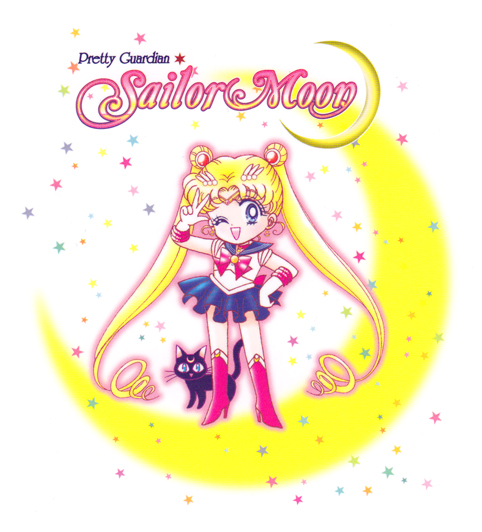
These questions form the core of why the manga Sailor Moon is so fascinating to me. A story about women, created by a woman, edited by a woman, written for a popular female audience, and enthusiastically embraced by an adult female fandom, Sailor Moon is an example of a homosocial female space in which women can talk about women and femininity without having to worry about what men are thinking.

Because the early volumes of the series are about young girls – and beautiful young girls (bishōjo) at that – their reception has not always been feminist-positive, however. For example, in his monograph Beautiful Fighting Girl, psychologist and cultural theorist Saitō Tamaki discusses the anime version of Sailor Moon as a prime example of why the “beautiful girl” trope appeals so much to men. In America, cinema scholar Susan Napier and anthropologist Anne Allison both take issue with the series, finding it a stale mash-up of tropes characteristic of the mahō shōjo (magical girl) genre as it has existed since the mid-seventies. Both scholars also view the anime series in particular as catering to a male audience eager for sexual titillation. Napier, for instance, finds the Sailor Scouts “lacking in psychological depth,” while Allison finds it troubling that the “girl heroes tend to strip down in the course of empowerment, becoming more, rather than less, identified by their flesh,” a trademark visual feature of Sailor Moon that “feeds and is fed by a general trend in Japan toward the infantilization of sex objects.”

Unfortunately, these evaluations do not take into account the female fans of the series, who seem to be less interested in the sexual aspects of the short-skirted female warriors and more eager to identify with the empowered femininity they represent. These fans are also willing to tolerate the weak characterization in the opening volumes of the series in order to enjoy the opportunities presented later in the story for the female heroes to develop their individual talents, personalities, and bonds with each other. In Sailor Moon, the female heroes begin as girls, but they gradually mature into capable and competent young women who must shoulder great responsibility and make difficult choices, usually without the support or interference of men.

To celebrate the recent North American release of a new translation of the Sailor Moon manga, an eighteen-year-old blogger on LiveJournal wrote of the series that:

[Sailor Moon] is a world where femininity is not something to be ashamed of, it’s the source of POWER. The girls don’t use their pretty clothes and jewels and compacts as playthings to impress men – these things are all weapons against evil, and powerful ones. They declare themSELVES pretty, needing approval from no one. Our hero possesses all the typical “chick” attributes – emotional, tearful, forgiving, loving, nurturing – and she uses these attributes to triumph and kick ass. She burns monsters alive with the purity of her love, sends out supersonic waves that shake the villains down when she bursts into tears, and her friendship and forgiveness is the most effective superpower one could ask for. The “girly” emotions and affectations are not something to be ashamed of or suppressed, but the source of the power these girls wield. They don’t have to imitate guy heroes at all or act “masculine” to be taken seriously – girliness is just as powerful.

Although someone like Saitō might see Sailor Moon as nothing more than a smorgasbord of tropes that can be endlessly combined and recombined to suit any male fetish, and although prominent critics such as Napier and Allison echo his reading, female readers find something entirely different in the series: they see a group of young women who fight not for the approval of a father or a boyfriend (or a male reader), but rather to achieve their own goals and ambitions. Moreover, they learn that being female isn’t something to be ashamed of; and, according to later developments in the series, neither is homosexuality or a transgendered identity.

Far from regurgitating the tropes of the magical girl genre, Sailor Moon creator Takeuchi Naoko overturned the conventions of both shōjo romance for girls and bishōjo fantasy for boys. Furthermore, the female fans of Sailor Moon aren’t invested in the series merely in order to lose themselves in fantasy (and spin-off merchandise), but rather because they find that the series empowers them to combat real-world problems directly related to the assumption that young women and the femininity associated with them exist only to please men. The fantasy created by Sailor Moon is not an escape from the gendered conventions and restrictions of reality, but rather a safe space in which these aspects of reality can be tested and challenged. Perhaps this is why Sailor Moon has appealed to so many women outside of its target demographic, and perhaps this is why it has appealed to so many boys and men as well.

If you haven’t read Sailor Moon, the Kodansha Comics re-release is beautifully published and contains a wealth of translation and cultural notes that help make sense of the story and characters. The first two or three volumes of the series can come off as a bit childish; but, as the characters grow and mature, the story does as well. If you’re a girl or a guy, or if you’re a serious manga reader or don’t read many manga at all, Sailor Moon is worth reading simply for the experience of entering a world in which femininity is indeed ” is not something to be ashamed of” but instead “the source of POWER.” The manga is also an excellent introduction to an alternative realm of discourse (common in Japanese manga and spreading to Western comics – partially due to the influence of Sailor Moon) in which female writers and artists can tell their own stories without really worrying about how men are reading and looking at them.

If you’re intrigued, check out the Sailor Moon Manga Moveable Feast hosted by Sean Gaffney’s at A Case Suitable for Treatment over on Manga Bookshelf.
Schoolgirl

Title: Schoolgirl
Japanese Title: 女生徒 (Joseito)
Author: Dazai Osamu (太宰 治)
Translator: Allison Markin Powell
Year Published: 2011 (America); 1939 (Japan)
Publisher: One Peace Books
Pages: 94

At the beginning of an essay on Yoshimoto Banana, Ann Sherif quotes the Japanese psychiatrist Machizawa Shizuo as saying that he despairs of the darkness in Japanese literature, as people come into his office clutching books by Dazai Osamu and saying, “This is exactly how I feel. I’m sorry that I was born.”

Dazai’s work is pretty dark. However, for all the young men who have lived “lives full of shame” (a sentiment expressed in the opening line of No Longer Human, generally considered to be Dazai’s defining work) there are apparently hordes of schoolgirls who visit the author’s grave on the anniversary of his death to offer flowers and prayers. I never really understood why this would be so (most of Dazai’s narrators are abusive pigs); but, having read Schoolgirl, I think I’m starting to get it.

Schoolgirl is an uninterrupted stream-of-consciousness monologue by a bourgeois high school student who has lost her father and lives alone with her mother. The girl rambles from topic to topic, stating strong feelings in one paragraph (I hate my mom!) and then contradicting them in the next (I actually love my mom!). She talks about her best friend (whom she hates – or not), the other women she sees on the bus (whom she hates – or not), the people who come over for dinner (whom she hates – or not), and the prospect of getting married (which she hates – or not). She also meanders through mundane topics such as her dogs, movies she likes, her teacher, and the garden around her house. More than anything else, though, she subject she repeatedly returns to is that of her feelings regarding herself. The narrator of Schoolgirl describes herself with the self-loathing characteristic of all Dazai narrators:

In my heart, I worry about Mother and want to be a good daughter, but my words and actions are nothing more than that of a spoiled child. And lately, there hadn’t been a single redeeming quality about this childlike me. Only impurity and shamefulness. I go about saying how pained and tormented, how lonely and sad I feel, but what do I really mean by that? If I were to speak the truth, I would die.

Her descriptions of herself tend to be a bit dramatic, but I guess she is a teenage girl. In fact, Dazai uses the narrator’s identity as a teenage girl in order to make general third-person and first-person-plural statements about young people. Sometimes these statements are a bit strange for the narrator herself to make (such as when she says, “What a girl likes and what she hates seems rather arbitrary to me”). Generally, though, Dazai uses the relatively marginal social position of the teenage girl to make rebellious manifestos of the My Generation variety. Where the narrator’s “girliness” really takes off, however, is in her flights of fancy. For example:

Mother used this parasol long ago, when she first got married. I felt quite proud for finding this interesting umbrella. When I carried this one, it made me feel like strolling through the streets of Paris. I thought that a dreamy antique parasol like this would go into style when this war ends. It would look great with a bonnet-style hat. Wearing a long pink-hemmed kimono with a wide open collar, with black lace gloves and a beautiful violet tucked into that large, wide-brimmed hat. And when everything was lush and green I’d go to lunch in a Parisian restaurant. Resting my cheek lightly in my hand, I’d wistfully gaze at the passerby outside and then, someone would gently tap me on the shoulder. Suddenly there would be music, the rose waltz. Oh, how amusing. In reality, it was just an odd, tattered umbrella with a spindly handle.

Another flight of fancy I enjoyed was the narrator’s description of her “Rococo cooking,” which is enjoyable and meaningful for her but apparently not fully appreciated by all of the ugly, stupid, and boring adults in her life. As insecure as the narrator is in her identity and her relationship to other people, however, she can always find refuge in her fantasies of luxury and glamour of an ahistorical European origin. “I’m Cinderella without her prince,” the narrator says at the end of the novella. “Do you know where to find me in Tokyo?”

Despite her petulant grumpiness, the narrator of Schoolgirl reminds me less of the tortured youths of novels like No Longer Human and The Setting Sun and more of the narrative voice of the Gothic Lolita poster child Ryūgasaki Momoko from Takemoto Nobara’s 2002 novel Kamikaze Girls. In fact, reading Schoolgirl felt a bit like reading one of the longer essays (perhaps by someone like Miyavi) from the Gothic & Lolita Bible. In Schoolgirl, as in Lolita fashion cultures, a certain world weariness and disgust towards adult society is mixed with a self-consciously artificial desire to maintain one’s innocence and emotional purity through a beautiful and delicate fantasy enacted through clothing, cooking, visual imagery, and music.

Of course, the Gothic Lolita mindset inspired in part by the narrative style of Schoolgirl is only one facet of the novella, which glitters like a diamond from any way you choose look at it. Schoolgirl might be used to demonstrate how premodern poetic nature imagery made its way its modern literature, or how the early Shōwa period was not all about fascism and conquest, or how “modern girls” viewed the West as a site of cultural maturity and longing, or how the complexities of the mother-daughter relationship shape the development of teenage girls – or even how male authors use transgender narration to escape the confines of literary conventions. Despite its relative brevity, Schoolgirl is fascinating and can be approached from a variety of angles by a wide range of readers. I can’t think of a single person to whom I wouldn’t recommend this novella.

Schoolgirl is published by One Peace Books, a small indie press that readers of contemporary Japanese literature in translation should keep an eye on. One Peace has published translations of two amazing manga, Tenken and Breathe Deeply, that should already be on the radar of serious and mature manga fans. They’ve also published two illustrated children’s books and a handful of inspirational books, such as Treedom and Shift. If the high publishing quality of Schoolgirl (and the small number of their other titles I have in my possession) is any indication, One Peace Books puts a great deal of attention and care into their non-conventional yet highly interesting catalog. Go check them out!

Review copy of Schoolgirl provided by One Peace Books.

Ico: Castle in the Mist

Title: Ico: Castle in the Mist
Japanese Title: イコ:霧の城 (Iko: Kiri no shiro)
Author: Miyabe Miyuki (宮部 みゆき)
Translator: Alexander O. Smith
Publication Year: 2011 (America); 2004 (Japan)
Publisher: Haikasoru
Pages: 400

When people complain about sexism in video games, they’re not complaining just to start a fight or to prove that they’re on the right side of the social justice movement. The sexism in many games is not only unnecessary but also detracts from the player’s enjoyment of the game. For example, when I played the original Tomb Raider game for the Playstation, I remember being frustrated at Lara’s inability to navigate certain terrain and thinking this wouldn’t be a problem if she were wearing pants. A better example might be Metroid: Other M, in which your female player-character (a veteran soldier who has already saved the world multiple times) can’t use even the most insignificant of her abilities until given permission to do so by her male commanding officer in a gameplay paradigm that has to be one of the most frustrating I have ever encountered. This sort of sexism is dangerous precisely because it is so frustrating. Instead of hating the (male) developers who imposed such ridiculous limitations on the female protagonist, the player’s frustration at these limitations instead causes him to hate the female protagonist herself.

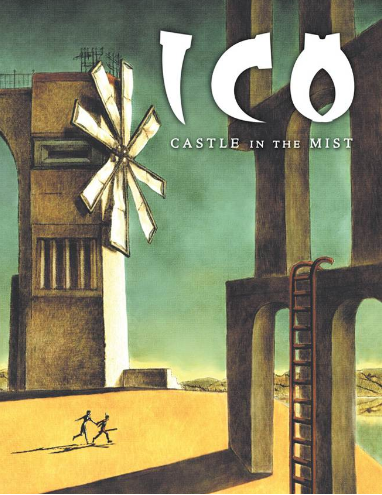
It is for this reason that I despise Ico: Castle in the Mist, a short puzzle platformer released for the Playstation 2 in 2004 that was received with almost universal acclaim. In this game, you are Ico, a boy with mysterious horns who is mysteriously dumped in a mysterious castle in which he mysteriously encounters a mysterious young woman named Yorda. As Ico, your job is to find your way out of the castle while simultaneously rescuing Yorda. Considering that Yorda (a) has lived in the castle for a very long time and (b) is magic, this shouldn’t be too difficult of a feat. Unfortunately, Yorda also (c) either can’t or won’t communicate with Ico and (d) is almost entirely passive. Ico quite literally must lug Yorda around like an inarticulate sack of meat, and the main challenge of the game is not for Ico to navigate his way through the castle but rather for Ico to bully and cajole Yorda over and around obstacles while she remains both vulnerable and inscrutable. If the player, as Ico, wanders off on his own for a moment, Yorda is besieged by shadow monsters that she will not attempt to ward off or escape in any way. Ico is a truly beautiful game that creates a hauntingly atmospheric experience through its graphics, music, and gameplay, but it is difficult to make it through the game’s roughly eight hour playtime without hurling obscenities at Yorda for being so useless. Sexism is thus built into the gameplay mechanics, and I remember thinking that Ico would have been a lot more fun if Yorda had actually done something instead of passively allowing herself to be rescued by a younger male hero.

When I heard that the novelization of Ico would be released in North America, I was really excited. I thought that Miyabe Miyuki, who writes about awesome female detectives and manages to create a strong yet believable female protagonist in The Book of Heroes, would be able to do something interesting with Yorda, or at least to make her more of a subject than an object. Thankfully, she succeeds – at least to an extent.

Like the game on which it’s based, Miyabe’s novelization is the story of Ico, a thirteen-year-old boy with horns who is exiled from his village and dumped at the Castle in the Mist by a group of soldiers. In the otherwise empty castle Ico finds Yorda, who is suspended in a hanging cage covered by thorns. Ico wakes Yorda and then extracts her from her cage, resolving to rescue her from her imprisonment in the castle. Yorda doesn’t speak Ico’s language and in any case doesn’t seem particularly interested in communicating with him, but her touch can open certain magical doors through which Ico needs to pass. Furthermore, Ico’s body is filled with light and energy whenever he holds Yorda’s hand, so he quickly develops an attachment to her.

As Ico and Yorda progress through the castle, Ico begins to see Yorda’s memories of her life before the castle was reduced to its current state. Through these memories, it becomes clear that Yorda’s mother, the queen of the castle, is the “daughter” of the Dark God. In ages past, Yorda’s mother used her power to keep outsiders away from her kingdom, mainly by turning them into stone. She also kept her own people within her country’s borders by means of an enchantment that kept their hearts and minds peaceful. Convinced that other nations coveted the beauty, wealth, and material prosperity of her kingdom, Yorda’s mother would hold a tournament every three years to bring the world’s mightiest warriors into her castle to compete for glory. The winner of these tournaments would teach the latest military technology to her soldiers – and then secretly be turned to stone. The tournament of Yorda’s sixteenth year brought a horned warrior, a servant of the Light God, to the tournament, and his interactions with Yorda led the kingdom to its current state of timeless abandonment. Ico’s job is thus to unravel the mysteries of the past in order to ascertain how to defeat the queen once and for all, after which he will presumably be able to escape with Yorda in tow.

Miyabe’s novel is divided into four parts. The first part details Ico’s life before he was taken to the castle and thereby provides information concerning the greater world in which the story takes place. The second part describes Ico’s adventures in the castle before Yorda begins communicating with him through her memories. The third part tells the history of the castle from Yorda’s perspective, and the fourth part follows Ico through his final confrontation with the evil queen. As Miyabe jokes in her introduction, her novelization isn’t meant to be a walkthrough for the game, and the first and third sections are almost entirely her own invention. Miyabe adds layers of depth to game’s characters and creates a handful of her own characters, who manage to be interesting and engaging despite only being onstage for small portions of the novel. Miyabe also renders the ending of the story slightly less ambiguous.

This is all well and good, but how does a puzzle platforming game translate into prose? Mainly, I suppose, in the way one might expect, though descriptive passages:

The thought put Ico at ease. Maybe if we can get down to those doors, we can get outside. The only problem was, there didn’t seem to be any way to get from the top of the bridge on the second floor down to the floor of the great hall. What stairs he could see went up to the ceiling, not down to the floor below, forming a sort of catwalk that seemed without purpose.

Besides such descriptions of setting, there is also a great deal of running, jumping, climbing, flailing at shadow monsters with a stick, and holding Yorda’s hand.

If the reader can successfully visualize what Miyabe is describing, then her descriptive passages, which form the bulk of the two sections from Ico’s perspective, create a sense of adventure and awe. If the reader is too engrossed in figuring out the mysteries of the castle to slow down and mentally picture the landscape Miyabe is describing, then these passages can come off as clunky and annoying. My sympathies tend to lie with the latter reader, especially if that reader has never played the game; trying to describe the visual aesthetics of the Castle in the Mist is like trying to describe an Escher painting. The game Ico is all about the atmosphere created by its visual and auditory elements, and a purely textual medium will never be able to capture that atmosphere, no matter how hard it tries.

What text can do, and what text can do well, is characterization, and it seems to me that the lion’s share of the game’s atmosphere is conveyed in the novel by Ico’s perceptions of and interactions with Yorda. Just as the castle is architecturally majestic and full of mysteries, Yorda is physically beautiful and conceals secrets upon secrets beneath her silent exterior. For example:

Ico glanced at her. She did not look sad or even frightened. Nor did she smile or seem engaged with the world around her at all. Though she was right next to him, and he could look directly into her face, he felt like she was standing on the other side of a veil.

Here’s another example:

The girl turned to him and to his surprise, she smiled faintly. She’s beautiful. He thought her smile looked like a flower in full bloom, swaying gently in a forest breeze, sending its petals out to drift on the wind. He could almost smell the flower’s perfume on her breath.

Here’s yet another example:

Filled with hope, Ico looked into Yorda’s eyes. He felt like he was looking into an hourglass, trying to pick through the grains of truth buried there long ago. He hadn’t found anything yet, but the warmth of Yorda’s hands in his told him that he was getting close.

Yorda is thus delicate and mysterious, and her main function as a character is to reflect the emotions Ico projects onto her. Because this novel is a work of young adult fiction, Ico is exceptionally pure of heart, and – perhaps as a result – Yorda is as well. What Ico is about, at its core, is the bravery of two children challenging the old, the impure, and the monstrous. For me, the main problem with Ico and Yorda is that, although purity of heart is inspiring, it is also somewhat boring. The evil queen is far more interesting. At a certain point I stopped caring about Ico and his youthful hope and good intentions and started waiting for the next appearance of the queen, who is the only halfway intelligent and rational character in the entire novel.

For example, unlike Ico’s caretakers, who tell him nothing, the queen respects her daughter enough to explain to her what she is doing and her motivation for doing it. The queen’s explanations are always pragmatic and hint at a lifetime of experience. The following passage, for example, is how the queen justifies to Yorda why the two of them never leave the castle:

“Beauty is a high and noble thing. Thus are men enchanted by it and seek it out. But those who desire you also desire our lands. I must keep you hidden so that you do not entice or enchant them – because, my dearest, while your beauty holds the power to command the actions of a few men, it does not bestow the ability to govern.

“It is the same for me. The land I govern is the most wealthy and beautiful of all the lands that divide this vast continent. They crave it, as they crave me. From their slavering jaws and their multifarious schemes have I escaped many times. All to protect myself and my beautiful domain, blessed by the Creator. You, who were born into the world as the lone daughter of the queen, have noble blood and noble beauty, thus must you bear my burdens.”

Judging from what happens in the rest of the novel (which I will not spoil), and judging from the way that Ico, his horned ancestor, and everyone in between has treated Yorda and her mother, the queen is not incorrect. Unfortunately, because the queen is a sexually mature and politically powerful older woman, she is EVIL and therefore cannot be reasoned with or redeemed but must be DEFEATED. The final battle between the queen and Ico is somewhat disappointing, as the queen is made to lay aside her primary weapons – her intelligence and wit – in order to fight boss-battle style with attacks that are easily deflected in a room filled with obstacles that deflect them.

The moral of the story seems to be that inarticulate yet delicately beautiful and innocent younger women are good (for men) and that brilliant and powerful mature women are EVIL (to men).

At least, that is the moral of the second and fourth sections of the novel, which are told from Ico’s perspective and closely follow the plot of the video game. The first and third sections are much more interesting and open-ended. The first section is, in my option, a superlatively excellent example of fantasy world building that establishes setting, mythology, history, and worldview through its characters instead of in spite of them. The third section, which is told from Yorda’s perspective, is an almost archetypal story of innocence awakening to experience as Yorda begins to question and investigate the world around while realizing the consequences of her own actions on the lives of others. By the end of the third section, Yorda has become a powerful queen in her own right…

…before we switch back to Ico’s perspective, in which Yorda is a helpless and naive young girl once more. Although this is jarring, it is also necessary. The game Ico is so deeply sexist that, in order for Miyabe to subvert this misogyny, she would have to abandon her goal of novelization. If Yorda were an active agent and not a passive victim, the events leading up to the final battle and the battle itself would not be possible. Good must triumph over evil in a decisive showdown; and, as everyone who has ever played a video game knows, such a task is the man’s job. This is why I complain about I sexism. Not only is it frustrating and unnecessary; it also tends to diminish from the overall quality of the work in which it appears.

Despite all this, Ico is a fun read. Miyabe is a good writer, and Smith has produced an excellent translation (as always). The plot and character conventions are fairly characteristic of mainstream young adult fiction, and I can imagine that younger readers would really enjoy this book, which is exactly the right length and complexity for the 7-12 demographic. It goes without saying that fans of the game will love the novelization, which does its very best to convey everything that was fun and intriguing about the original work. Fans of video games in general might also enjoy the book, which is an interesting experiment in adaptation. As for adult readers who are looking for archetypes represented in a deep and multilayered fantasy, however, I think there are much better books to spend an afternoon reading.

Tokyo on Foot

Title: Tokyo on Foot
Author/Artist: Florent Chavouet
Publication Year: 2011
Publisher: Tuttle
Pages: 206

While I was in New York City for the New York Comic Con last weekend, I met a friend of mine for lunch. Accompanying her was her new fiancé, a really cool guy who’s lived and traveled all over Asia. All over Asia except for Japan, that is. He said that, based on the Japanese movies he’s seen, he’s a bit afraid of Tokyo. It seems too big, and too modern, and too noisy – hyperkinetic and almost like science fiction. I asked him what Japanese movies he’s seen. Akira and Lost in Translation, he told me.

I think that, for a lot of people who are familiar with Japan but haven’t actually been there, Japan exists not as a real place where real people live but rather as some sort of strange and exotic fantasy land called “Japan.” For some people, “Japan” consists of towering skyscrapers and flashing lights and all-night karaoke rooms, while for some people “Japan” is all about green mountains and cherry blossoms and Zen temples and tea houses. There is a touch of good old fashioned Orientalism at play here; but, then again, Japan actively markets itself in such a way as to encourage these assumptions, even domestically. Furthermore, the fantasy of “Japan” is perhaps not so fantastical – places like the 109 Building in Shibuya and the Philosopher’s Path in Kyoto really do exist.

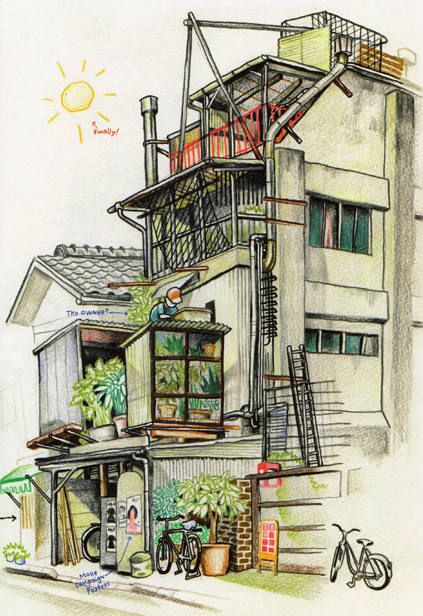
In the end, though, Japan is a real place where real people live, and it’s not any more beautiful or ugly or modern or rural than, say, New Jersey. What I love about Florent Chavouet’s Tokyo on Foot is that it visually depicts Tokyo as a real city with many, many faces. Yes, there are huge buildings and busy intersections in West Shinjuku, but there are also tiny restaurants and old houses on the verge of falling apart in West Ikebukuro. And then there’s everything in between, from architectural oddities in Ueno to cute little bars in Daikanyama to Shintō shrines nestled between skyscrapers in Takadanobaba. Chavouet draws them all beautifully.

Tokyo on Foot is divided into neighborhoods, with each section opening with a drawing of the local kōban (police station) and a highly detailed annotated map. What follows this map are several pages of drawings of buildings, street corners, storefronts, landmarks, and occasionally people that the artist observed in the neighborhood. Most of these drawings occupy a full page, and all of them are in high-contrast full color. Chavouet’s drawings of people are caricatured, and his drawings of buildings and objects are almost photorealistic, but all of his subjects receive the same careful attention to detail. Chavouet’s medium of choice is colored pencils, and his pencil work really brings out the colors and textures of everything he draws. Really, it’s gorgeous.

Chavouet often accompanies his sketches with annotations. He’ll make small notes concerning the weather, how he got to a certain location, and what interactions he had with the people who watched him drawing. He’ll also include small cultural details, like the fact the Mr. Donuts offers free coffee refills. In each section, there is usually at least a page or two of smaller sketches illustrating concepts like the vast insect population of Tokyo or how to make a disco lamp using cheap materials from Tokyu Hands (“like Target, only better”). There is occasionally political commentary as well, such as when the artist draws the heads of conservative male politicians attached to the bodies of young women in bikinis or mocks the nonsense spewed by the right wing campaign trucks that tour the streets of Tokyo (“Down with kisses and TLC, long live war and mean people”). In a scattered and roundabout manner, Chavouet also turns a satirical eye on the police officers who repeatedly harassed him for parking his bike in the wrong place and/or loitering (in other words, staying in one place long enough to draw it).

What Chavouet draws is a Tokyo that isn’t some futuristic (or idyllic) alien city but rather a city where people live, work, drink, smoke, have trouble finding parking, chill out in coffee shops to get out of the rain, hang out with their friends, sometimes act like assholes or creeps in public, take lunch breaks in the park, and all the other things people do in a huge urban area filled with millions of people. Through his pencil work, Chavouet depicts the beauty of the monumental, the grimy, the quaint, and the pedestrian. Rows of potted plants outside of someone’s house in a small back alley just behind a major train station can be just as calming and peaceful as a painstakingly manicured Zen garden, and telephone poles covered in posters can be just as awe-inspiring as Corinthian columns.

I can’t wrap my head around how much I love this book. Get this book for yourself. Get this book for your hipster art school friends. Get this book for your mom who doesn’t understand why you care about Japan in the first place. And get this book for your friend’s fiancé who thinks Japan is exactly like Akira. At least, that’s what I plan on doing.

Snow Country

Title: Snow Country
Japanese Title: 雪国 (Yukiguni)
Author: Kawabata Yasunari (川端 康成)
Translator: Edward G. Seidensticker
Publication Year: 1956 (America); 1947 (Japan)
Publisher: Vintage International
Pages: 175

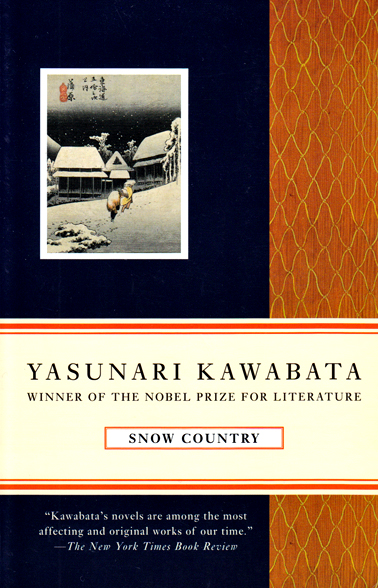
Snow Country won the Nobel Prize for Literature in 1968, a year which serves as a convenient temporal marker for the changing perception of Japan in the collective consciousness of the Western world. The postwar American occupation of Japan had ended fifteen years prior, and many of the American G.I. officers returned home from the country with the knowledge and motivation to create Japanese Studies departments in American universities like Columbia and Harvard. With their classes and translations came a new respect for the Japan of the twentieth century among academic circles. Meanwhile, Japan itself had risen from the ashes of wartime devastation and had begun to enter an era of double-digit GNP growth. The city of Tokyo had hosted the Summer Olympics in 1964; and, with the ultra-modern Tokyo Dome stadium and high speed bullet train between Tokyo and Kyoto, Japan was able to prove itself the technological and economic equal of any country in the world. The Nobel Committee thus awarded its literary prize to Kawabata for reasons that were partially political, as they would to many candidates over the following four decades. As with these other laureates, however, Kawabata did not win the world’s foremost award for literary distinction for political reasons alone.

According to academic lore, Kawabata’s candidacy was largely a result of Edward Seidensticker’s translation of Snow Country. Snow Country is an aesthetically magnificent book, and Seidensticker was able to do justice to Kawabata’s subtle and poetically resonant prose with his English translation. We are of course lucky that Seidensticker’s translation is so masterful; but, even if it had been merely adequate, the relatively early introduction of a translation into English would still have gained Kawabata a prominent position in the field of international literature. American and European prose writers and poets had cultivated a love affair with haiku and the Japanese aesthetic principals often associated with Zen Buddhism, and Snow Country delivered such “Japanese” sensibilities by the bucket load. In many contemporary reviews of the novel, Kawabata’s prose is repeatedly praised as being delicate and “haiku-like.”

As a prominent member of a literary group called the “New Sensationalist School” (新感覚派), Kawabata was interested in representing the various sensory stimuli of modern life in his writing. Earlier in his career, this interest lead to novels such as The Scarlet Gang of Asakusa, a loosely-structured work that pulls together various bits of urban ephemera, such as newspaper articles, playbills, advertising posters, and overheard conversations. In Snow Country, however, Kawabata turns his keen gaze on a small mountain village in the “snow country” of Niigata prefecture, a region on the west side of the Japan Alps that is referred to as such due to its heavy winter precipitation. Along with luxuriant snowfall, the words “snow country” conjure up images of ski vacations, deliciously warm hot springs, high-quality saké brewed with snowmelt runoff waters, and small, traditional inns catering to all of the fall and winter tourists. To men of a certain generation, the snow country is also associated with the geisha who service these tourists. Unlike the artistically skilled geisha of urban areas such as Kyoto, these “hot springs geisha” are known for using their minimal training in music and dance as a cover for more intimate performances.

Snow Country is about a man named Shimamura who travels to the snow country to meet a hot springs geisha named Komako. The novel begins during Shimamura’s second trip to Niigata as his train emerges from a mountain tunnel into the open air:

The train came out of the long tunnel into the snow country. The earth lay white under the night sky.

This is one of the most famous opening passages in Japanese literature. In the original language, when Shimamura’s train emerges from the long tunnel, he crosses a kokkyō (国境), or a border between countries, and, as he does so, “the bottom of the night becomes white” (yoru no soko ga shiroku natta). It is such terse and powerful descriptions that American critics have described as “haiku-like,” thus connecting Kawabata with premodern poets such as Bashō and Issa.

As I mentioned earlier, however, Kawabata’s New Sensationalist School was interested in describing the sensations of the modern era – thus the emphasis on “New.” Premodern poetry was no longer enough to describe the modern landscape, even in a place like the snow country. The New Sensationalists thus incorporated the methods of photography and cinematography into their writing. For example, while Shimamura is still on the train going deeper into the snow country, he watches the image of a woman reflected on the surface of his window.

In the depths of the mirror the evening landscape moved by, the mirror and the reflected figures like motion pictures superimposed one on the other. The figures and the background were unrelated, and yet the figures, transparent and intangible, and the background, dim in the gathering darkness, melted together into a sort of symbolic world not of this world. Particularly when a light out in the mountains shone in the center of the girl’s face, Shimamura felt his chest rise at the inexpressible beauty of it.

Not only is Kawabata referencing movies directly both in his description of the scene and in his play on light and mirrors and unreal images, but he’s also obliquely referencing the modern state of being overwhelmed with sensory input. On another level, by having Shimamura watch himself watching the reflection of a woman instead of directly addressing her, Kawabata hints at the fractured nature of the modern self, which, despite having finally developed a modern ego, is now mediated through various technologies. It would take some time to fully unpack this passage, but what I am trying to get at is that, instead of thinking of Kawabata as the successor to some mystical Zen poetic tradition, it’s useful to understand the author as looking through the modern lens of a camera, both in his still frames and in his tracking shots.

If a haiku is supposed to capture the “thusness” of a single moment, for instance, Kawabata instead uses his descriptive passages in the way that a movie director might use an establishing shot, namely, to suggest things about his characters that can’t otherwise be established in the absence of devices like narratorial exposition. In showing the reader an image of the house where the geisha Komako lives, Kawabata is essentially showing us Komako herself:

To the right was a small field, and to the left persimmon trees stood along the wall that marked off the neighboring plot. There seemed to be a flower garden in front of the house, and red carp were swimming in the little lotus pond. The ice had been broken away and lay piled along the bank. The house was old and decayed, like the pitted trunk of a persimmon. There were patches of snow on the roof, the rafters of which sagged to draw a wavy line at the eaves.

What the reader is supposed to understand from this description, especially as it is combined with Komako’s behavior and dialog, is that, although Komako tries to be bright and cheerful, there is something about her that is wasted and neglected as a hot springs geisha out in the rural snow country. Such a passage might indeed be “haiku-like” – but, then again, it is also intensely cinematic.

In Snow Country, Kawabata is writing about “traditional” Japan using “traditional” nature imagery, but he is also fully aware of the modern world and its literary devices, which include notions of dramatic structure, character psychology, and withholding information from the reader in order to force her to draw her own connections. It goes without saying that Kawabata was familiar with the canon of premodern Buddhist poetry, but he was equally familiar with the great novels of English, French, and Russian literature, as well as the cinematic auteurs of the early twentieth century.

It is also interesting to note that the majority of Snow Country was serialized between 1937 and 1941, a period of time in which writers, artists, and other intellectuals were indiscriminately jailed if they expressed even a hint of dissatisfaction with the fascist regime. By writing about geisha in the snow country, Kawabata could escape the attention of government censors. Yet, by not writing about the war – not a single mention of the Japanese state and its military action appears in the novel – Kawabata is, in a sense, resisting it by turning his back on it. Furthermore, when Japan does appear by association in the novel, it is not a healthy country. Shimamura, the modern dilettante who writes essays about Western ballet (which he has never actually seen), possess both wealth and power but refuses to do anything useful with it. Komako, an intelligent and essentially kind-hearted young woman with a glimmer of undeveloped talent, is pushed from male patron to male patron while rotting away in the heart of “traditional” Japan. Although Snow Country is unarguably an extraordinarily beautiful novel, its themes of waste and the contrast between hardship and indolence can be seen as a veiled commentary on the state of the nation during the opening years of the Pacific War, which director Toyoda Shirō subtly yet unmistakably drew out in his 1957 film version of the novel.

I think Snow Country is a fascinating novel. To dismiss it as a vaguely misogynistic, somehow Zen-like pastiche of auto-Orientalizing imagery is to do it a disservice. After all, Kawabata won the Nobel Prize for a reason. Snow Country is a pleasure to read, and it’s a pleasure to think about and discuss, which is probably the reason it’s assigned so often in “world literature” classes. As with all modern and contemporary Japanese literature, however, I have to insist that Snow Country be read as “literature” before it is read as “Japanese.”

Fires on the Plain

Title: Fires on the Plain
Japanese Title: 野火 (Nobi)
Author: Ōoka Shōhei (大岡 昇平)
Translator: Ivan Morris
Publication Year: 1957 (America); 1951 (Japan)
Publisher: Tuttle
Pages: 246

The Pacific War is an uncomfortable subject for me. I don’t like war, and I don’t like watching movies about war, and I don’t like reading about war – especially the Pacific War. I’m also not entirely comfortable recommending a book written about the Pacific War. However, a friend of mine recently confided in me that he’s working on a novel about a Japanese soldier on a small island in the Pacific. The novel would have swords, he told me, and survival, and brilliant military strategies, and cherry blossoms. At the end of his novel, everyone would die a glorious and noble death.

I told my friend to go read Fires on the Plain.

Fires on the Plain is about a soldier named Tamura who is stationed on Leyte, an island in the Philippines. Ōoka himself was drafted and sent to Leyte in 1944, so one can plausibly assume that the novel is somewhat based on the author’s experiences. What distinguishes Fires on the Plain from many other Japanese fictional accounts of the war, however, is that it is not written in the style of proletarian literature or the semi-autobiographical shishōsetsu (“I-novels). Before he was drafted, Ōoka worked at a Franco-Japanese translation agency while working on his own translations of French literature. Far from being preachy or moralistic, Fires on the Plain is a tightly structured psychological novel written in the style of nineteenth-century French novelists such as Stendhal, Ōoka’s favorite author.

Fires on the Plain focuses on the psychological and emotional struggles of Tamura as the soldier is kicked out of his unit, sets off on his own, later rejoins the scattered remnants of the Japanese army still on the island, and then struggles for survival in the company of two men who have turned to cannibalism in order to stay alive. During his time on Leyte, Tamura ponders the nature of humanity, the relationship between God and man, and the workings of free will in the face of an almost certain fate. His primary concern, and the primary concern of every character that appears in the novel, however, is hunger. How long can you live on a handful of potatoes? How can you procure food from the native islanders without getting killed? Where can you find salt? What do you do after all the food is gone? Aside from the ranting of one half-dead and half-crazed man who appears towards the end of the novel, the glory of the Emperor and the nation of Japan have no place in the consciousness of Tamura and his fellow soldiers.

Because the story is recounted by a starving, traumatized, and unreliable narrator, there is little thematic closure in the novel. That being said, there are some lovely descriptive passages reflecting the beautiful tropic setting of the island:

The sun gleamed on the river’s surface, and clouds scudded across the dazzling sky to disappear over the mountain peaks. On the sloping banks of the river bamboos grew luxuriantly, their green leaves wafted by the breeze. Driftwood, which remains from the floods of the rainy season, lay drying on the sand and pebbles of the river’s edge. Now and then the water would strike the banks capriciously, or form deep pools, or spread out into frothy rapids. In the evenings by the shadows of the pools I could hear the river deer cry as they came down to drink, and at dawn the turtledoves cooed high on the river bank.

There are also harrowing passages describing the horrors of war:

How could I have failed to notice the objects lying at the foot of those steps – objects that must have been in my field of vision for some time? My sense of perception must have already changed during the weeks since I had left my company. Clearly the link between my consciousness and the outer world was greatly attenuated. A solitary alien in an enemy land, I had by this time come to notice only objects that warned me of immediate danger, or, as in this case, objects on which I literally stumbled.

I thought of them as “objects” though some might call them “people.” In one sense, to be sure, they were people, but their bodies had already become dehumanized objects. What lay below those steps were corpses.

Having been corpses for some time, they had lost all the individual conformations of their past lives. Only their army trousers revealed some slight trace of the time when their owners had belonged to humankind; yet even these were so discolored by mud and carrion slime that they no longer seemed like human clothing and were, indeed, barely distinguishable from the surrounding earth.

In the end, though, having been abandoned on Leyte and left to fend for himself during the closing days of the Pacific War, and having witnessed death and killed people himself, and having starved and eaten the flesh of his fellow soldiers, Tamura is no closer to solving the great mysteries of life than he was when at the beginning of the novel. The confusion of the narrator becomes the confusion of the reader; and, despite its brilliant imagery and powerful symbolism, it is difficult to draw any clear philosophical message from the novel – besides the painfully obvious.

Anyone interested in the Pacific War in any capacity should read Fires on the Plain. Ōoka demonstrates that the reality of the war was anything but honorable and glorious, but he does so through the vehicle of a disturbing yet highly readable novel that feels no need to shove its “war is evil” message into the reader’s face.

The Restaurant of Love Regained

Title: The Restaurant of Love Regained
Japanese Title: 食堂かたつむり (Shokudō Katatsumuri)
Author: Ogawa Ito (小川 糸)
Translator: David Karashima
Publication Year: 2011 (United Kingdom); 2008 (Japan)
Publisher: Alma Books
Pages: 193

The ad copy on the back cover of The Restaurant of Love Regained proclaims the book to be “for all fans of Kitchen by Banana Yoshimoto.” I think the comparison between the two books is apt. Both novels are short and fluffy stories of young women who attempt to ameliorate the pain caused by a recent loss through cooking. Both are meant to have a calming and healing effect on the reader. And finally, depending on the reader, the prose of both novels is either refreshingly light and bubbly or infuriatingly infantile. Before you read the rest of this review, you might first want to ascertain how Ogawa’s writing style affects you:

My dream of having my own place was now within reach. Things were still hard work, though. I still trod in [my pet pig]’s droppings at least once a day. I still had chestnuts falling on my head. And I still kept tripping over pebbles along the mountain paths and almost falling flat on my face. But the number of moments that filled my heart with joy far outnumbered those I’d felt while living in the city. Even the tiniest little thing had the power to make me feel happy. Like turning over a beetle struggling on its back and watching it walk away. Like feeling the warmth of a freshly laid egg against my cheek. Like seeing a droplet of water balance on a leaf’s surface, more beautiful than any diamond. Or like finding a Kinugasa mushroom at the entrance to the bamboo forest, carefully plucking it and taking it home to place in my miso soup, with its wonderful flavor and its underside as beautiful and intricate as hand-knitted lace. All of these things filled me with wonder and gratitude and made me want to kiss God on the cheek.

If you like this type of writing, the whole book is written like this. If you don’t like this type of writing, this whole book is written like this. Since the novel has apparently achieved “international bestseller status” and was even turned into a feature film, I suppose that enough people have found Ogawa’s prose charming. It struck me as both forced and superficial at times, and the overwrought analogies and smug statements of self-satisfaction that Ogawa tends to place at the end of her paragraphs occasionally made me cringe in second-hand embarrassment. It took me about thirty pages to get used to Ogawa’s writing; but, once I did, I started to enjoy the book for what it was: food porn. Ogawa’s narrator loves cooking, and she loves eating, and she talks about both incessantly. If nothing else, this novel will fill you with a powerful lust for food.

The Restaurant of Love Regained begins when its first person narrator, Rinko, returns to the apartment she shares with her boyfriend to find it empty. Everything – from her furniture to the food in the refrigerator to the money she had kept stashed away under her mattress – is gone. Since Rinko has neither a cell phone nor a debit card, she uses the last bit of money on her person to take a bus back to her rural hometown. Rinko had originally left this village as a teenager in order to get away from her mother, who works as a bar hostess. After moving to Tokyo and living with her grandmother for a few years, during which time she learned how to cook, Rinko started working at a Middle Eastern restaurant. She was planning on opening her own restaurant when she had saved enough money – or at least she was before her boyfriend absconded with all of her worldly possessions. The shock to Rinko is so great that she ends up losing her voice. Rinko thus can only communicate through writing, but this doesn’t stop her from convincing her mother to loan her enough money to open an “eatery” in the small mountain village where she now lives. Rinko names her eatery “The Snail” and decides to serve only one party of customers a day, a management strategy that will presumably allow her to put her entire heart and soul into each and every meal.

What follows this initial setup is an episodic series of stories about Rinko’s customers and the dishes she prepares for them. Through her cooking, Rinko brings couples and families together while healing sick pets and sick relationships. All of these stories have happy endings, and Ogawa seems to delight in detailing the ingredients and preparation of the food that makes these happy endings possible. Behind the fluffy chick lit and food porn, though, is the story of the complicated relationship between Rinko and her mother, which, in the end, gives the novel the kind of satisfying narrative closure that cannot be provided by erotic descriptions of crème fraiche alone. This mother-daughter relationship is also the only hint of character complexity in The Restaurant of Love Regained, which is otherwise entirely one-dimensional. If you happen to like that one dimension, though, you will love the novel. Ogawa’s formulaic prose and story patterns are enjoyable and relaxing, and her novel is a testament to culinary creativity.

… At least until the last forty-five pages. The first thirty pages of the novel’s closing sequence are grisly and horrific. In these pages, Rinko butchers her pet pig Hermes for her mother’s wedding reception. This process is described in hideously disturbing language. Nothing in the rest of the book will have prepared you for these scenes. Reading them is viscerally upsetting – it’s like biting into a sweet tropical fruit only to find that a many-legged creature has died there while its sickly white larva feast on the flesh of their mother.

Besides an older man named Kuma, who helps Rinko set up her restaurant, Hermes is Rinko’s only friend. Rinko variously describes the pig as her sister, her child, her foster mother, and her grandmother. Rinko has fed Hermes, slept beside Hermes, and taken care of Hermes when the pig was sick. Rinko celebrated her birthday with Hermes, and Rinko rang in the new year with only Hermes to share her joy. Rinko cried to Hermes when she was sad and tried out new recipes on Hermes when she was excited. Throughout the novel, Hermes has proven capable of a wide range of human emotions; and, in many ways, the pig is a more sympathetic character than Rinko herself.

It is therefore not a little upsetting when Rinko acquiesces to her mother’s request that she kill Hermes.

The end of the novel is composed of a series of scenes depicting Rinko preparing Hermes for her mother’s wedding reception dinner. The author uses cruelly precise language to explain everything from the fear in Hermes’s eyes when the pig realizes she will be killed, to the way the pig struggles against being lead to the slaughterhouse, to the pig’s panic and anger when she is strung upside-down from the ceiling, to the pig’s anguished cries when Rinko slits her throat, to the pig’s futile struggles as she slowly bleeds to death. This goes on for pages. What follows is a loving description of the instruments Rinko uses to skin, gut, and carve Harmes, as well as how these instruments cut and slice into the pig’s body. There is a lot of ripping and tearing and blood, which is all the more disturbing when coupled with Rinko’s tender prostrations of how precious Hermes is to her, and how Hermes is just like a child/sister/mother.

This book takes the preparation of food very seriously. However, whereas these food preparation scenes used to be innocent and appetizing…

The rice was cooked a little too soft for my liking, but that didn’t stop me from munching down several mouthfuls and imagining their energy rising from the bottom of my stomach; the energy had come from Kuma’s mother as I’m sure she prepared them with her heart, her soul and kind thoughts for us. So I wasn’t just eating rice. I was taking in her love.

…now they are cruel and disgusting:

Next, I said a final farewell to Hermes’s face and placed it in the middle of the work bench. I took a knife and cut off both ears, planning to use them in a salad. Then I cracked the head in two. As my knife went through her head, it let out a sound like a groan. I was surprised to see that her brain was a lot smaller than I’d expected, and with a different, pearl-like colour to it too.

Pretty gross, right? And this paragraph isn’t even the worst. That particular honor goes to the paragraph in which Rinko muses that Hermes was like a grandmother to her as she pulls out the pig’s intestines.

I think the point of these scenes is supposed to be that we should reflect on where our food comes from and respect the organisms that give their lives so that we may be nourished. In other words, I think the novel’s conclusion is supposed to be a joyous celebration of food and food cultures (oddly paired with a sense of sadness directed towards relationships that cannot last, such as Rinko’s relationship with her mother, who is dying of cancer). Unfortunately, the incestuous and cannibalistic overtones of the language used to describe this bloody and barbaric celebration cancel out any intended joy and thanksgiving. I am not a vegetarian, and I think pork bacon is delicious, but the slaughter and consumption of Hermes was too much even for me, especially since the one hundred and fifty pages proceeding it had lulled me into complacency with uncomplicated stories of delicious food and people being happy.

Such an ending could be interpreted in two ways. The first is that it is simply the incompetent icing on a cake of incompetent writing. The second is that Ogawa is a brilliant writer of subversive horror fiction who has been even more subtle in her project to shock and horrify her audience than director Miike Takashi was in a film like Audition. If we follow this second interpretation, Rinko’s one-dimensional personality takes on sinister overtones. In her mind, there is no distinction between food and family, and she finds just as much pleasure in the bloody butchering of flesh as she does in sipping imported hot chocolate. Such an interpretation, combined with the novel’s vaguely gothic setting, provides a chilling premonition of the grisly future of Rinko’s isolated restaurant in the mountains. Furthermore, what really happened to the lover who abandoned Rinko at the beginning of the novel?

Unfortunately, this second interpretation is somewhat improbable. What we have, then, is a novel about food that gets a little messy at the end. If you love food and can stomach an extended scene detailing the slaughter and butchering of a beloved pet for the sake of thematic closure, you can probably handle The Restaurant of Love Regained. You might even be glad you read it. If you’re looking for serious Literature-with-a-capital-L, an engaging plot, an interesting and multi-faceted cast of characters, and real human drama – or if you’re put out by the prospect of reading thirty pages of intense carnage – you should probably avoid this novel. Personally, I wish I could unread it.

Gate 7

Title: Gate 7
Artist: CLAMP
Publication Year: 2011
Publisher: Shūeisha
Pages: 180 (per volume)

There is a haiku by Bashō that goes something like “even in Kyoto, I miss Kyoto” (Kyō nite mo kyō natsukashi ya hototogisu). I love Kyoto, and I think I know what Bashō was talking about. Kyoto is a special place. The food is delicious, the city is filled with countless shrines and temples, all sorts of interesting historical stories happened in Kyoto, the tea and vegetables grown just outside of Kyoto are amazing, there’s a vibrant nightlife catering to the students who come to the city’s numerous universities, tons of artists and craftsmen make their homes in Kyoto, and the local sake is out of this world.

Almost every grade-school student in Japan gets dragged on a class trip to Kyoto at least once, and even adults make pilgrimages to Kyoto to see the sights (especially during the spring and fall, when the cherry blossoms and maple leaves are at their best). Since Kyoto is only about two hours away from Tokyo by bullet train, the city also has a reputation as a good place to go for romantic getaways and weekend partying. Kyoto is totally awesome, and almost everyone in Japan has been there at least once, so it’s always been surprising to me that there aren’t more manga set there. CLAMP’s new fantasy series Gate 7, however, is like a love song to the ancient capital.

Gate 7’s teenage protagonist, Takamoto Chikahito, is just as much in love with Kyoto as I am, but he has somehow managed to make it almost all the way up to high school without having ever been there. He saves up enough money to make a solo visit to see the sites; but, on his very first trip to a famous Kyoto shrine called Kitano Tenmangū, he is suddenly transported onto a magical battlefield. Chikahito witnesses a beautiful young warrior with an enormous sword defeat a strange creature before passing out. He wakes in a house near the shrine, where he is attended by the child, named Hana, and her two older companions, Sakura and Tachibana. Sakura, a kind-hearted and cheerful young man involved in the world of geisha and maiko, and Tachibana, a serious and sullen college student, discuss how strange it is that Chikahito was able to enter the magical realm. Tachibana then attempts to erase Chikahito’s memory but fails. In the final coup of strangeness, the androgynous Hana kisses Chikahito and tells him that s/he’ll be waiting.

At the beginning of the second chapter (actually the first chapter, as the previous chapter is considered a “prelude”), Chikahito has somehow been transferred to a high school in Kyoto. As soon as he gets off the train that has brought him to the city, he sets off for a famous soba restaurant, where by chance he encounters Hana, who is as happy to see him as s/he is to eat bowl after bowl of noodles. Chikahito is soon dragged into another magical fight with Hana, in which it is revealed that all creatures are affiliated with either light (陽) or darkness (陰). Sakura is affiliated with darkness, Tachibana is affiliated with light, and Hana, for some mysterious reason, can fight using the power of either. By the end of the day, Chikahito finds himself invited to live with the trio in a traditional Kyoto townhouse in the Ura-Shichiken district (the hidden side of the Kami-Shichiken neighborhood around Kitano Tenmangū), an invitation which he ends up accepting, to his own consternation. It turns out that, during their first meeting, Hana had cast a spell on Chikahito that would cause him to return to the Ura-Shichiken.

The second and third chapters of the volume develop this fantasy version of Kyoto a bit further. The reader learns, for example, that major historical figures have been reincarnated in our own time, and that these personages are battling over both the position of head of their respective families and the possession of the legendary familiar spirits called “oni” that are connected to these positions. Chikahito also learns that Hana unique in not being affiliated with light or darkness, and that he is special in the same way. Furthermore, he can see oni, which normal humans cannot. In other words, there’s a lot going on behind the scenes in Kyoto that most people don’t know about, and Chikahito has somehow found himself right in the middle of a conflict spanning hundreds of years and multiple dimensions.

Gate Seven moves quickly through both plot points and battle scenes, but I found it to be a perfect balance between an action-oriented title like Tsubasa: Reservoir Chronicle and an exposition-oriented title like xxxHolic. Backgrounds, dialog bubbles, and movement between panels are all handled effectively and artistically. The character designs are appealing and seem to be drawn from a wide range of CLAMP styles, such as those on display in series like Legal Drug and Kobato. Veteran readers of CLAMP’s work should find themselves right at home:

Chikahito is appealing as a hapless yet loveable protagonist, much like Hideki from Chobits. Also reminiscent of Chobits is the character Hana, who occupies a strange liminal position between ontological dualities. Is Hana a boy or a girl? Is s/he a child or an adult? Is s/he a person or a pet? Is s/he innocent and weak or completely in command of the situation? Is s/he even remotely human?

There is a lot of magic and mystery contained between the pages of Gate 7, as well as some interesting historical revisionism. The series plays with questions such as: What if Buddhist magic (妙法), as well as the principles underlying Taoist divination and geomancy, were real? What if the Shinto gods were real? What if the major figures of Japanese history were somehow more than human?

The city of Kyoto, with its temples and shrines and traditional houses and narrow alleys and delicious soba restaurants, provides a pitch-perfect backdrop to the story. At the end of the volume is a section called “Wandering Around Kyoto” (ぶらり京めぐり), which provides addresses, websites, and other information about the real locations visited by the characters. Dark Horse has the North American rights to the manga, and I hope they’ll include lots of Kyoto trivia (as well as historical and cultural information) in their own translation notes when they release the first volume this October. Gate 7 is shaping up to be a good story, and it’s interesting just as much for its setting and its take on history as it is for its fights and its handsome male characters.

The Friends

Title: The Friends
Japanese Title: 夏の庭 (Natsu no niwa)
Author: Yumoto Kazumi (湯本 香樹実)
Translator: Cathy Hirano
Publication Year: 1996 (America); 1992 (Japan)
Publisher: Farrar, Straus and Giroux
Pages: 170

For one reason or another, I’ve never been a huge fan of Stephen King’s IT (it might be something about the gang rape of immense magical significance that occurs towards the end of the book), but I’ve always enjoyed the author’s descriptions of the characters as children. King’s characterization of the kids as occasionally cowardly and petty yet genuinely concerned for each other strikes me as fairly accurate. Kids are not innocent, and they don’t always do the right thing. They’re mean to each other, and they make decisions according to a logic that doesn’t always make sense to adults. And yet they notice things that adults don’t. They also put a lot of faith in their friendships, which seem to change quickly from an outside perspective but which mean the world to the kids involved in them. Kids aren’t embodiments of a romantic ideal of childhood, but they’re not adults, either. Therefore, when a book handles its child characters well, you have to give it credit.

One of the reasons I like The Friends is that it lets its three twelve-year-old protagonists think and act like twelve-year-olds. Another reason I like The Friends is that it treats adults like real people, too. Obviously the narrative focus is on the child protagonists and not the adult supporting characters, but these adult characters are not evil, incompetent, or strangely absent as they are in so many other works of fiction for children. Also, because The Friends is meant for a young audience, it does not dwell on issues like sexuality and abandonment that might be upsetting to a child reader – or at least to the adult reading the book to her child. What this book does address frankly is death, as well as adolescent fear and curiosity regarding death.

The Friends opens with a boy named Yamashita telling his friends Kawabe and Kiyama (our narrator) about a relative’s funeral. Kawabe reacts to Yamashita’s story by announcing that he would like to see someone die. He therefore convinces his two friends to help him keep watch over the house of an old man whom the neighborhood housewives have discussed as someone who is likely to die soon. Thus, over the summer before their last year of middle school, the three boys skip studying for the cram school classes that are supposed to prepare them for their high school entrance exams in order to hang around the old man’s back yard. They quickly notice that the old man isn’t taking good care of himself, and they finally come to his attention by taking out his trash. Even though the old man is not initially pleased by the fact that three middle schoolers are stalking him, he gradually forms a friendship with the boys by roping them into helping him clean up his yard. You can probably figure out how the story ends, but I promise it’s handled well and with a minimum of sentimentality.

One thing I like about The Friends is that, although the three boys are clearly misfits, their relative social position is never fetishized or glorified. This is how their friendship is introduced:

I’ll never forget Kawabe’s face. He was furious. Grinding his teeth, he glared at Sugita so hard that I thought his glasses would fly off his chalk-white face. Even his customary jiggling was stilled.

I feel a little guilty when I remember that incident, because when Kawabe leaped at Sugita, I grabbed him from behind and held back. I was sure that Kawabe was going to kill Sugita if I didn’t stop him. Just the thought of it scared me so much that every pore in my body seemed to shrink shut. What a coward I was. I should have punched Sugita myself, right in the nose, as hard as I could.

That was when Kawabe and I became real friends. A little later Yamashita joined us and our trio was formed. Four-eyes Kawabe, chubby Yamashita, and me. Once we all went over to my house to do homework together. When my mother talked to Kawabe, he couldn’t stop jiggling, and then Yamashita spilled some juice on the sofa. It was terrible. After they left, my mom said, “Next time maybe you could bring over some better friends.” I never brought anyone home after that.

In other words, these kids are a little weird, but they’re not that weird. It’s easy to sympathize with them and relate them to one’s own experiences, but it’s also easy to understand why they would spend their summer hanging around an old man’s yard instead of playing with other kids or working harder on their homework. The characterization feels very natural. The writing style also makes sense as being from the perspective of a teenager looking back on what happened to him when he was a year or two younger. Kiyama doesn’t know everything, but he’s not afraid to leave out his personal impressions.

Although the story is set in Japan, which means that the boys do things like eat tempura and go to cram school over the summer and ride public transportation unattended, I feel that it’s well written enough to have universal appeal. Perhaps a young reader wouldn’t understand why three normal thirteen-year-olds would need to take high school entrance exams, for instance, but she would understand the pressure of social expectations to do well in school and have a plan for the future. The behavior and psychology of the characters didn’t strike me as “quintessentially Japanese,” either. I think The Friends could be read out loud to an eight-year-old or a fourth-grade classroom just as easily as something like The Hatchet or The Indian in the Cupboard. It’s a story for children of remarkable depth and quality, and I think any library for young readers should have in its possession.

The Girl Who Leapt Through Time

Title: The Girl Who Leapt Through Time
Japanese Title: 時をかける少女 (Toki o kakeru shōjo)
Author: Tsutsui Yasutaka (筒井 康隆)
Translator: David Karashima
Publication Year: 2011 (Britain); 1967 (Japan)
Publisher: Alma Books
Pages: 170

Three things are generally true of Tsutsui Yasutaka’s writing: it’s easy to read, it’s creative and fun, and it’s usually more about the concept than the characters. The Girl Who Leapt Through Time is no exception. The story is short, it’s entertaining, and the idea of time travel is more fleshed out than the characters.

Junior high school student Kazuko hears a crash in her school’s science lab while helping her friends Goro and Kazuo clean up after class. When she enters the room to investigate, she smells lavender and passes out. The next morning, she and Goro are run down by a bus while rushing to school. Right before the bus strikes them, however, Kazuko opens her eyes and finds herself back in bed. She discovers that she has somehow jumped back in time to the morning of the previous day. Kazuko tells Kazuo and Goro about her strange experience, and they suggest that she talk to their science teacher, Mr. Fukushima, after school. Surprisingly enough, Mr. Fukushima listens sympathetically before explaining that Kazuko needs to jump back in time to the incident in the science lab in order to figure out what happened. She does so and meets Kazuo, who explains everything to her before erasing her memory and returning to where he originally came from.

And that is the story. Nothing else really happens. Kazuo’s debriefing is interesting, but there is no on-screen adventuring or experimentation on the part of Kazuko. There is no narrative tension, just a bit of simple mystery solving. None of the characters really stand out. Kazuko is frightened and dependent on the help of others, Goro is childish and petty, and Kazuo drifts along without contributing anything until the last three or four chapters. The two other named characters, Mr. Fukushima and Kazuko’s friend Mariko, barely have any lines at all. Director Hosoda Mamoru’s 2006 animated adaptation is much richer in terms of storytelling and character development. Still, The Girl Who Leapt Through Time is a quick and easy read that should appeal to a younger audience.

A bit more interesting than the main novella is the shorter work “The Stuff Nightmares Are Made Of,” which is also included in the book. In this story, junior high school student Masako tries to get to the bottom of her fear of heights, which is somehow connected to the discomfort she feels around Prajna masks. Masako’s close friend Bunichi passes along what his therapist uncle tells him about the psychology of fear, and Masako uses this information to help not only herself but also her five-year-old brother Yoshio, who suffers from night terrors. The relationship between Masako and Yoshio is charming and sweet, as is the budding romance between Masako and Bunichi.

If I had to guess, I would say that the two stories in The Girl Who Leapt Through Time are meant for kids who are a bit younger than their protagonists, despite the adult woman adorning the book’s cover. They’re both entertaining, simple stories for the age seven to twelve crowd. If you’re an adult reader in North America who can’t seem to find a copy of this British publication, though, you’re not missing much. The movie is definitely better.