NonNonBa

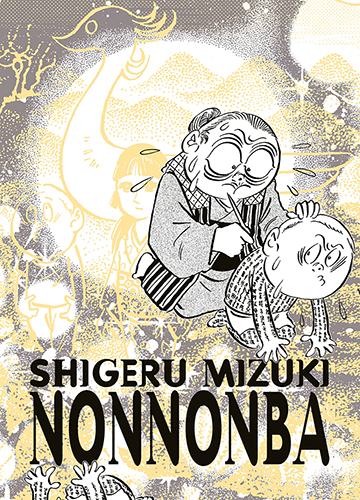
Shigeru Mizuki was one of the twentieth century’s most prolific and influential manga artists. Today he’s known primarily for documenting the culture and folklore of his childhood in rural western Japan. The single-volume graphic novel NonNonBa, originally published in 1992, is perhaps Mizuki’s most accessible work, as well as a fantastic gateway into the study of indigenous Japanese religion and folklore.

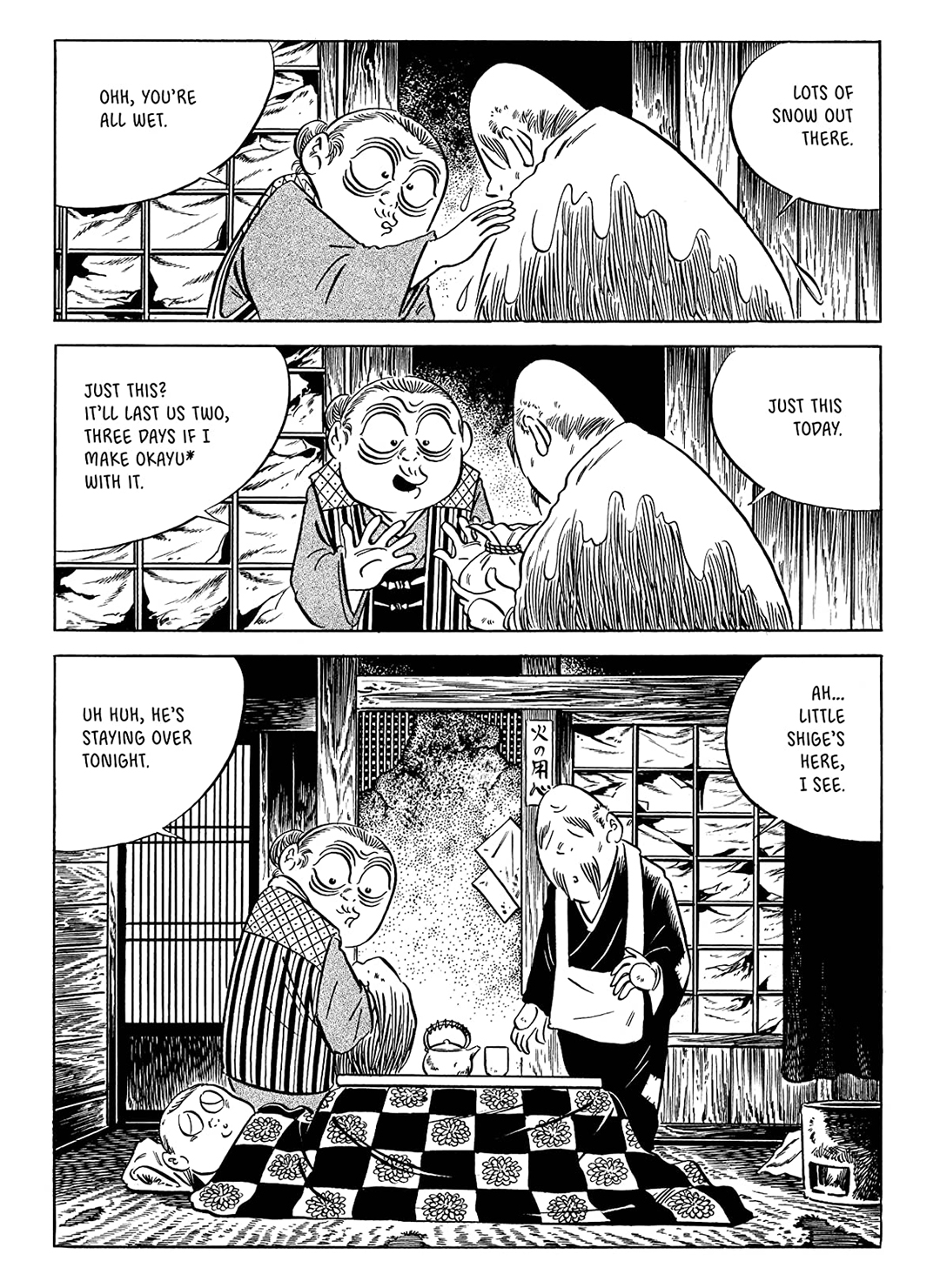
NonNonBa tells a coming-of-age story about the artist’s childhood relationship with an elderly family friend, the poor but kind Nonnonba of the title. Nonnonba is a repository of local folklore, and she sincerely believes in yokai, a term that refers to any number of species of Japanese fantastical creatures. The world of NonNonBa is indeed populated with yokai, but the manga is primarily a realistic account of life during the early 1930s.

NonNonBa opens with an introduction to the coastal town of Sakaiminato in the Kansai-region prefecture of Tottori. Despite being a port on the East Sea, the town wasn’t wealthy, and most houses remained unchanged from the nineteenth century. Mizuki’s family was relatively comfortable, and he lived with his mother, his two brothers, and his father, who worked at a bank but had creative ambitions and operated a small cinema on the side. Nonnonba was occasionally employed by the family to help with housework and childcare, as she was by several families in town. 

The artist, who goes by the name of Shige, is a mediocre student but deeply fascinated by the natural world, often bringing home strange objects like animal bones in order to study and draw them. When he’s not at his desk, Shige plays at being a soldier in the “boy army” that roams around the town and beach staging pretend wars with other roving bands of children.  

Shige’s uncomplicated boyhood is disrupted by Chigusa, a cousin from Osaka who is sent to Sakaiminato to recover from tuberculosis. Nonnonba cares for Chigusa while she’s bedridden, and the girl is just as interested in Nonnonba’s yokai stories as Shige is himself. The two become friends, and Shige is heartbroken when his cousin succumbs to her illness. He begins drawing in earnest, no longer as invested in the boy army as he once was.

After losing Chigusa, Nonnonba begins working for a family from the city that has moved into a house rumored to be haunted. She’s charged with the care of Miwa, a young girl who lives in the family’s house and seems to be able to see and hear yokai. Shige believes the girl is a victim of human trafficking, which seems highly likely given the number of other young girls who have passed through the house. Regardless, there’s not much he can do about this as a young boy.

As he develops a close friendship with Miwa, Shige matures, and he understands that growing up isn’t growing away from yokai, but rather realizing that the stories of these creatures are part of a much larger world. Despite their flaws, Shigeru’s mother and father are both portrayed sympathetically, as are his brothers and friends. NonNonBa overflows with sympathy and compassion, gently poking fun at the characters while also encouraging the reader to see them in their best light.  

Despite being published more than thirty years ago, NonNonBa doesn’t feel dated. The stylizations of Mizuki’s artwork are timeless, and his character designs are clean and fresh. The high quality of Jocelyne Allen’s translation contributes to the contemplative yet entertaining tone of the story, whose episodes move briskly but never feel cartoonish. 

Through Mizuki’s sensitive storytelling and evocative artwork, NonNonBa celebrates how folklore inspires imagination and facilitates resilience in the face of loss and change. Despite the occasionally heavy subject matter, this graphic novel is accessible to readers of all levels, and I imagine it would be a fantastic text to spark discussion about history, family, and folklore in the classroom.

Kanda Gokurachō Shokunin Banashi

The first volume of Akihito Sakaue’s manga Kanda Gokurachō Shokunin Banashi, which won the Tezuka Osamu New Creator Prize in 2024, collects five stand-alone short stories about the everyday lives of artisans during the Edo Period. As might be expected from a manga about craftsmanship, Sakaue devotes meticulous care and attention to creating an accurate visual depiction of the tools and techniques used in these traditional arts. 

Shokunin Banashi opens with a twelve-page account of a day in the life of a carpenter who creates and repairs wooden buckets. Although the work may seem unglamorous, the skill involved is readily apparent. An additional layer of accuracy lies in the fact that this story’s star craftsperson is female, as were many of the artisans who kept Edo period society functioning.

The next two stories feature a blacksmith who specializes in swords and an indigo dyer who dreams of creating her own fabric pattern designs. My favorite of these opening stories is the fourth, which follows a young but talented seamster who sews and binds the edges of tatami mats. Along with the rest of his team, he’s been hired to replace the tatami in a high-end establishment in the Yoshiwara red light district. The courtesans are impressed by the craftsman’s skill with his hands, but he remains focused on his craft and maintains an appropriate professional distance. Once he’s finished the job, however, he allows himself to be a little flattered. This is a cute story that’s also very sympathetic to the craft of the women who work in Yoshiwara.

The three-chapter story in the second half of the volume is a workplace drama about a company of contractors who specialize in laying plaster walls. This is intense physical labor that requires a good eye, a steady hand, and careful group coordination. The leader of the team, Chōshichi, is an undisputed master of her craft, but a new recruit, Jinsaburō, soon learns that there’s trouble among the ranks of her subordinates. A master craftsman himself, Jinsaburō supports Chōshichi during the construction of a townhouse. For the reader, this is a marvelous opportunity to get an inside look at each stage of how these houses were built.

I’d recommend Shokunin Banashi to anyone who enjoyed Fumi Yoshinaga’s Ōoku series, especially for the high quality of its historical representation and the subtlety of its human drama. I might also recommend Shokunin Banashi to any illustrator who’s interested in studying hands depicted in a variety of positions while manipulating all sorts of specific tools. The art in Shokunin Banashi is something special, as is the physical book itself, which was designed to be a beautiful object.

Edited to add: This manga has been licensed by Yen Press as Neighborhood Craftsmen: Stories from Kanda’s Gokura-chou. Excellent!

A Woman of Pleasure

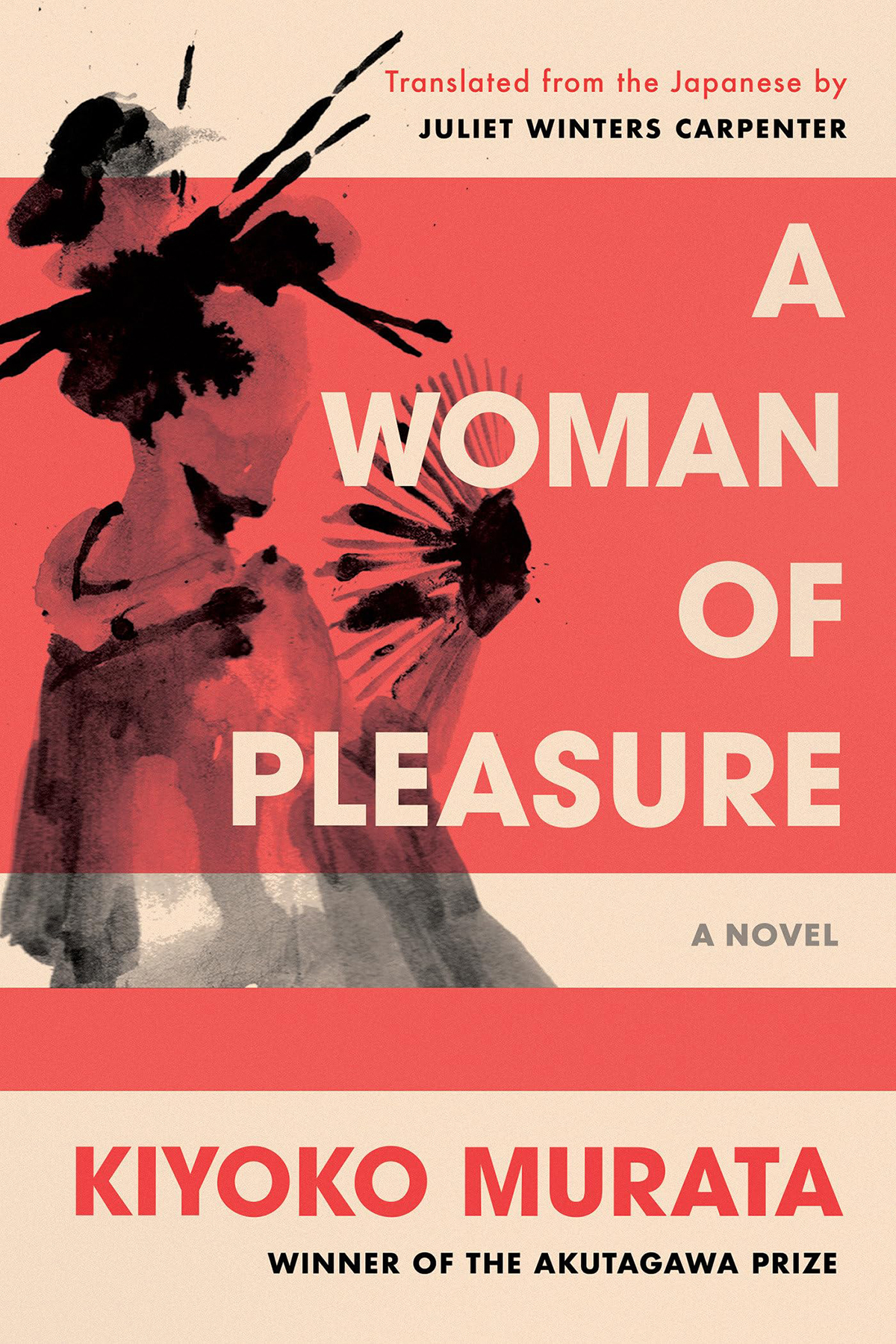
Kiyoko Murata’s A Woman of Pleasure is a feminist novel about the self-liberation of Japanese sex workers in the early twentieth century. It’s also a vibrant window into a different world and a true pleasure to read. Murata’s work has won almost every major Japanese literary prize, and Juliet Winters Carpenter has crafted a beautiful translation of her writing.

A Woman of Pleasure is set in 1903 in the adult entertainment district of Kumamoto, where the fifteen-year-old Ichi has been sold by her impoverished family to a high-ranking brothel. While she apprentices under a senior geisha, Ichi also attends literacy classes run by a retired entertainer named Tetsuko.

Ichi’s honest yet playful diary entries are interspersed between third-person accounts of her everyday life, the mundanity of which comprises the bulk of the novel. Despite the unfairness of her situation, Murata portrays Ichi with sympathy and dignity, as well as with a welcome touch of light humor.  

While the last fifty pages of the book describe how the women at Ichi’s establishment decide to exercise their legal right to leave, the majority of the story explains – very gently – why they would choose to do so. For a contemporary reader, there’s a lot to be upset about, but Murata never degrades her characters or their agency in shaping the course of their lives.

A Woman of Pleasure reminds me a great deal of Jun’ichiro Tanizaki’s classic novel The Makioka Sisters. Despite several startling and high-tension incidents, the book doesn’t have much of a plot. This is to its benefit, I think, as what’s interesting about Ichi’s story would be ruined by melodrama. Murata’s project is first and foremost to celebrate the essential humanity of the women who lived in a different era, but she also presents a compelling demonstration of how normal, ordinary people are capable of powerful political action.

Ryokan: Mobilizing Hospitality in Rural Japan

Chris McMorran’s Ryokan: Mobilizing Hospitality in Rural Japan is an academic monograph about gender and society that’s surprisingly entertaining and enjoyable to read. McMorran is an anthropologist at the National University of Singapore who spent more than a year working at an onsen hotel in the idyllic town of Kurokawa on Japan’s southern island of Kyūshū. His account of how such resorts operate is informed by his own experience, as well as a decade of talking to people with fascinating life stories.

McMorran is discrete and never exploitative, but he uses a fair amount of behind-the-scenes drama to illustrate the conflicting views at play in the construction and maintenance of Kurokawa’s fantasy of “traditional Japan.” Not every aspect of these traditions is worth preserving, especially the pressure placed on firstborn sons (and their wives) to inherit the family business, often at the expense of the ambitions of a family’s daughters.

Despite stubbornly persistent gendered expectations, one aspect of these onsen hotels that seems almost utopian is their willingness to employ women who might otherwise be in danger of falling through the cracks of society, such as divorcées and single mothers with small children. Even though McMorran tackles serious social issues, his approach is always sympathetic and accessible, and his writing is so crisp and clear that this study often feels remarkably akin to a literary memoir.

Ryokan: Mobilizing Hospitality in Rural Japan has the potential to be an entertaining read for fans of Japanese pop culture interested in indulging in a bit of armchair tourism while gaining a deeper understanding of contemporary Japanese society. To enhance the experience, I’d also recommend the gorgeous travel guide Onsen of Japan: Japan’s Best Hot Springs and Bath Houses, which perhaps might be enjoyed alongside a viewing of the beautiful slice-of-life anime movie Okko’s Inn.

The Easy Life in Kamusari

Japanese Title: 神去なあなあ日常 (Kamusari naa naa nichijō)
Author: Shion Miura (三浦 しをん)
Translator: Juliet Winters Carpenter
Publication Year: 2012 (Japan); 2021 (United States)
Press: Amazon Crossing
Pages: 197

Eighteen-year-old Yuki Hirano has just graduated from high school, but he has no ambitions in life or plans for college. Not wanting him to become a hikikomori, his mother enrolls him in a special year-long forestry training program in rural Mie Prefecture. Unlike Yuki’s home in Yokohama, the tiny mountain village of Kamusari has no convenience stores or cell phone reception, just trees as far as the eye can see.

Yuki receives a warm welcome into the home of his supervisor, Yoki Iida, but he wants nothing to do with Kamusari. Forestry work is difficult and dangerous, and Yuki doesn’t have any particular knack for the job. Other employees of Nakamura Lumber judge him for his mistakes and make him feel like an outsider. The only other person his age, a schoolteacher named Nao, isn’t remotely interested in becoming friends with him. There’s nothing in Kamusari except work, and Yuki is so exhausted by the physical labor that he falls asleep right after dinner.

As he continues working, however, Yuki gradually learns to appreciate the warm hearts of the villagers and the wild beauty of the mountain forest. He becomes accustomed to the slower pace of life in Kamusari, and he’s eventually inducted into the village’s religious traditions. The Easy Life in Kamusari is divided into four chapters, one for each season, and Yuki is keenly observant of how the natural world changes around him. He has to be, as his life and livelihood now depend on his connection to the forest.

Like Shion Miura’s 2011 novel The Great Passage about an earnest young dictionary editor, the protagonist’s gender is central to the fantasy of accidentally stumbling into a meaningful and fulfilling career. And The Easy Life in Kamusari is, without a doubt, a fantasy.

All of the conservative and “traditional” aspects of society in Kamusari are quaint and charming. There’s no poverty or bigotry or bullying. Yuki isn’t gay, so he doesn’t have to deal with the locals equating homosexuality to sexual deviance. Since Yuki isn’t female, he doesn’t have to do a second shift of cooking and cleaning and childcare, which means he can fall asleep after dinner without ever having to worry about the fact that the nearest grocery store is a forty-minute drive away.

If you’re thinking, “Wow, that must be nice,” then rest assured that it is. It’s very nice! That’s the fantasy.

The Easy Life in Kamusari is a light read, and nothing unpleasant happens. An older worker isn’t happy with Yuki being included in village activities, but he’s shut down quickly by Yuki’s supervisor and coworkers, who support and protect him. There’s a bit of darkness in Nao’s character, but the reader never hears her story, as Yuki decides that it’s not his problem. Everyone in the village seems to expect that Nao will allow Yuki to have sex with her despite her lack of interest in a relationship, but he doesn’t force the issue, thankfully.

The Easy Life in Kamusari is a coming-of-age story about a boy becoming a man through manual labor and religious ritual, and the narrative perspective is staunchly masculine. Unlike its boisterous cinematic adaptation, the novel refrains from sex puns about wood, but it nevertheless expresses a strong gender dichotomy. Yuki’s sense of belonging is tied to his gradual incorporation into male spaces that exclude women, and female perspectives are not introduced into the story. If you’re sensitive to how “tradition” can trap people in gender roles and unwanted relationships, especially in isolated rural areas with no tolerance for more progressive worldviews, The Easy Life in Kamusari may not be for you.

Still, if you can accept the limitations of the narrative perspective, it can be nice to indulge in the fantasy of “traditional” masculinity as recounted in the light and gentle storytelling of a female author. No one gets hurt, either by toxic masculinity or in a gruesome forestry accident.

Speaking of which, the other fantasy presented by The Easy Life in Kamusari is the fantasy of living in harmony with nature. Forestry work is fairly dangerous in reality, as are wild animals, diseases carried by insects, and extreme weather conditions. While I admire the research Miura did for this novel, I can’t help but wish that she had been willing to explore a more nuanced and realistic portrayal of rural life and agricultural labor. Japanese cedar plantations have been harshly criticized by domestic and international environmental groups, and it would have been interesting to see these issues acknowledged and discussed from the perspective of people withing the industry. In addition, I would have liked to see a hint of the ongoing discussion about Japan’s aging rural population, perhaps in terms of what it means to have so many older people doing such dangerous work so far away from any healthcare resources.

But again, The Easy Life in Kamusari is a fantasy. It’s a charming and pleasant novel, and I thoroughly enjoyed it. I read a few pages at a time, and I’d always come away refreshed by the beauty of Miura’s writing and Juliet Winter Carpenter’s translation. Although I wish the story were more engaged with the realities of its setting, I would happily recommend The Easy Life in Kamusari as a light read to anyone interested in nature writing, Japanese religion, or a heartwarming story of growing up and finding one’s place in the world.

Where the Wild Ladies Are

Author: Aoko Matsuda (松田 青子)
Japanese Title: おばちゃんたちのいるところ (Obachan-tachi no iru tokoro)
Translator: Polly Barton
Publication Year: 2016 (Japan); 2020 (United States)
Publisher: Soft Skull Press
Pages: 271

Where the Wild Ladies Are collects seventeen short stories about the everyday lives of ghosts, demons, and yōkai in contemporary Japan. Although all of these stories are a bit strange, their tone is light and comedic, and all the hauntings are consensual.

My favorite story in the collection is “Quite a Catch,” which is about a young woman named Shigemi who has found herself in a romantic relationship with the ghost of a skeleton she inadvertently pulled out of the Tama River in Tokyo while fishing with a friend. The ghost, Hina-chan, appears outside of Shigemi’s apartment to thank her for dredging her bones from the riverbed. Shigemi is alarmed at first, but before long she and Hina-chan are chatting while watching television, not to mention bathing and sleeping together. Hina-chan’s nightly visits are a best-case scenario for the narrator, who has always wanted companionship without having to live with a spouse or roommate.

As the story notes in the back of the book explain, “Quite a Catch” is based on the comedic folktale Kotsutsuri (Skeleton Fishing) about a man who, after having heard a friend’s story about being thanked by the beautiful ghost of a drowned skeleton, goes to the river in an attempt to snare himself a supernatural girlfriend of his own but ends up fishing up the skeleton of the villain of a famous kabuki play.

Other stories in the collection feature other well-known figures from Japanese drama, lore, and legends narrated from unusual perspectives. “On High,” for example, is about a ghostly princess who haunts the beautiful hilltop Himeji Castle while it’s in the process of undergoing extensive renovations in the name of “historic preservation.” Meanwhile, “Enoki” is narrated by a sacred tree that is both frustrated and amused by the humans who insist on praying to it for various blessings, while “A Fox’s Life” is about a woman who’s been told she resembles a fox so often that she finally decides to go up into the mountains and become one.

“Smartening Up” is the first story in the collection, and it’s an excellent introduction to the author’s playful voice as she expresses the central theme of learning to embrace your weirdness and imperfections. The narrator begins the story obsessed with the darkness of her hair, spending a considerable amount of time and money on hair removal treatments while wishing she were born blond. On returning home after a rigorous session at an aesthetic salon one evening, she finds her aunt waiting for her in her apartment. This is something of a surprise, as her aunt had committed suicide in the wake of a failed love affair. Even more shocking, this aunt tells the narrator that she knows all about how she’s come to hate her appearance after being dumped. There’s nothing wrong with her hair, her aunt insists, especially since the fault lies with the piece of trash who cheated on her. The aunt assures her that her black hair is gorgeous, and that there’s no need for her to feel gross and ugly.

This story is loosely based on the Dōjōji legend, specifically the kabuki play Musume Dōjōji (The Maid of Dōjō Temple). The original story, in which a lustful woman is spurned by a celibate monk and turns into a giant snake to pursue him, is almost laughably misogynistic. The kabuki version, on the other hand, celebrates the woman’s serpentine transformation as an act of beauty and magic, with the dancer twirling in a robe that shines silver with the gorgeous gleam of scales.

The narrator’s aunt reminds her of the time they saw this play together and then admits that she’s still figuring out what her own secret power is. As the narrator considers the matter, she realizes that her own power is indeed in her hair. She begins eating hair-fortifying foods like liver and seaweed, helping her hair to become as monstrous and powerful as the snakes commanded by Medusa. She hides her demonic hair during the day but allows it to come out at night, brushing it to a high sheen and thinking about what sort of special skills she will learn in the future as she grows more comfortable wielding her magical power.

This may sound sentimental and a bit self-helpy, but the tone is actually very tongue-in-cheek and down to earth. The narrative voice, which is expertly captured through Polly Barton’s translation, is highly engaging. Many of the stories in Where the Wild Ladies Are were inspired by rakugo comedic storytelling, which is meant to be a bit salty and ridiculous. A set of brief notes concerning sources and inspirations is provided at the end of the book, but it’s absolutely not necessary to be familiar with the original legends to appreciate and enjoy the stories in the collection.

Although many of the stories in Where the Wild Ladies Are revolve around the theme of supernatural female empowerment, there’s no man-hating here – far from it. There are plenty of interesting male characters, including a time-traveling and dimension-hopping wizard who was inadvertently roped into the job and decided, like any good salaryman, just to stick with it. Although the reader doesn’t figure this out until late in the collection, all of the stories are loosely linked, with the various male and female characters managing to get along with each other in relative harmony.

Between the creative contemporary re-imaginings of folklore, the strong female friendships, the queer monster romance, and the general disdain for boring office jobs and awful bosses, the target audience of Where the Wild Ladies Are is specifically me, and I feel very seen and catered to. Still, Where the Wild Ladies Are should resonate with a broad readership. I suspect that a lot of anime fans and yōkai enthusiasts will be highly entertained by the collection, and the stories will appeal to anyone of any gender who enjoys clever comedy about how wild it is to live in the modern world.

Onibi: Diary of a Yokai Ghost Hunter

Onibi: Diary of a Yokai Ghost Hunter
Artists: Atelier Sentō (Cécile Brun and Olivier Pichard)
Translator: Marie Velde
Publication Year: 2016 (France); 2018 (United States)
Publisher: Tuttle
Pages: 128

This story was inspired by one of our trips to Niigata, during the fall of 2014. We dedicate it to the people we’ve met there. They welcomed us with overwhelming generosity and helped us discover the region and its secrets. Some of these people will appear in this book. We hope they will enjoy it.

This paragraph prefaces Onibi, a diary-style graphic novel written and drawn by Cécile Brun and Olivier Pichard, who work together as a creative team called Atelier Sentō. In the late summer and fall of 2014, Brun and Pichard were able to spend ten weeks living in the small village of Saruwada thanks to the efforts of Kosuke and Sumie Baba, who run a small restaurant and international guesthouse called Margutta 51. At the beginning of their stay, Brun and Pichard bought a toy Polaroid camera from a man who assured them that it could photograph spirits, so they went out ghosthunting. Onibi is the result of their travels and conversations.

Along with a short prologue and epilogue, Onibi has seven chapters, each of which chronicles a local legend related to the yōkai of Niigata prefecture in northern Japan. A few of Brun and Pichard’s excursions were facilitated by the proprietors of Margutta 51, who introduced them to people with stories to share. Some of their encounters happened completely by chance, however, and most don’t play out as expected. In the second chapter, for example, Brun and Pichard take the train to a small village to find a creature called “Buru Buru-kun,” but they find that the old forest where it’s said to live has been cut down to make room for rice fields. In the seventh chapter, Brun and Pichard visit Osorezan, a temple located in the caldera of an active volcano where the world of the living and the world of the dead are believed to meet. They misplace their ghost camera as they explore the strange landscape surrounding the temple, but the conversations they have with their fellow pilgrims make the journey worthwhile.

I especially enjoyed the fourth chapter, “Mountain’s Shadow,” which is about the pair’s chance encounter with a man who gives them a walking tour of Yahiko. The village is famous for its fall foliage, but it’s deserted during the week. After taking in the sights, Brun and Pichard step into a small udon restaurant, where they’re approached by a man who offers to tell them about the local yōkai. He takes them to a large tree in town and then up a hill to a mountainside temple, after which they embark on a hiking trail through the woods. Instead of taking the tram down the mountain once it gets dark, they decide to walk, and they hear strange noises in the trees as they descend. This episode is enhanced by its visual appeal as the color palette shifts from the brown of the restaurant interior to the gold of the afternoon sunlight in the village to the blue of the forest twilight.

The comic artwork in Onibi is gentle and warm, with a gorgeous color palette and a pleasing compositional balance on each page. The humans who appear in the book are distinctive without coming off as caricatures, and the landscapes, townscapes, and interiors are striking. Brun and Pichard devote special attention to natural and artificial lighting and weather conditions, making the reader feel almost as if they’re walking right alongside the artists as the summer shifts into fall. Tuttle has released a beautiful Kindle edition of the book, but I highly recommend the print version, which allows the reader to appreciate the details and textures of the artwork.

Although it hints at some fairly dark themes, Onibi is more atmospheric than spooky, and it should be suitable for people of all ages. If I were teaching a class about Japanese folklore (and Onibi makes me dearly want to teach such a class), I think the graphic novel might serve as an interesting companion to Marilyn Ivy’s Discourses of the Vanishing, especially its chapter on Osorezan. Even for people with no background knowledge of Japan, Onibi is a fascinating exploration of a beautiful part of the world, as well as a lovely introduction to the people who live there – and the supernatural creatures who might just coexist with them.

your name.

Content warning: discussion of body swapping, gender dysmorphia, and social dysmorphia

Title: your name.
Japanese Title: 君の名は。(Kimi no na wa.)
Author: Makoto Shinkai (新海誠)
Translator: Taylor Engel
Publication Year: 2016 (Japan); 2017 (United States)
Publisher: Yen Press
Pages: 192

This guest review is written by L.M. Zoller (@odorunara on Twitter).

your name. is a novelization of director Makoto Shinkai’s your name., an animated film that tells the story of Mitsuha, a high school girl from rural Gifu prefecture who wishes she could be a boy in Tokyo in her next life. After an incredibly vivid dream in which she wakes up as Taki, a high school boy living in downtown Tokyo, she discovers it’s not a dream at all – and Taki is also switching bodies with her. As the two teenagers try to navigate each other’s lives and relationships, only able to communicate with each other by writing notes in each other’s cell phones when they switch, they begin to unravel a mystery involving Mitsuha’s town.

First, a note about the style of the book: the film was not created for an unfinished book series, nor was it a post-release novelization. Rather, the novel was written in the late stages of the film’s production but released before the film debuted in Japan. In his afterword, Shinkai writes,

In other words, it’s a novelization of the movie, but actually, as I’m writing this afterword, the movie hasn’t been finished yet. They tell me it will take another three months or so to complete. That means the novel will go out into the world first, so if you asked me which is the original work, the movie or the novel, I’d have to say, “It’s complicated.” (Kindle location 2177)

As a result, the novel doesn’t have to backfill the character’s internal monologue, nor does the film have to focus on getting the characters’ internal dialogue to come across visually; both works fill in gaps in the other.

The film’s biggest strength is, by and large, bringing the imagery and emotions of the characters to life. In a film, narrative exposition can get in the way of acting and using visual cues to explain emotions of the characters. While the movie is heavily visual and expresses the subtlety of its characters’ emotions by showing instead of telling, the novel (as well as the translation) gets off to a rough start because the writing style is overly descriptive in light novel/YA novel fashion. Shinkai’s attempts to describe physical reactions and facial expressions while simultaneously describing the characters’ underlying emotions sometimes make the opening chapters seem clunky. However, the novella really hits its stride after the third chapter. With the difficulty of the exposition out of the way and the setting and characters established, Shinkai’s writing shines and the pace picks up.

What I really love about the book, in addition to the mystery of why Taki and Mitsuha start and stop switching bodies, is how both characters come to experience themselves differently because of swapping bodies. Mitsuha gets to explore her sexuality – she, not Taki, is the one that sets up the date with his coworker Okudera-senpai in the hopes that she herself will get to go on it as Taki. This is a contrast to a common plot line in body-swap fiction: that one of the two swapped people has a date and is scared of being expected to kiss or have sex with the other person’s partner for a variety of reasons, chiefly the consent of all three parties.

Another body-swap trope that Shinkai averts is that Taki doesn’t learn to be more emotional just by being in Mitsuha’s body. Instead, he learns from her actions, especially how she treats Okudera-senpai while in his body. Eventually, he says, he’s given up on pretending to be her and just acts like himself when he’s in her body, though he notices that he has her memories and that he experiences emotional and visceral reactions to people in her life, such as feeling comforted by seeing her grandmother and friends and angry when meeting her father.

The book also deals with a number of existential questions. For example, what is consciousness and how tied to ones body is it? Does the spirit live on apart from the body? Related, but not explicitly spelled out, is to what degree sexuality and gender identity are consciousness or a physical body. As a queer nonbinary person who experiences social dysphoria (being read as the wrong gender in social contexts) but not usually body dysmorphia (the feeling that something about your body is wrong), the book and film versions of your name. raised a lot of questions for me. Would I experience body dysmorphia if my body looked differently than it does? Would I experience body dysmorphia if I woke up in someone else’s body? Would I experience social dysphoria to be called by the wrong pronouns but not the ones I was assigned at birth? Would it matter if the other person were built similarly to me or if they had a very different body shape? If I were in a binary person’s body, would it be weird to be called by the wrong pronouns? For cisgender people, who have the luxury of knowing their own gender and rarely have their gender questioned, would swapping bodies seem awkward but not dysmorphic or dysphoric?

Moreover, Taki and Mitsuha are two thin, conventionally attractive, and able-bodied cisgender teenagers. How would the narrative vary if one of them had a disability, or if one were trans or openly queer, or much younger or older? (For example, what if Taki and Mitsuha’s grandmother switched places?) your name. doesn’t answer Taki’s questions about memory or mine about gender, but the gentle manner in which it raises these questions is less of an existential crisis and more of a catalyst for self-reflection.

Along with the human characters, Mitsuha’s hometown Itomori is practically a character itself. Itomori is based on the city of Hida in Gifu prefecture, which is one of my favorite vacation spots. The descriptions of the town in the book and the visualization of the town in the film are vivid and gorgeously rendered, taking me right back to traveling to Hida-Takayama in the fall. While Mitsuha hates Itomori and dreams of moving to Tokyo, Shinkai avoids both painting rural Japan as either superior or inferior to urban Japan. Mitsuha’s complaints are ones many young people have: there are not many jobs, there are no cafes or places to hang out, and everyone knows your business, especially when your family is heavily involved in town politics (her estranged father is the mayor) and religious life (she and her sister are shrine maidens at her grandmother’s family shrine). However, there is merit in the traditions of the town, which preserve not just history for history’s sake, but important cultural and historical information.

Mitsuha’s grandmother, who is the head of the town shrine, repeatedly tells Mitsuha and her younger sister Yotsuha that the meaning underlying the shrine dances, braided cords, and festival rituals were lost when the original shrine and all its old records were destroyed in a fire two hundred years ago. What Taki realizes when he drinks ritual sake at a sacred location deeper in the mountains is that the braided cords and dances all told the story of how a meteorite created the crater lake in Itomori and destroyed the town a thousand years ago. With the records gone, the rituals survived without meaning, and this lacuna between history and folklore becomes crucial to the plot of Mitsuha and Taki’s story. As Shinkai’s focus expands beyond the two teenagers out into the larger environment they inhabit, I thought about not just the local dances of the places I had lived in and visited but also the tsunami markers on Aneyoshi.

your name., while not perfect, is an easy fantasy read that deals with open-ended questions of gender, memory, and rural depopulation. If possible, I recommend reading the novel as well as watching the movie, as Shinkai’s prose exploration of Mitsuha and Taki’s interiority complements and deepens the impact of the gorgeous artistry of his film.


L.M. Zoller is a nonbinary writer and former JET CIR with an MA in Japan Studies. All zir favorite manga and anime seem to involve gender fluidity and sword fighting. Ze blogs about media and gender at The Lobster Dance (@odorunara) and food, sexuality, and gender at I’ll Make It Myself! (@illmakeitmyself).
Apparitions

Title: Apparitions: Ghosts of Old Edo
Author: Miyuki Miyabe (宮部 みゆき)
Translator: Daniel Huddleston
Publication Year: 2000 (Japan); 2013 (United States)
Publisher: Haikasoru
Pages: 265

Apparitions: Ghosts of Old Edo is a collection of nine supernatural stories set in the Edo period (1603-1868), a historical era of relative peace that preceded Japan’s modernization. The author, Miyuki Miyabe, is known outside of Japan for her fantasy and suspense novels, but she also writes historical fiction informed by her love of the city of Tokyo.

Apparitions is a difficult book to break into, especially for someone who doesn’t have a great deal of background knowledge about Japan. Although the six-page thematic introductory essay by Masao Higashi situates Miyabe’s historical fiction within the tradition of Western horror, each of the stories in this collection is thoroughly suffused with what might be termed Japanese cultural odor. While this is far from a bad thing, the jumble of geographic and personal names that Miyabe employs to add color to her stories won’t carry the same narrative weight for most readers of this translation as it would for someone more familiar with the cultural and historical context she references.

The opening story, “A Drowsing Dream of Shinjū,” provides a good example of how these references work to create a sense of atmosphere – or, for many readers, may simply be strange and confusing. After the end of the Kyōhō era, in the fourth year of Bunka, a boy named Ginji is “sent off to work at a cotton wholesaler called the Daikoku’ya, in Tōri Setomono-chō” by an older man at the Mannen’ya, an employment agency “located in Ōdenma-chō Block 1” that places apprentices in the wholesale businesses “that dotted the way from Ōdenma-chō and the surrounding area on through Muromachi, Takara-chō, Suruga-chō, and Nihonbashitōri-chō” (18). Miyabe uses the names of these emperor reigns, businesses, and neighborhoods as a shorthand to create a sense of time and place. Unfortunately for those of us not already well versed in Edo-period historical fiction, this type of highly specific allusion is largely unaccompanied by any sort of explanation. As a result, to someone who isn’t a specialist in the Edo period, the stories in Apparitions can seem rather dry.

Even the broader cultural allusions that Miyabe uses to add flavor to her stories are only mentioned in passing without any sort of elaboration. To return to “A Drowsing Dream of Shinjū,” the premise of the story is that the fourteen-year-old protagonist Ginji is employed by Tōichirō, the son of the prosperous cotton wholesale business Daikoku’ya, to run errands, some of which involve carrying messages to Tōichirō’s various girlfriends. Meanwhile, the 21-year-old Tōichirō wants his family’s business to start selling tea towels printed with monogatari moyō, or scenes from literary romances such as The Tale of Genji. His father tells him that this is a bad idea, as such items have come to be associated with real-world cases of shinjū, or double suicide, in which several pairs of lovers tied their hands together with these towels so that they would have a greater likelihood of drowning when they jumped into a river.

One thing leads to another, and when Tōichirō gets married he moves his mistress O-Haru to the neighborhood of Ōshima-mura, which “was on the other side of the Ōkawa River, on past Fukagawa” (34). On being sent to O-haru’s villa one afternoon, Ginji arrives to find it empty, and as he dozes off in the foyer he dreams that he sees the lifeless bodies of Tōichirō and O-haru deeper inside the house, their wrists bound with a monogatari moyō tea towel.

To anyone familiar with Japanese drama, “A Drowsing Dream of Shinjū” is redolent of numerous other stories involving the ghosts of star-crossed lovers appearing in forgotten and out-of-the-way places. It’s precisely because Miyabe is confident in her reader’s familiarity with such ghost stories in the Noh, Bunraku, and Kabuki theatrical traditions, however, that she doesn’t go out of her way to deepen the eerie atmosphere by means of other literary devices. Perhaps a Western equivalent of this might be naming a character Horatio and thereby expecting the reader to associate him with chilly Scandinavian sea winds and dead princes without otherwise supplying the character with any personality traits. Unfortunately, Miybe’s allusions may pass entirely over the heads of unfamiliar readers.

Although two or three of the stories in Apparitions are strong enough to stand on their own, the book isn’t so much a collection of accounts of individual people and the ghosts they leave behind as it is a cumulatively growing narrative about the city of Edo itself. If the reader can tough out an initial sense of disorientation, however, the geography of the city and the character of its people gradually begin to take shape with each successive story.

That being said, the strongest pieces in the collection need no contextualization. In my favorite story, “The Oni in the Autumn Rain,” an older woman speaks to a younger woman and offers sound and canny advice that transcends time and place. Moreover, the cleverness of the surprise ending to the story, in which it is revealed that the circumstances of this conversation are not what they seemed, needs no cultural background knowledge to be appreciated.

I use another of the more accessible stories in the collection, “Cage of Shadows,” as one of the readings in my “Tokyo Stories in Japanese Fiction” seminar. “Cage of Shadows” serves as an excellent starting point for a discussion of Edo period fiction, as it evokes the themes and tone of popular stories from the eighteenth century while still employing conventions relating to psychologically astute characterization and linear plot progression that contemporary readers have come to take for granted. As an added bonus, the imagery of the story is deliciously grotesque, and the way it ends is downright creepy.

Overall, it’s difficult to recommend Apparitions to a casual thrill seeker; but, for a patient reader, allowing the stories enough time to build a gradual atmosphere of strangeness at the margins of human activity is akin to watching twilight deepen into darkness as an evening fog rises from the ground. Many readers may find themselves lost in the maze of foreign words and names; but, if you’re interested in Japanese ghost stories and looking for a nice collection of original and historically grounded horror fiction with lovely Gothic undertones, then Miyuki Miyabe has summoned a delightfully eerie group of ghosts.

The Book of Yōkai

the-book-of-yokai

Title: The Book of Yōkai: Mysterious Creatures of Japanese Folklore
Author: Michael Dylan Foster
Illustrator: Shinonome Kijin (東雲 騎人)
Publication Year: 2015
Publisher: University of California Press
Pages: 309

This guest review is written by Katriel Paige (@kit_flowerstorm on Twitter).

Yōkai are part of an ongoing conversation surrounding global popular culture. Even in the United States we hear about yōkai through games like Pokémon and Yo-Kai Watch, and we happily watch films from Studio Ghibli that feature wondrous and strange creatures.

Although Michael Dylan Foster acknowledges that commercial cultures factor into the continued vibrancy of yōkai lore, The Book of Yōkai does not focus on the portrayals of yōkai in contemporary popular media and fan culture. Rather, the goal of this text is to provide an overview of the folkloristics of yōkai, from how thinkers and artists have interpreted yōkai to how the mysterious entities have been created, transmitted, and continually redefined. Foster is especially interested in how yōkai enthusiasts create their own networks of practice, with popular media cultures as one node in those networks. As he writes, “For many of my students in the United States, for example, the terms yōkai and Japanese folklore are practically synonymous; they have encountered kappa or kitsune or tengu in manga and anime, films and video games, usually in English translation. This exposure inspires them to delve further into folklore, to find the ‘origins’ of the yōkai of popular culture that they have come to love. And that is [a] purpose of this book, to provide some folkloric grounding for yōkai they might encounter” (6).

Foster succeeds in this endeavor, as The Book of Yōkai is an excellent overview, especially for those new to the study of folklore. In his first chapter, “Introducing Yōkai,” the author offers a short introduction to the shifting definition of the term “folklore,” reminding readers that, like yōkai themselves, “folklore” occupies a place-in-between, where it is both traditional and modern, rural and urban. Folklore, like yōkai, can be found both in the shadows of the forest and in the light cast by our computer screens. Just as there is no single definition of “folklore,” there is no single definition of “yōkai,” and Foster’s cogent explanations of liminality and communal creation serve as an excellent introduction to the study of cryptids and the legends surrounding them.

The Book of Yōkai is divided into two sections: “Yōkai Culture” and “Yōkai Codex.” The “Yōkai Culture” section is where the reader will find Foster’s discussions of the history of yōkai, beginning with the mysterious twilight entities of the classical Heian Period (c. 794-1185) and spanning to medieval picture scrolls illustrating yōkai night parades and early modern codices classifying both natural and supernatural phenomena. The majority of this section is centered around important texts, such as the mytho-historical Kojiki and hyakumonogatari compilations of ghost stories, and influential figures, such as the artist Toriyama Sekien and the scholar Inoue Enryō.

The “Yōkai Codex” describes yōkai according to their habitats, such as the countryside, the city, and the sea. This section is similar to the indexes seen in games that involve the collection of strange creatures, such Pokémon and Yo-Kai Watch. Foster’s “Yōkai Codex” also draws on and serves as a link to yōkai indexes past and present, most famously the illustrated yōkai compilations of the manga artist Mizuki Shigeru.

The writing is accessible to academics and non-academics alike, making The Book of Yōkai superb for independent scholars or a general reader with an interest in yōkai. Foster by and large avoids technical jargon, and he clarifies his treatment of Japanese words and names at the beginning of the book, which aids in cross-referencing with other sources. As a folklorist, Foster privileges the storytelling experience, using anecdotes to make the reader feel as if they are having a friendly chat with the author. Although the academic foundation of Foster’s text is solid, his colorful personal stories have the potential to resonate strongly with a non-academic audience.

The Book of Yōkai is a great resource for undergraduates, non-specialists, and other curious readers looking for a comprehensive English-language introduction to the historical complexities and artistic potential of yōkai. It is available in hardcover, paperback, and e-book editions from the University of California Press. Shinonome Kijin, who has provided thirty original illustrations for the text, can be found as @ushirodo on Twitter.

* * * * *

Katriel Paige is an independent scholar of yōkai as well as media cultures and folklore. They earned a MA in Intercultural Communication with International Business from the University of Surrey and a BA from the University of Delaware with a dual focus in East Asian Studies and English, and they currently work in the technology industry. They like cats, video games, and caffeine in both coffee and chocolate forms. You can find more of their work, including their essays on Japanese culture and video games, on their Patreon page.

the-book-of-yokai-page-73