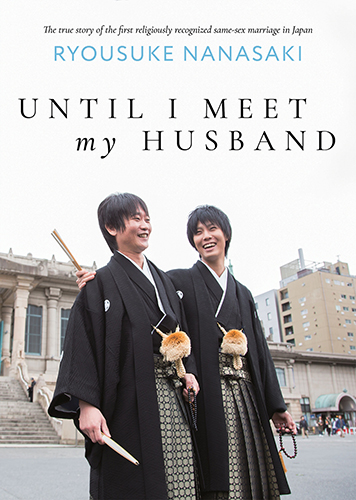
Until I Meet My Husband

Until I Meet My Husband is a collection of short autobiographical essays by Ryousuke Nanasaki, an activist who established LGBT Community Edogawa in 2015 and a wedding planning company called Juerias LGBT Wedding in 2016, both of which contributed to Tokyo’s Edogawa ward officially recognizing same-sex partnership by issuing marriage certificates.

Nanasaki lays out his motivations for becoming an activist toward the end of the book, but the majority of his essays are humorous stories about life and love. As Nanasaki explains in the final chapter, “In Place of an Afterword,” he wants readers to understand the “raw, uncut truth” of queer identity, which is that gay people experience happiness and make mistakes like everyone else.

As a result of Nanasaki’s honesty, the essays in Until I Meet My Husband are immensely entertaining and compulsively readable. Many of the stories will be familiar to queer Millennials, from receiving a stern lecture from a well-meaning teacher in elementary school to dating other closeted queer kids in high school to falling a little too hard for your first serious partner as an adult. Nanasaki leans hard into friendship drama, relationship drama, and family drama, but he’s so funny and good-natured that you can’t help but support him through his misadventures.

Molly Lee’s translation is pitch perfect, conveying the confidence and enthusiasm of Nanasaki’s voice in natural English that’s a pleasure to read. Along with the original essay collection, Seven Seas has also released the manga adaptation, which features dreamy artwork by BL manga author Yoshi Tsukizuki

Memento Bento

Memento Bento is a 65-page chapbook created by the Italian artist Alessandra Criseo. The chapbook, which is structured like an annotated sketchbook, chronicles Criseo’s trip to Japan with her partner Andreas in April and May of 2014. Over the course of two and a half weeks, the pair visited Tokyo, Kyoto, Nara, and Yokohama.

At the time, Criseo was working in London as a freelance character designer and concept illustrator for video game development studios. Criseo’s primary interest in Japan lay in its culture of cuteness, and the pages of Memento Bento are filled with sketches of clothing, characters, and street fashion. This fascination with cuteness is supplemented by photos of cute food, such as strawberry-themed pastries and the popular Tokyo Banana souvenir cakes.

Despite her stay in the popular tourist destinations of Kyoto and Nara, Criseo cares less about traditional Japanese architecture and handicrafts than she does about common urban cityscapes and mundane everyday objects. “I love taking the train. [It’s] one of the pleasures of life, especially in a country with such pretty houses as this one,” she writes next to an ink drawing of herself sketching on a commuter train.

Along with the urban tangle of telephone poles and power lines, Criseo is also fascinated by vending machines, instant ramen packaging, toilets, umbrellas, disposable cameras, and the uniquely non-aerodynamic shapes of domestic Japanese automobiles. Having submerged herself in the visual clutter of Japan, Criseo writes that she’s not looking forward to returning to the “boring and gray” monotony of London.

The heterodox and chaotic aesthetic often decried by older observers of Japan is a source of fascination and delight for Criseo. As an artist and professional designer, Criseo has translated her study of Japanese commercial design to her own clothing and stationery, which she distributes through her independent label, Mezzolume.

When I wrote about Ryōko Nagara’s recent manga about the local material culture of Sapporo (here), I was reminded of how many visual representations of Japan created by Europeans (such as Onibi: Diary of a Yokai Ghost Hunter) often emphasize “Shōwa retro” objects and spaces. In a time when the speed and productivity demanded by neoliberal capitalism leave many people anxious and exhausted, there’s a certain appeal to old and “useless” things, which artists like Criseo present as visually charming and emotionally compelling.

If you’re interested, you can order an English-language edition of Memento Bento (here), and you can follow Alessandra Criseo on Instagram (here).

Okareta basho de abaretai

Emuko Asai began posting essays online in 2021. She never considered herself to be a writer, she says, but the enthusiastic support she received from thousands of readers inspired her to keep sharing her stories. Asai’s 2024 collection 置かれた場所であばれたい (Okareta basho de abaretai) is a clear demonstration of the appeal of her essays, which inject a healthy dose of good humor into the trials and tribulations of everyday life.

Okareta basho de abaretai follows a loose timeline from Asai’s girlhood to her current career as a professional in the field of early childhood education. Although I get the sense that the staunchly pseudonymous Asai grew up in an upper middle-class family, the path she followed to adulthood was anything but standard. To me, Asai reads as having mild learning impairments, and she frequently makes jokes about her terrible grades and how much she hated studying. Since she was never going to meet expectations, Asai always figured that she might as well enjoy herself and have a good time.

One of my favorite essays is Miko no arubaito (Part-time job as a shrine maiden) which is about the weekend Asai worked at a large Shinto shrine during the rush over the New Year holiday. Just like her normal part-time job at a bakery, her duties involved standing behind a counter and helping people pay for their purchases. Amusingly, Asai had a bit of trouble with code-switching between secular and religious settings, which resulted in several comedic exchanges with confused patrons.

( As an aside, Miko no arubaito would be an excellent reading assignment for a Japanese language class, especially since its humor is dependent on a knowledge of the taigū hyōgen set expressions used by service workers. )

Asai’s most popular essay on social media is Yasashii uragiri (A gentle betrayal), which is about a written test given by her high school Home Economics teacher. This story will probably be familiar to American Millennials, many of whom were exposed to a variation of this test at some point in secondary education. Over the course of the essay, we follow Asai’s progress through the exam, which presents a lengthy series of detailed instructions. The last item on the list is, of course, “Don’t write anything. This is a test of whether you read the directions before starting work.”

Although Asai presents this story as little more than an amusing anecdote, I get the feeling that this experience was probably crucial in her decision to become a teacher. Many of Asai’s experiences with education seem confrontational at best (and downright depressing at worst), so it would make sense that she had a positive response to a teaching strategy that fostered independent thought and prioritized practical application.

In later essays, Asai describes her own goals as a teacher while challenging herself to accommodate different learning styles. Perhaps the best example is Sensei-tte, dare no koto (Who are you calling Teacher?), in which Asai attempts to help a 4yo child overcome his refusal to sit down and draw with crayons. It turns out that what the boy really disliked was having his pictures compared to the drawings of his best friend, who displays a small measure of artistic talent. Asai readily admits that she herself can’t draw, but what she can do (using an age-appropriate version of the Two Cakes! meme) is to help this little kid realize that his work is just as valuable as his friend’s.

Lest you think Asai has grown soft, however, she follows this essay with one titled Unchi somurie (Poo Sommelier), which is about how she possesses the rare but useful ability to tell which of her young charges has shit themselves at school. 

Emuko Asai’s essays read a bit like David Sedaris, albeit without the cutting edge of Sedaris’s characteristic meanness. Her work isn’t wholesome, necessarily, nor is there an absence of irony. Rather, Asai expresses a type of radical good humor that occasionally borders on passive-aggressive sweetness but always mellows out into a chill attitude of c’est la vie – or YOLO, as the case may be. If nothing else, it’s always amusing to follow the unexpected progression of the author’s thoughts as she relates episodes of her life that probably would have been traumatic for someone without her incredible store of gentle good humor. 

You can follow Emuko Asai on Twitter (here), and you can read her essays online on Note (here). The most recent posts are only accessible to subscribers, but her older essays are free to read. My recommendation would be her story about her Home Economics test, Yasashii uragiri, which you can find under its original title (here).

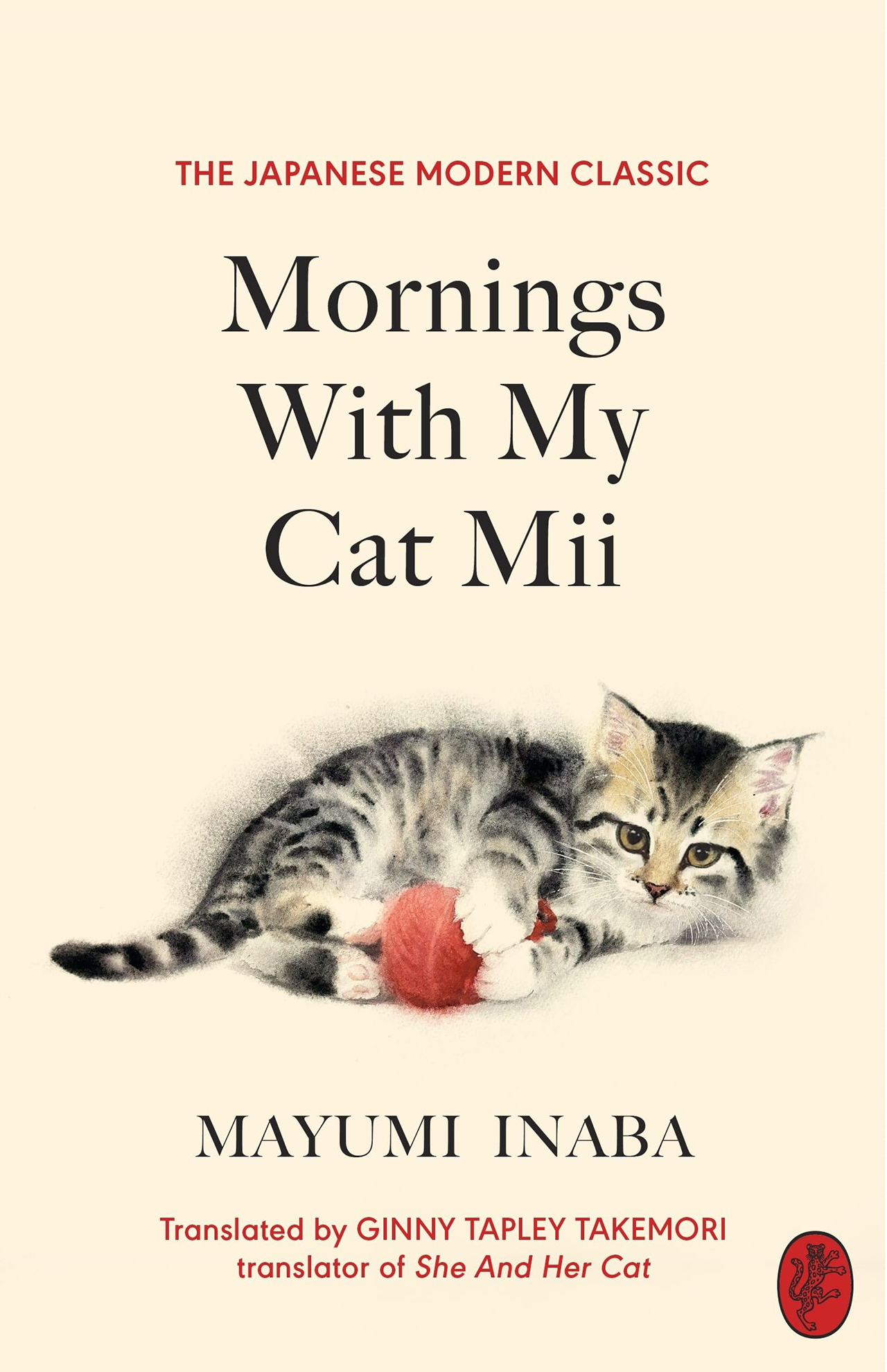
Mornings With My Cat Mii

Cats are adorable creatures, it’s true. It’s also true that they’re a little magical. Unfortunately, the experience of caring for a cat isn’t all sunshine and rainbows, and there’s a lot of cleaning involved. Mayumi Inaba’s autobiographical essay collection Mornings With My Cat Mii is a beautifully written attempt to capture the not-always-rosy reality of sharing your space with a cat while doing your best to manage your life as a human.

In the summer of 1977, Inaba follows the cries that drift in through her window and discovers a ball of fluff stuck at the top of a fence along the bank of the Tamagawa River in western Tokyo. Since it’s freezing outside, she takes the kitten home. Inaba names her “Mimi,” or “Mii” for short, after her constant crying. Despite her precarious childhood, Mii goes on to live for almost twenty years, accompanying the author through major developments in her personal life and career.     

Mayumi Inaba (1950-2014) worked in a number of creative industries while publishing stories, essays, and poetry. The opening essays in Mornings With My Cat Mii are about the milestones in Inaba’s life as she divorces her husband in Osaka to focus on her career in Tokyo. As time passes, Inaba begins to devote more attention to her friendships and psychological wellbeing, a shift in priorities represented by her growing love for Mii.

Mornings With My Cat Mii is far from wholesome, however. Inaba is nothing if not honest about the vicissitudes of life. Sometimes you and your partner grow distant. Sometimes you get kicked out of your house by your landlord. Sometimes people abandon animals. And sometimes you have to bear witness to your pet’s slow decline toward death.

A major element of Inaba’s commitment to honesty are her raw descriptions of the mess of keeping an animal in your house. Sometimes, for example, your entire apartment is going to smell like cat urine. Sometimes you have to scrub puke out of the carpet. Sometimes you have to extract your cat’s feces with your own hands.

Regardless, Inaba always finds a silver lining and an interesting story to tell. I especially enjoyed her essay “The Pet Sitter,” which provides an intriguing glimpse into the thriving industry of petcare services in Japan while digging its heels into the silliness of celebrity pet therapists. I also love “The Winter Break,” which describes a trip Inaba took to the countryside with her sister so Mii could touch grass and frolic in nature. The essay “Moving House” stands out as a playful description of a typical day in young Mii’s life in Inaba’s old house in the west Tokyo suburbs, which were still filled with pockets of nature in the 1970s.

Each essay is less than ten pages long, and most of them feature several verses of a poem as a postscript. Ginny Tapley Takemori has done a marvelous job translating Inaba’s poetry. Just be aware that some of these poems might make you a bit misty-eyed, especially if you’re feeling sentimental about the death of a pet of your own.

I’m generally not a fan of Japanese cat books, but Mornings With My Cat Mii isn’t bubblegum pop about how all of life’s problems can be magically solved by a cat. Rather, this is messy and honest nonfiction about the hardships of pursuing a creative career as a single woman. Still, Inaba manages to find moments of sweetness in life, which she generously shares with the reader in her soft and shining prose.

Emergent Tokyo

Emergent Tokyo: Designing the Spontaneous City is a fascinating study of urban space augmented by a wealth of photographs and illustrations. Jorge Almazán convincingly argues that, instead of being designed from the top down, Tokyo’s distinctive cityscape emerged from history and opportunity.

Almazán focuses on five distinguishing characteristics of Tokyo, from the famous zakkyo “mixed-use” highrise buildings that line the main boulevards to the dense shopping areas that crowd the bays between support columns under elevated train tracks. Each feature of Tokyo’s cityscape is illuminated by three case studies that are meticulously documented and analyzed.

My favorite chapter is about the narrow and winding ankyo streets of West Tokyo, which were built on top of old canals and have gradually become pedestrian oases. The most famous is Harajuku’s Mozart-Brahms Lane, the chill and ambient twin to Takeshita Street. As in the case of Mozart-Brahms Lane, ankyo streets have often become communal backyards for neighborhoods with flashier public faces.    

I especially appreciate the Conclusion section, in which Almazán demonstrates that corporate-led urbanism has created unwelcoming and visually unappealing spaces that have none of the vibrancy of the more organic spaces fostered by collectives formed by homeowners and small business managers. While urban planning is still necessary, Almazán argues, emergent communities should not be stifled. 

Emergent Tokyo isn’t a book for tourists, but I imagine it will be of interest to anyone who’s curious about urban design. Also, although some of the more academic text might fly above the heads of small children, I think Emergent Tokyo would be a wonderful book to give a kid. The illustrations and diagrams are truly fantastic, and they’re so immersive that I found myself disappearing into the details as I imagined walking through the Tokyo gorgeously laid out across the pages.

Being Dead Otherwise

Being Dead Otherwise is an anthropological account of the shifting cultures of death and dying in contemporary Japan. Despite its seemingly grim topic, this is one of the most hopeful academic books I’ve read in recent years.

Anne Allison is primarily concerned with Japan’s aging population, who have begun to form communities surrounding their preparations for burial. Due to urbanization and an increase in nuclear family households, it’s no longer feasible to rely on one’s children or relatives for end-of-life arrangements. Still, older generations have been finding practical solutions.

I especially enjoyed the chapter about the social meetings of the future occupants of urban columbaria (repositories for burial urns), who call themselves “grave friends” and get together to make scrapbooks and other creative projects that will commemorate their lives for their children and grandchildren.

Allison argues that this type of self-care is often necessary to work around Japan’s outdated burial laws, in which only the formally registered Head of Household (who is almost always male) is allowed to make arrangements with a Buddhist temple. Thankfully, many temples are starting to ignore this law in order to serve the needs of older women who survive their husbands. 

Without a doubt, many problems still exist in an increasingly fragmented society, but Allison is optimistic and respectful as she interviews death workers ranging from priests to city officials to entrepreneurs. Being Dead Otherwise is an academic book that achieves the highest standards of scholarship, but it’s also a fascinating read that’s easily accessible to a wide audience.

A word of warning, however: Being Dead Otherwise contains photos of human remains that may be disturbing to those who aren’t used to such things. Sensitive readers may want to skip Chapter 6 entirely.

Rental Person Who Does Nothing

Shōji Morimoto’s Rental Person Who Does Nothing is probably the most chill autobio essay collection I’ve read, and it’s also one of the more interesting. Morimoto, who makes himself available to strangers through Twitter, offers encouragement and support simply by being present.

Don Knotting’s translation does an excellent job of conveying Morimoto’s distinctly casual voice as he explains the situations in which someone might need an impersonal companion – when filing divorce papers, for instance, or when arriving to the airport after a visit with aging relatives. Morimoto doesn’t pass judgment, nor does he offer any sort of advice or therapy. Rather, he serves as a companion for tasks that are difficult to accomplish alone.

Generally speaking, Morimoto is asked to accompany people on relatively mundane tasks. A common request (that I found extremely relatable) comes from people who need someone to sit next to them while they write a difficult email. Although some requests are awkward, most are surprisingly wholesome. My favorite anecdote is about the person who asked Morimoto to express happiness and excitement when he greeted their dog in a public park.

To me, the most interesting thing about Rental Person Who Does Nothing is not the type of requests people send, but rather Morimoto himself. Like Marie Kondo (whom I wrote about here), Morimoto has a very distinct personality that comes with a story.

Morimoto was bullied at work by his supervisor, who told him that it didn’t matter whether or not he was there at all. Morimoto’s aggressively chill affect comes off as a weapon of resistance against the assumption that someone’s worth is dependent on how productive they can be for an impersonal institution. It fits the theme that there are no life lessons in these essays, just people being people.

To me, this memoir serves as a record of how social media has enabled a new type of ephemeral interpersonal relationship that can be psychologically healthy in its own way. Rental Person Who Does Nothing also inspires introspection regarding how a companion might help you on your own journey, as well as speculation about what sort of request you might make to Morimoto yourself.

からだの美

Yōko Ogawa’s 2023 collection からだの美 brings together sixteen short essays on the theme of bodies and physicality. The three primary topics are sports, performing arts, and animals.

The essays about sports were mostly lost on me, but I loved Ogawa’s discussions of animals, especially naked mole rats. As Ogawa reflects on their odd appearance and rigorously structured society, she writes that the world is an infinitely strange place, and that she couldn’t invent creatures like this from imagination even if she wanted to.

My favorite essay is レース編みをする人の指先, which is a meditation on how our lives and bodies are shaped by creative practice. Even though crafts such as embroidery and sewing lace seem to have no practical purpose in modern society, we continue to make things by hand just for the joy of it.

The Japanese literary tradition of essay writing is a bit different than what many of us have come to expect from English-language essays. To make a generalization, Japanese literary essays tend not to include anything overly personal about the author or lay bare any sort of trauma. It’s not a given that an essay will address political topics or attempt to persuade or educate the reader. Rather, reading a Japanese essay is often like engaging in a gentle conversation. I find this lo-fi style of writing to be quite relaxing to read, but your mileage may vary on whether the essays in からだの美 come off as pleasantly chill or somewhat flat and underwhelming.

To me, からだの美 is an interesting companion to Ogawa’s 2022 short story collection 掌に眠る舞台, which also explores the relationship between art and the body. Ogawa’s fiction follows strange people who inhabit a twilight world that feels slightly removed from our own, so I found it amusing to read her perfectly normal nonfiction essays about the brighter side of topics she’s explored in her recent stories.

Tree Spirits Grass Spirits

Tree Spirits Grass Spirits collects twenty-one autobiographical stories about plants by the celebrated Japanese-American poet Hiromi Ito. As the translator, Jon L Pitt, explains in the book’s preface, these stories were originally serialized from 2012 to 2013 in a highbrow Japanese literary magazine, but Ito’s prose is lively and accessible. Each of the stand-alone stories in Tree Spirits Grass Spirits is gentle and thoughtful, and the collection is a breath of fresh and green summer air.

Ito divides her time between the cities of Encinitas in southern California and Kumamoto on the southern island of Kyushu in Japan. Each region has a unique climate and ecosystem, and Ito is fascinated by the plants that grow in both environments, from yucca and agave to camelia and hydrangeas to grass and mold. Ito’s stories touch on botany and natural history, but their primary focus is on humans, especially the humans in Ito’s own family.

Among my favorite of the stories is “Baobab Dream,” which recounts a challenge that many people have experienced with houseplants. As Ito puts it: “They are at their most beautiful when you first purchase them, and they get progressively shabbier and shabbier, even if you take care of them. And then, at some point, they wither away and die.” 

And then, when you go to a garden store to get new plants to replace the old ones, it can be a challenge to identify what you’ve purchased. This is how Ito came into the possession of a mystery tree that she and her daughters resorted to calling “the baobab tree.”

While conducting research on what the tree might actually be, Ito considers the Latin names of various plants and arrives at the conclusion that botanical categorizations of plants often don’t make much practical sense. How are tulips and green onions members of the same botanical family, for instance? This confusion of taxonomy yields to broader meditations on how certain species are categorized as “invasive” as opposed to “naturalized,” and how this reflects Ito’s own experiences as someone who moves between cultures. In the end, however, such abstract concerns are secondary to the beauty of the plants themselves:

In the park next door, the mountain lilacs were at their peak. The peach trees and plum trees and cherry trees were blooming in folks’ yards. The roadsides were bright yellow from the acacias. The bushes of sweet-scented geranium in my own garden, too, had suddenly grown dense and were so thick that they seemed to be sweating, steeped in a green that surrounded one or two pink buds – swelling with each coming day and trying to open up any minute now.

Ito’s vivid descriptions of the physicality of the natural world carry over to her reflections regarding how it feels to be a human moving through the environment. This is one of the many reasons why I love the story “Kudzu-san,” which is about the kudzu growing in the neighborhood around Ito’s house in Kumamoto. As anyone who’s encountered the aggressively leafy vines can attest, kudzu is filled with vitality. If you cut it down, it will grow back twice as quickly, and its fuzzy tendrils are constantly creeping into unexpected places.

Ito remarks that there’s a certain lasciviousness to kudzu, so she searches for references to the plant in literary sources such as the Man’yōshū poetry anthology and the Tale of Genji. Such references are scarce, but Ito is intrigued by a chance mention of the famous Heian-period court magician Abe no Seimei, whose mother was supposedly a fox. In Japanese folklore, foxes are shapeshifters known for their sexual allure, so it seems only fitting that Seimei’s mother is poetically associated with the visual motif of kudzu. Ito’s own encounters with kudzu are likewise filled with startling physicality:

The vines we crushed in the morning lay as they were, and stood back up erect in the evening, swaying their stems and moving in on women – I had seen this, as well. They were more like snakes than plants. Even more than snakes, they resembled those eels that sway in the ocean. There are stories in old books about snakes that enter women’s bedchambers at night, and one about a snake that slid into a woman’s vagina after she had climbed a tree. Couldn’t all those stories be about kudzu?

What I admire about Ito’s stories is that, despite the poetic beauty of her writing, her meditations often progress in strange and unexpected directions without forcing symbolism or allegory onto the natural world. Ito observes her environment closely and looks inward as she describes what she sees, but the mycelial networks between her associations expand unseen below the surface of her writing. Just as autobiography often inspires self-reflection in the reader, Ito’s “phyto-autobiography” inspires an observation of ourselves in a larger context that doesn’t always follow human logic.

Tree Spirits Grass Spirits is a welcome companion to anyone interested in going outside and seeing the world around them from a fresh perspective. Jon Pitt’s translation gracefully conveys Ito’s casual style by allowing space for the rhythm and mouthfeel of each sentence, and it’s not an exaggeration to say that every paragraph is a joy to read. Almost all of the stories are less than ten pages long, and it’s a pleasure to dip into the collection whenever you’re in the mood to open your eyes and shift your viewpoint to a less anthropocentric frame of reference.

Tree Spirits Grass Spirits is published by Nightboat Books, and you can check out the book’s page (here).

Books on Japanese Culture and Society

This past semester I taught a class on Japanese science fiction and fantasy, and I was surprised by how interested my students were in learning more about the social and cultural context of contemporary Japan. I therefore put together a list of recommendations for popular-audience books that are smart and specific yet still accessible to a casual reader. I decided to share this list here with the hope that it might prove useful outside the classroom.

If you’re interested in social issues facing contemporary Japan…

Dreux Richard’s Every Human Intention: Japan in the New Century (2021) tackles two of the most significant demographic concerns in Japan, immigration and rural depopulation, as well as a major environmental concern, Japan’s aging nuclear reactors. Richard approaches these topics by conversations with people who are directly involved, from Nigerian immigrants to census workers to nuclear regulatory officials. The writing is remarkably rich and features a large cast of characters with interlocking stories.

If you’re interested in learning more about the “Triple Disaster” of March 2011…

Richard Lloyd Parry’s Ghosts of the Tsunami: Death and Life in Japan’s Disaster Zone (2017) tells the stories of people who survived, as well as the stories of people who didn’t. There are elements of true crime in Parry’s journalism, which seeks to understand what happened, how it happened, and how it affected those involved. Parry is never needlessly dramatic or unkind, but he is justifiably critical of the decisions of elected officials at all levels of government.

If you’re interested in a deep dive into the “Lost Decade” of Japan in the 1990s…

John Nathan’s Japan Unbound: A Volatile Nation’s Quest for Pride and Purpose (2004) was written at a time when people were just beginning to understand the causes, repercussions, and long-term effects of Japan’s prolonged economic recession. Although it was published almost twenty years ago, this book remains relevant. Nathan is a professor and a literary translator, and reading each chapter is like listening to a fascinating class lecture.

If you’re interested in the dark side of Japan’s postwar economic miracle that emerged in the 1980s…

Norma Field’s In the Realm of a Dying Emperor: Japan at Century’s End (1991) is simultaneously an academic study and an intensely personal memoir. It’s also a genuine work of literature, and it won an American Book Award in 1992. Field’s prose is impeccably beautiful and a true pleasure to read, and her critique of the rise of neoliberal capitalism in Japan is penetratingly sharp. This book doesn’t feel the least bit dated, and it’s actually somewhat uncanny how all of Field’s predictions for Japan’s future came true.

If you’re interested in the history of how Japanese pop culture has been exported and received in the United States…

Matt Alt’s Pure Invention: How Japan’s Pop Culture Conquered the World (2020) is recounted from the perspective of an active working professional in the field of cultural exports from Japan. Alt begins in the immediate postwar period, and the scope of this book is impressively expansive. Alt regularly writes intriguing longread pieces for the New Yorker, and his 2018 essay “The United States of Japan” is a fascinating preview of an equally fascinating book.

If you’re interested in the American anime explosion during the early 2000s…

Roland Kelts’s Japanamerica: How Pop Culture Has Invaded the U.S. (2006) feels charmingly retro in its perspective on Japan’s anime industry, especially when it comes to Kelts’s optimistic enthusiasm. This book captures the excitement of the mid-2000s anime boom fueled by DVD sales and anime conventions, which were springing up like mushrooms in North America. Kelts hits all the high points of the conversation at the time as he discusses topics ranging from anime auteurs to otaku fandom subcultures.

I also want to mention Jonathan Clements’s Anime: A History, which was published in 2013 by the British Film Institute. This is a muscular book that might be a bit too powerful for a casual reader, but it’s exquisitely well-researched and absolute required reading for anyone’s who’s serious about studying anime in the context of the creative industry that produces it.

If you’re interested in how the gaming industry developed in America during the 1980s through the 2000s…

Jeff Ryan’s Super Mario: How Nintendo Conquered America (2012) is a lot of fun. Very few people knew how to write about video games back in the early 2010s, but Ryan has perfect pitch. Nintendo is an apt focus of Ryan’s exploration of how the gaming industry underwent numerous rapid shifts during a twenty-year period, but the book is still interesting and accessible even to people who don’t particularly care about Nintendo games.

If you’re interested in landmark speculative fiction and sci-fi anime from the 1980s and 1990s…

Robot Ghosts and Wired Dreams: Japanese Science Fiction from Origins to Anime (2007) is an academic essay collection, but most of the essays are fun, interesting, and easy to read. There’s a lot of intriguing analysis here, as well as a great deal of literary and media history that you can’t find in English anywhere else.

If you just really love Hayao Miyazaki…

Helen McCarthy’s Hayao Miyazaki: Master of Japanese Animation (1999) is a classic, with beautiful summaries, insights, formatting, and screenshots. Susan Napier’s essay collection Miyazakiworld: A Life in Art (2019) is published by an academic press but still accessible and enjoyable, and it has the added bonus of covering Miyazaki’s manga in addition to his films.

If you’d like to do some armchair tourism of otaku subcultures in Tokyo…

Gianni Simone’s Tokyo Geek’s Guide: The Ultimate Guide to Japan’s Otaku Culture (2017) is filled with incredible photos and a wealth of interesting recommendations. It also includes several illustrated essays on the history and cultural context of various subcultures, from comics to cosplay to pop idols to anime musicals.

If you want to learn about Japanese folklore while doing some armchair tourism of rural Japan…

Cécile Brun and Olivier Pichard’s Onibi: Diary of a Yokai Ghost Hunter (2016) is a collection of comic nonfiction essays about the artists’ travels to various points of interest in the Tōhoku region of north Japan. There is indeed ample discussion of ghosts and yōkai, but this book’s true charm is its depiction of small rural towns and the colorful human characters who live there.

If you want to learn about Japanese urban legends and the true stories that inspired them…

Tara A. Devlin’s Toshiden: Exploring Japanese Urban Legends (2018) is self-published on Amazon, but that doesn’t make it any less well-researched. This book covers many internationally well-known Japanese urban legends, as well as a few that are infamous in Japan but aren’t yet widespread on the English-language internet. It’s much longer and denser than you might expect, but every chapter is extremely entertaining.

. . . . . . . . . . . . . . . . . . . .

This post’s header illustration was created by Marty Tina G., who goes by @geezmarty on Twitter. You can check out their portfolio (here) and download their short fantasy and sci-fi comics (here). Marty is an expert at bold character designs and bright color palettes, and I trusted them to capture the energy and excitement of reading an interesting book that expands the world.