The first volume of Akihito Sakaue’s manga Kanda Gokurachō Shokunin Banashi, which won the Tezuka Osamu New Creator Prize in 2024, collects five stand-alone short stories about the everyday lives of artisans during the Edo Period. As might be expected from a manga about craftsmanship, Sakaue devotes meticulous care and attention to creating an accurate visual depiction of the tools and techniques used in these traditional arts.
Shokunin Banashi opens with a twelve-page account of a day in the life of a carpenter who creates and repairs wooden buckets. Although the work may seem unglamorous, the skill involved is readily apparent. An additional layer of accuracy lies in the fact that this story’s star craftsperson is female, as were many of the artisans who kept Edo period society functioning.
The next two stories feature a blacksmith who specializes in swords and an indigo dyer who dreams of creating her own fabric pattern designs. My favorite of these opening stories is the fourth, which follows a young but talented seamster who sews and binds the edges of tatami mats. Along with the rest of his team, he’s been hired to replace the tatami in a high-end establishment in the Yoshiwara red light district. The courtesans are impressed by the craftsman’s skill with his hands, but he remains focused on his craft and maintains an appropriate professional distance. Once he’s finished the job, however, he allows himself to be a little flattered. This is a cute story that’s also very sympathetic to the craft of the women who work in Yoshiwara.
The three-chapter story in the second half of the volume is a workplace drama about a company of contractors who specialize in laying plaster walls. This is intense physical labor that requires a good eye, a steady hand, and careful group coordination. The leader of the team, Chōshichi, is an undisputed master of her craft, but a new recruit, Jinsaburō, soon learns that there’s trouble among the ranks of her subordinates. A master craftsman himself, Jinsaburō supports Chōshichi during the construction of a townhouse. For the reader, this is a marvelous opportunity to get an inside look at each stage of how these houses were built.
I’d recommend Shokunin Banashi to anyone who enjoyed Fumi Yoshinaga’s Ōoku series, especially for the high quality of its historical representation and the subtlety of its human drama. I might also recommend Shokunin Banashi to any illustrator who’s interested in studying hands depicted in a variety of positions while manipulating all sorts of specific tools. The art in Shokunin Banashi is something special, as is the physical book itself, which was designed to be a beautiful object.
Edited to add: This manga has been licensed by Yen Press as Neighborhood Craftsmen: Stories from Kanda’s Gokura-chou. Excellent!
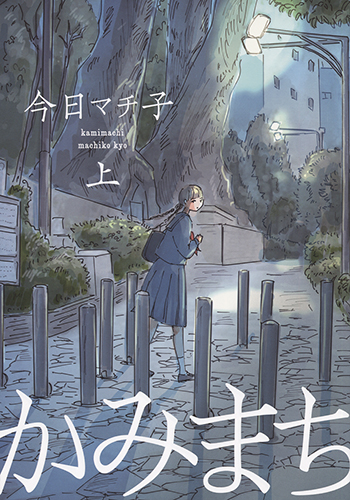
Machiko Kyō’s Kamimachi (かみまち) was serialized from June 2019 to December 2022 and published as a two-volume graphic novel in August 2023. The story follows four homeless teenage girls who find themselves at a privately run youth shelter called Kami No Ie (“Family of God”) in the Tokyo suburbs.
Although he initially seems kind and welcoming, the middle-aged man who runs this shelter is a sexual predator, and he has assaulted and murdered one of his young charges prior to the beginning of the story. The ghost of this young woman, in the form of a Christian angel, helps the girls find the courage to escape the Kami No Ie shelter.
Each of the four main characters in Kamimachi has become homeless after escaping a toxic home environment.
Uka is the only child of a single mother who projects her loneliness and frustrated ambitions onto her daughter. The story begins as Uka leaves home and seeks shelter by means of a roomshare app. After a number of awkward situations, Uka comes to the attention of a group of men who use the app to recruit sex workers. These men force Uka into a situation in which she’s expected to trade a night at a short-term rental space for sex. She breaks out of the apartment and wanders the streets of Tokyo before finding herself at the Kami No Ie shelter.
Uka’s closest friend at the shelter, Nagisa, has been sexually abused by her stepfather for years. She finally flees from home after her mother witnesses one of these assaults and turns away in disgust.
Arisa was raised as a television idol by a single mother. After her mother’s sudden death in an accident, Arisa is given to the care of a talent manager who steals her inheritance and financial assets, leaving her destitute.
Yō is one of five siblings. She’s so neglected by her family and bullied by her brothers that she finds it preferable to sleep in subway stations. Eventually she stops returning home altogether.
For each of these young women, Tokyo becomes a wilderness whose anonymous open spaces serve as a refuge from the enclosed interiors where they’re coerced into enduring abuse. Kyō draws indoor scenes using small panels with blank backgrounds, and these scenes often feature close-ups of the characters’ faces in moments of distress. Meanwhile, Kyō depicts outdoor scenes with large panels that frame the characters with trees and buildings. The expansive outdoor settings often serve as the stage for small moments of kindness and emotional clarity.
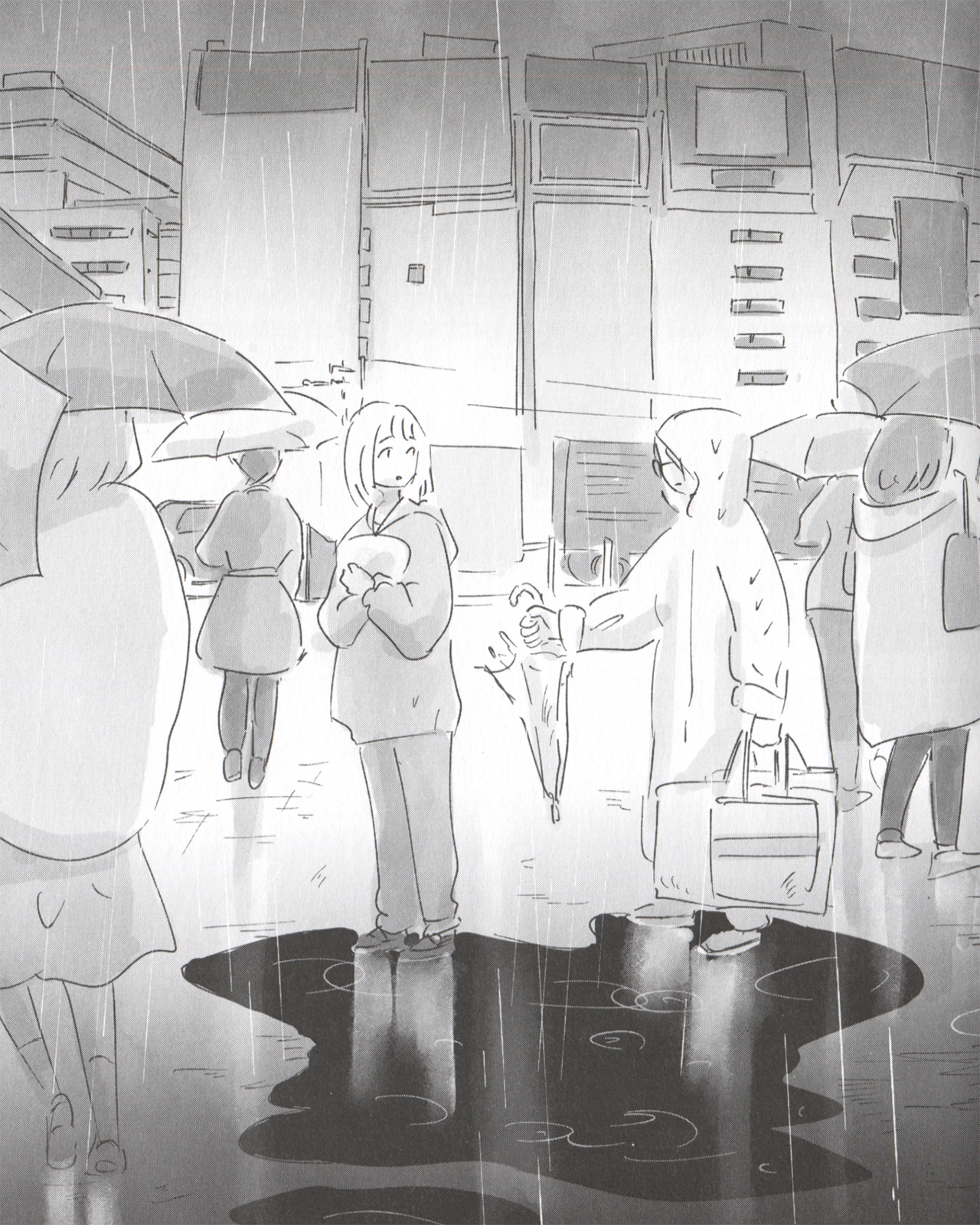
In Chapter Three, for example, Uka flees into the night after an attempted sexual assault at a roomshare apartment. After her escape, she wanders through the rain with nothing but the clothes on her back. Out of context, the rainy cityscape may seem bleak, but the large panels filled are a visual relief after the oppressively small and claustrophobic panels that depict the apartment.
One of the anonymous figures passing in the rain, whom the reader later learns is Yō, stops beside Uka to give her an umbrella. Page 71 opens with a close-up of Yō’s extended hand before spreading into an open panel in which Uka and Yō stand at the center of a composition framed by misty buildings and puddles on the concrete. The two small figures reaching out to one another are enclosed in a soft curtain of rain, and the sense of relief at being a part of a larger world is palpable.
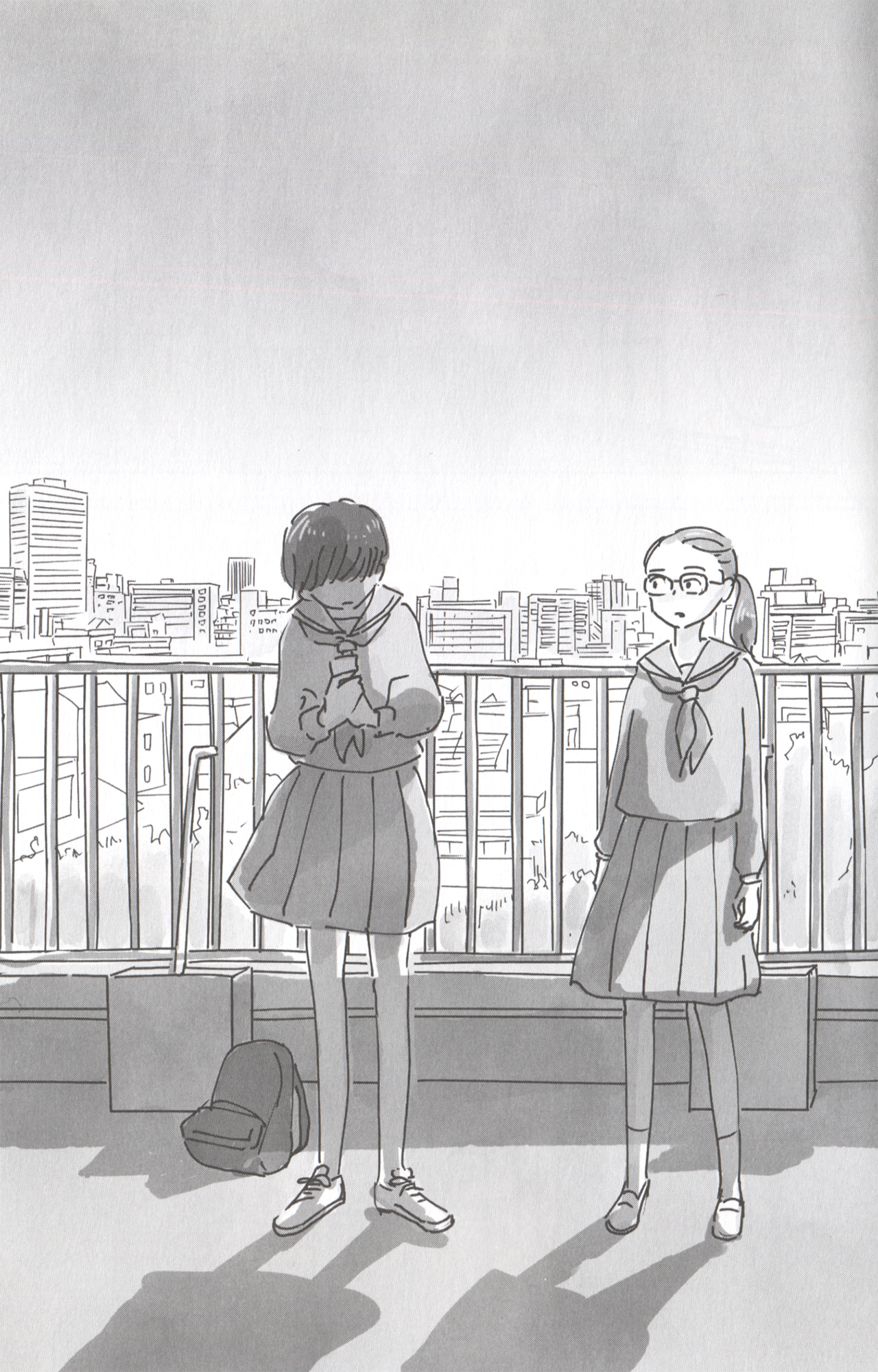
Chapter Seven contains a similar scene in which the open sky and background cityscape suggest freedom from the violence that occurs behind closed doors. Nagisa, who’d encountered Uka in a roomshare arrangement, takes Uka’s discarded uniform and attends school in her place. One of Uka’s former classmates approaches Nagisa, offers to share her lunch, and asks that Nagisa talk with her on the roof. Nagisa initially tries to be normal, showing the girl photos of her mother and stepfather’s new infant daughter.
During this scene, the panels become progressively smaller until Nagisa finally admits the truth about having left her family. The shift to a full-page panel depicting the city’s jumble of buildings spreading under the open sky signals Nagisa’s admission that something has to change. This moment also serves as the catalyst for Uka’s classmate to begin searching for her missing friend, a decision that ultimately results in Uka’s rescue from the Kami No Ie shelter.
The openness of Tokyo cityscapes in these scenes suggests that the sort of hidden abuse endured by these young women needs to be brought into the open and exposed to the light of public scrutiny. Along those lines, I can’t help but feel that Kyō’s depictions of outdoor spaces in Kamimachi also reflect the artist’s emotional response to the Covid pandemic. For people in precarious situations, being physically stuck inside often exacerbated the experience of feeling trapped within oppressive social systems.
As an artist who documented the pandemic years through evocative illustrations posted to Instagram, Kyō’s project is not simply to depict the beauty of architecture and greenery within the city, but also to comment on the importance of open outdoor “third places” for young people suffering from social pressure and economic strain. Kamimachi doesn’t provide easy solutions, but it’s cathartic to see the issue of youth precarity brought out into the open air.
Machiko Kyō is a prolific and award-winning artist whose illustration collections have been celebrated by The Comics Journal (here). If you’re interested in reading more about the artist’s work, I published a short essay on her 2013 graphic novel Cocoon – whose animated adaptation is scheduled to premiere on NHK in Summer 2025 – on Women Write About Comics (here). Here’s hoping that English-language readers will be able to experience Kyō’s compelling and thought-provoking work in the near future.
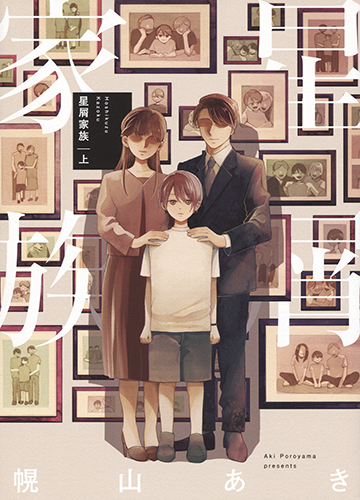
Hoshikuzu Kazoku (星屑家族) is a two-volume graphic novel set in an alternate universe where parents are required to obtain a license to raise children. To qualify for a license, a prospective family is asked to undergo an audition with a homestay student. This auditor, who is often an orphan raised in a government-run facility, evaluates the family’s fitness by deliberately behaving badly and provoking difficult situations.
An auditor who goes by Hikari is assigned to Daiki and Chisa Hirokawa, a young couple who live on the grounds of a Shinto shrine. During their initial interview, Daiki surprises Hikari by openly requesting that their family be denied a childrearing license. Daiki claims to be happy living with his wife as a couple, and he shares his suspicions that Chisa doesn’t actually want children. With that out of the way, Daiki says, the three of them can enjoy the homestay visit without any pressure or expectations.
Chisa and Daiki genuinely seem to be happy together, but Hikari soon notices that Chisa is the target of a longstanding prejudice held by people in the neighborhood. Chisa’s mother killed her father when she was a child, and she’s been ostracized ever since. Along with her foster father, who once managed the shrine, Daiki was the only person who was kind to her. Now that she and Daiki have married and set up a household at the shrine, Chisa feels trapped within a community she can’t escape. Why, then, does she want a child so badly? And is it Hikari’s place to get involved?
Hoshikuzu Kazoku is a high-stakes family drama that presents a moral conundrum with no easy solutions. If the government creates regulations to ensure a well-ordered society, what happens to the people whose lives are more complicated than the provisions allowed by the legal code? If there’s room for flexibility in the bureaucratic system that enforces the law, who should have the right to grant exceptions? And more specifically, in a country witnessing its birth rate decline in response to the disintegration of community support structures, what are the limits of government intervention?
Even putting such questions aside, Hoshikuzu Kazoku is compelling by virtue of its problematic yet still sympathetic characters. Hikari, Daiki, and Chisa each bring loads of emotional baggage to the table, but they do their best to communicate to the limited extent of their abilities. Despite their many flaws and the odds against them, I wanted these characters to be happy.
Aki Poroyama’s writing, dialogue, and pacing are all excellent, and the visual language of the manga serves to set the mood and create dramatic impact. I wasn’t familiar with the work of this artist, and I was amazed by the polish of this graphic novel. I’d recommend Hoshikuzu Kazoku to mature readers looking for socially conscious speculative fiction driven by complicated human stories.
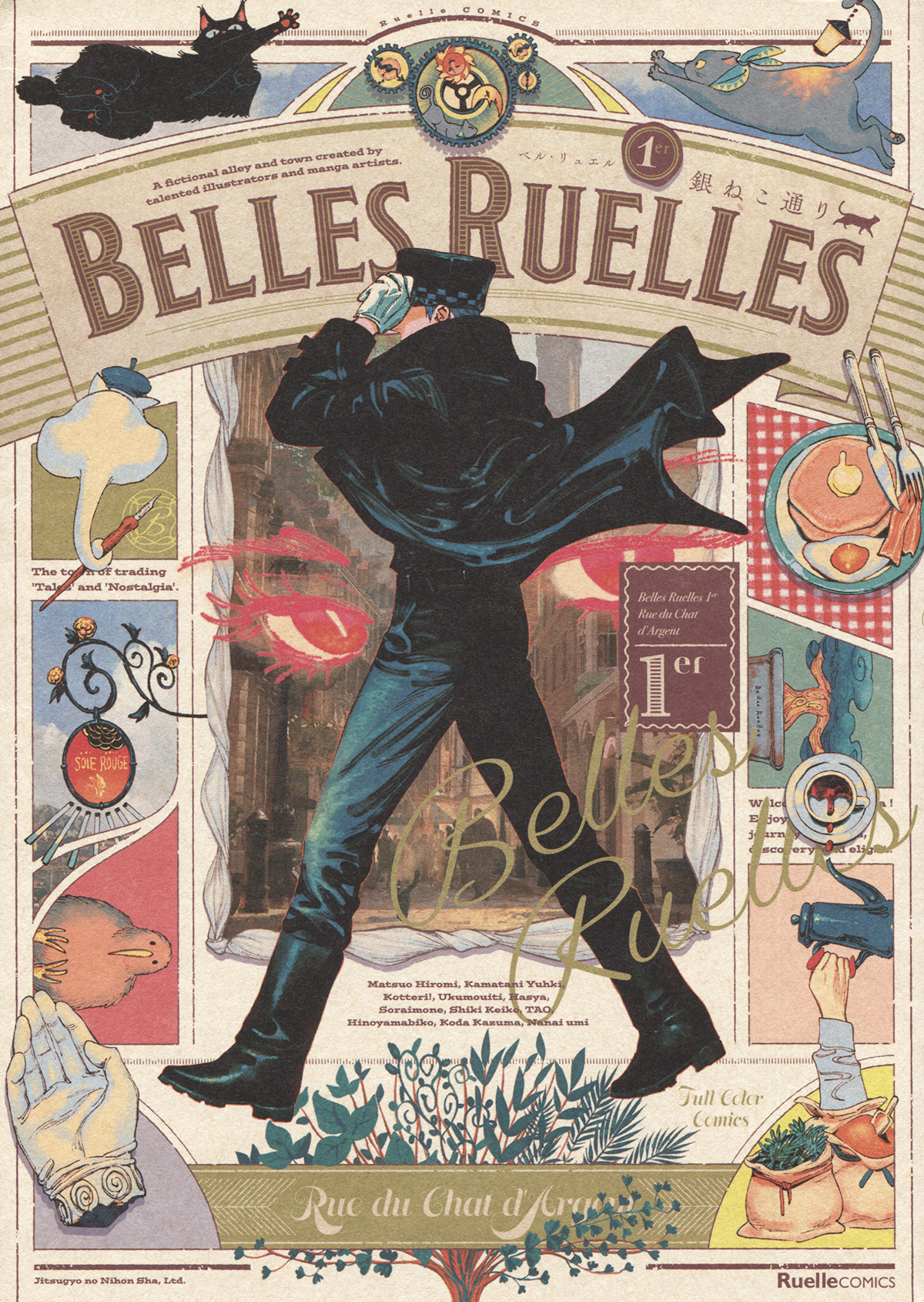
Belles Ruelles is a gorgeous full-color anthology that collects the work of eleven manga artists and illustrators, each of whom has been tasked with telling a story set in the fictional European town of Eufemia.
Eufemia has preserved its medieval cityscape while maintaining a lively community of established shops, young entrepreneurs, and cultures from all over the world. It’s filled with narrow alleys, charming old buildings, ivy-adorned walls, and even a bit of magic.
One of my favorite stories is Keiko Shiki’s “Spice,” in which the young assistant at a store specializing in herbal teas and cooking spices learns just how much love and care the store owner puts into perfecting her craft.
I also love Hiromi Matsuo’s “Soie Rouge,” in which a college student tastes the luxury of trying on a kimono for the first time. Every panel of this manga is an artistic masterpiece, and the writing gently guides the reader through the sartorial experience.
I’m happy to see that this anthology is the first in a series, because I’m very much looking forward to visiting Eufemia again soon. If you’re a fan of the fantasy European setting of Studio Ghibli movies like Kiki’s Delivery Service, I’d encourage you to take a trip yourself.
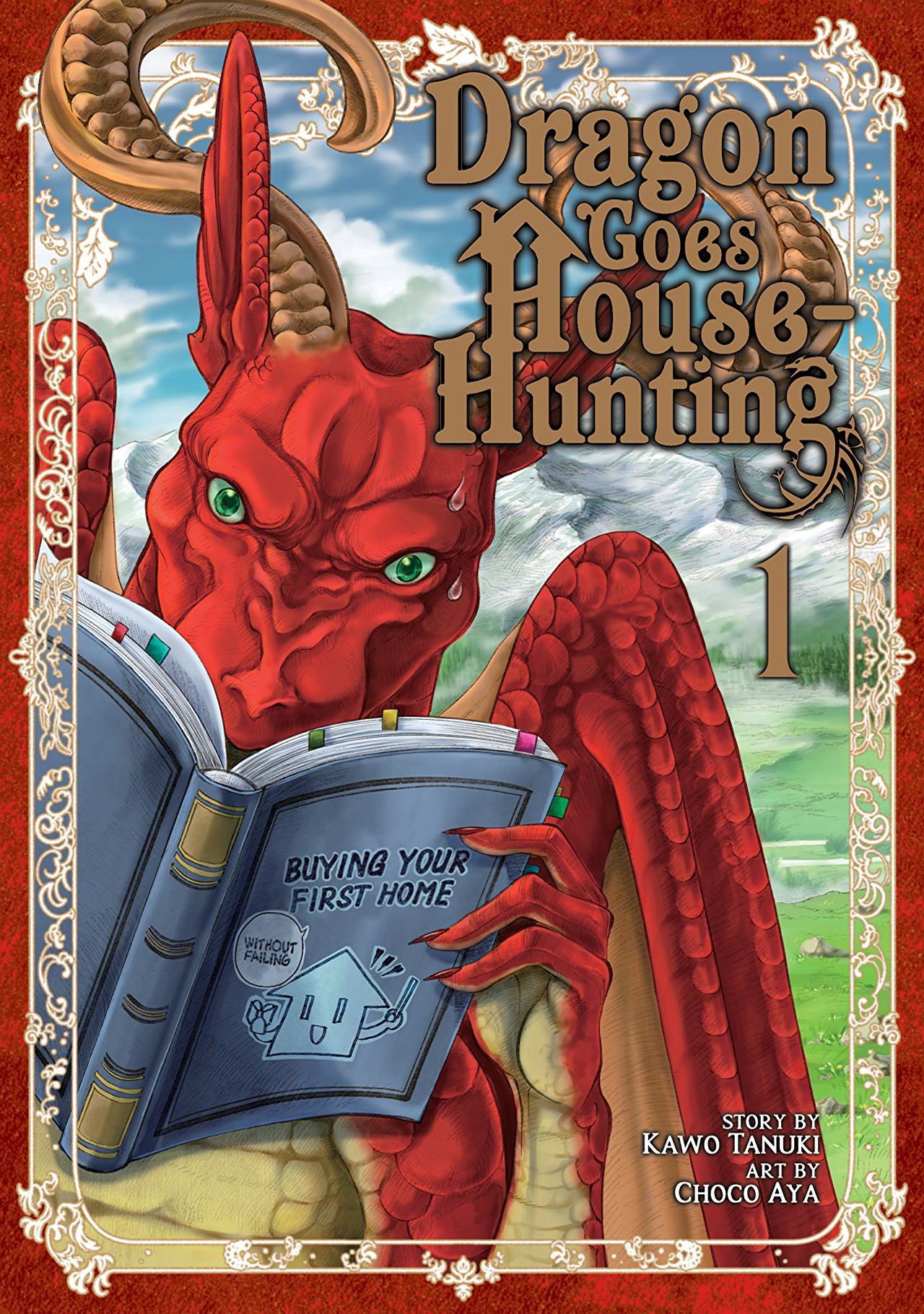
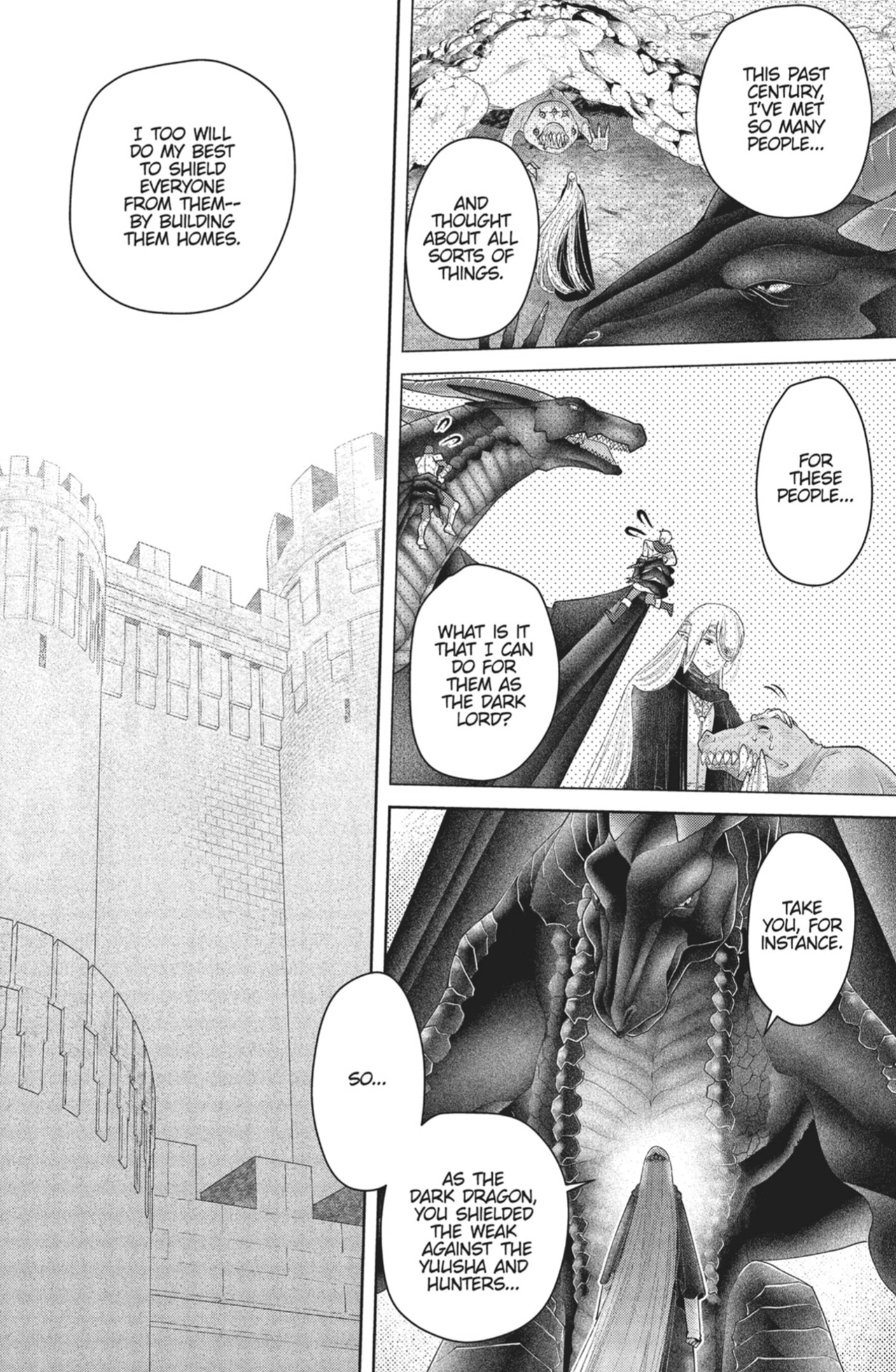
Earlier this year, Seven Seas released the tenth and final volume of Kawo Tanuki and Choco Aya’s fantasy series Dragon Goes House-Hunting. This manga follows the misadventures of a gentle but cowardly dragon named Letty and his real estate agent Dearia, a massively powerful and inhumanly beautiful dark wizard. Letty is searching for a comfortable house that will accommodate his size while also protecting him from the pesky adventurers trying to hunt him for crafting materials. While Letty pictures himself in a cozy cottage, Dearia encourages him to be more pragmatic and dungeon-minded.
What makes Dragon Goes House-Hunting stand out in the “slice-of-life fantasy” genre is the consistently high quality of its art, which references the detailed monster designs from video game manuals of the 1990s while still feeling fresh and contemporary. For video game fans especially, it’s quite entertaining to look at dungeon design from the perspective of the monsters, who are just trying to make it through the day without being harassed by heroes. The manga’s situational humor is gentle and sweet, but each volume still managed to surprise me with at least three or four devilishly sharp jokes.
Perhaps the easiest way to describe Dragon Goes House-Hunting is to say that it’s the high fantasy version of the wholesome yakuza comedy The Way of the Househusband. Like The Way of the Househusband, Dragon Goes House-Hunting is designed to be accessible to all ages, but it will resonate most strongly with readers old enough to have some experience with real estate (even if that experience is limited to looking for a student apartment). For a more action-oriented and kid-friendly take on the concept of “building homes for monsters,” I’d also like to recommend the ongoing shōnen series Soara and the House of Monsters, which is a gorgeously creative celebration of fantasy architecture.
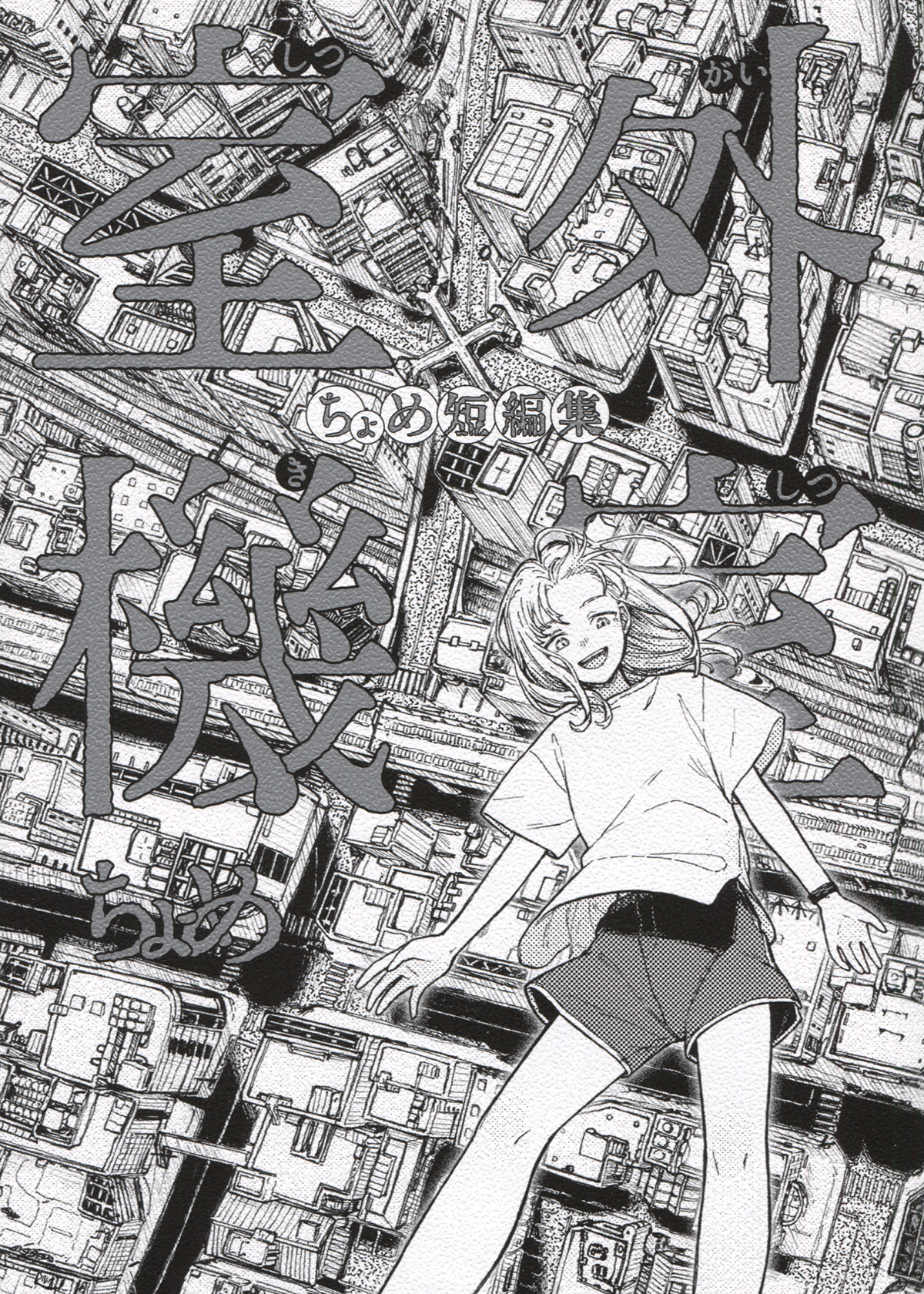
室外機室 collects four gorgeously illustrated magical realist stories drawn by an otherwise unpublished artist who goes by Chome. The stories transport the reader to a reality slightly removed from our own as each of the mundane protagonists catches a small glimpse of a hidden world.
I immediately fell in love with this collection from the opening pages of the first story, Tsugiho, in which a woman attends a large comic convention and finds a self-published minicomic that turns out to be brilliant despite its nondescript cover. The comic doesn’t seem to be documented anywhere online, so the woman starts writing a description. Her project quickly spirals out of control, however, as the pages of the small book seem to change each time she reads it. In the end, the woman’s essay transforms into an original illustrated short story, which she self-publishes and takes to the same comic convention where she found the mysterious comic that inspired her.
Speaking personally, I couldn’t describe the process of creative inspiration more accurately if I tried. What begins as a relatively straightforward act of casual appreciation can easily turn into something that has almost no relation to the original work at all, often to such an extent that the source is entirely forgotten by the end. In addition, it’s not always the case that creative inspiration comes from “the great works” of art and literature, as smaller and more specific stories can create a powerful sense of resonance and creative motivation even despite being unacknowledged by the broader culture. It’s nothing short of amazing that Tsugiho captures this aspect of creativity so perfectly in just twenty pages.
The two middle stories are thought experiments that are far more beautifully executed than they have any right to be. In 21g no bōken (which illustrates the manga’s front cover), a young woman dies and finds that her ghost is able to go anywhere and do anything. This story is primarily an excuse to illustrate the joy of absolute freedom of movement, but the ending is quite touching. Meanwhile, Konshin takes place almost entirely in a woman’s bedroom as she sits at her desk and listens to a strange radio broadcast from a parallel universe in which history has developed in an entirely different direction. The strength of this story lies in its writing, but the uncanniness of the broadcast is augmented by the visual coziness of the woman’s apartment.
The fourth and final story, Chika tosho tankenshō, is a seventy-page graphic novella that blew me away with its creativity and charm. A young woman doing research at the library drops her eraser, which bounces into the crack of a panel at the bottom of a bookshelf. The woman opens the panel to find a staircase. To the woman’s surprise, there’s an enormous library complex underground, but something about it is decidedly strange. The staff is wearing traditional Japanese clothing, and none of the books have titles. The young woman quickly arrives at the conclusion that this isn’t a place she’s supposed to be, but can she escape without being caught by the librarians? And what are all the mysterious books?
If I had the power to snap my fingers and make any manga appear in a licensed English translation, Shitsugai Kishitsu would be at the top of the list. This short story collection is a hidden treasure that easily stands its ground with the experimental but gorgeously polished work of emerging creators published by small presses like Silver Sprocket and Peow, and I could see any of these minicomics being released in the line-up of the ShortBox Comics Fair. Whoever the mysterious Chome may be, they’re creating brilliant and accessible comics that deserve an appreciative international audience.
Shima Shinya’s four-volume sci-fi manga Glitch opens in a mundane setting in contemporary Japan: a high school student named Minato Lee (who uses they/them pronouns) has moved to a small rural town with their mother and younger sister Akira.
Minato notices that there’s something strange about their new home after a fragmented hole in reality emerges from the ceiling of her classroom. Two of Akira’s friends confirm Minato’s experience, telling them that only some people can see the distortions.
The group consults with the clerk of a neighborhood corner store, a mild-mannered man in flip-flops with a Biblically accurate angel for a face. He tells them that, since the town was constructed on top of open fields thirty years ago, various visitors have been emerging from a mysterious forest. He should know, given that he’s one of them, but the town’s glitches are a mystery to him as well.
Shima is a big fan of Star Wars and a co-author of The High Republic: The Edge of Balance manga series. Glitch captures the fun “weird little creatures in rundown environments” spirit of Star Wars, but the manga also engages with the deeper themes expressed in the movies, especially regarding how the small-scale actions of a diverse coalition are necessary to undermine the mundanity of evil.
Glitch handles its portrayal of diversity in a light-handed and clever way, and the “evil” confronted by the characters isn’t what readers might expect. While its story takes time to develop, the strength of Glitch’s art is immediately apparent, as Shima mixes the dynamic poses and expressions of Disney-style animation with the detailed backgrounds and dramatic panel compositions of indie manga.
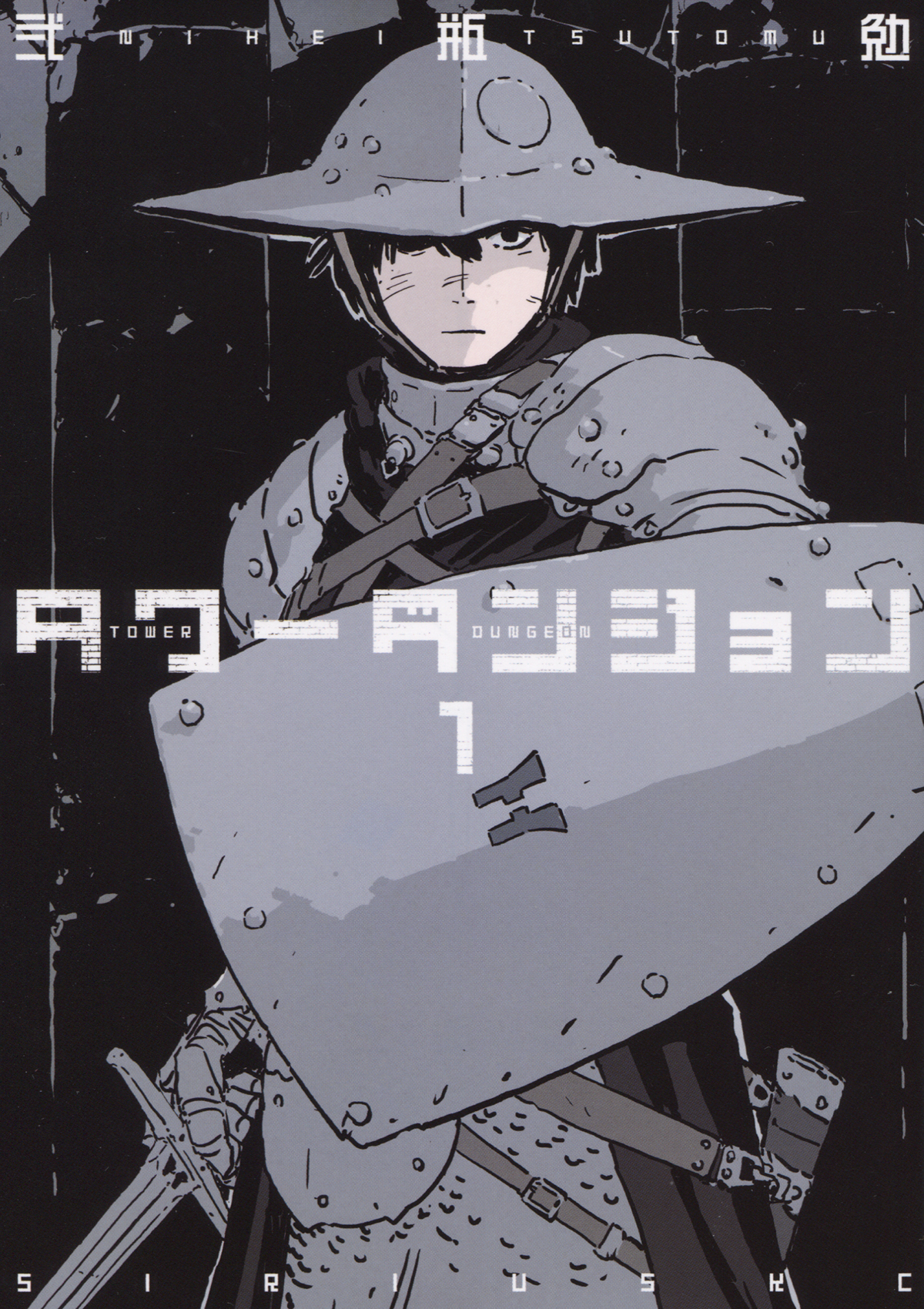
Tsutomu Nihei’s newest manga series, Tower Dungeon, is a grim and grisly dark fantasy about a small team of knights attempting to rescue a princess from an evil wizard at the top of the mysterious Dragon Tower.
This purposefully bog-standard fantasy premise is a bait-and-switch for the actual story, which is as brutal and fiercely imaginative as any of Nihei’s sci-fi dystopias. Instead of being set in the claustrophobic cable-choked interior of a spaceship, the visual space of Tower Dungeon is filled with vaulted ceilings and crumbling stone walls, but Nihei still dazzles the reader with labyrinthine passageways and an awe-inspiring sense of scale.
Nihei’s signature body horror is on full display in Tower Dungeon, which is populated by the shambling undead, grotesque human graftings, uncanny automatons, and abject abominations. Even when they’re not monstrous, I love the designs of Nihei’s heavily armored knights.
There’s a bit of fanservice, sort of? But not really, and I’m not complaining. If I had to guess, I’d say that Nihei has a crush on Malenia, the deadly woman warrior from Elden Ring, but don’t we all.
The pacing of Tower Dungeon is excellent, and the action sequences are balanced by downtime and light banter that doesn’t try too hard to be funny. The characters offer very little exposition, but the background setting is intriguing. Given my experience with Nihei’s previous manga series, I’m not expecting the story to coalesce into any sort of cohesive plot, but I’m happy to join this strange journey wherever it leads.
I think, honestly, that Tower Dungeon is the Dark Souls manga I always wanted. I hope it gets an English translation soon!
Taiyō Matsumoto’s newest series, Tokyo These Days, follows a senior manga editor named Shiozawa who suddenly quits his job at a publishing company. After an initial period of wanting nothing more to do with manga, Shiozawa visits various artists he’s worked with over the past thirty years, hoping to commission “the perfect manga.”
Like Matsumoto’s Eisner-winning graphic novel Cats of the Louvre, Tokyo These Days is a sensitive yet realistic story about artists and the industry professionals who support their work. Although Matsumoto is honest about the pain caused by frustrated ambitions in a market that doesn’t value the wellbeing of artists, small moments of kindness and hope prevent the tone of the story from becoming too bleak.
Given that Tokyo These Days is a book about books, it’s worth mentioning that Viz’s hardcover edition is a beautiful publication with a glossy canvas cover and high-quality paper that allows Matsumoto’s artwork to shine. If you’re familiar with the kinetic urban fantasy Tekkonkinkreet, you’ll know just how much love Matsumoto puts into the details of his environments, and it’s a pleasure to take your time studying each page to appreciate the ink textures and image framing.
I’m looking forward to seeing how the story of Tokyo These Days develops, but the first volume stands on its own as an episodic commentary on the difficult but still worthwhile business of being an artist and storyteller during the slow decline of the traditional publishing industry.
Title: シュナの旅 (Shuna no tabi)
English Title: The Journey of Shuna
Author: Miyazaki Hayao (宮崎 駿)
Publication Year: 1983
Publisher: Animage Bunko
Pages: 149
This guest review is written by L.M. Zoller (@odorunara on Twitter).
Shuna no tabi (The Journey of Shuna) is a short watercolor manga by Studio Ghibli director Miyazaki Hayao. Shuna is not only the precursor to Nausicaä of the Valley of the Wind, but also to Princess Mononoke, Nausicaä’s spiritual successor. It contains many of the themes that define Miyazaki’s oeuvre, such as the relationship between humans and nature, human rights, and pacifism.
Shuna is a prince from a small nation in a valley where food cannot grow easily and the people and animals are starving. One day, an injured old traveler wanders into his community. Before the man dies, he tells Shuna about a place where golden grain grows in abundance and gives him some seeds that a traveler gave him when he was a young man. Shuna decides to set off on a journey in search of the grain with Yakuul, his red antelope. Along the way, he fights slave traders and thieves and rescues a young woman, Thea, and her sister from slavery in the castle town of Dorei. They outrun the slave traders and eventually part ways. Thea and her sister go to a town in the north where they live with an old lady. Thea farms, raises animals, and weaves. Meanwhile, Shuna enters a forest full of giant green humanoids who become the forest when they die. The giants are people sold into slavery who are transformed into giants in an organic machine with the help of the Moon, who appears almost like a mask in the sky and appears to be a deity or other supernatural creature. Shuna finds the fabled golden grain in the forest, but his journey back to Thea and her sister is more difficult than anticipated.
Fans of Miyazaki’s work will be delighted to discover the prototypes for certain themes and scenes from both Nausicaä of the Valley of the Wind and Princess Mononoke in Shuna no tabi. While the story is certainly more simplistic than the works it inspired, there’s still a lot going on beneath the surface. What is the machine that turns people into forest giants? If the Moon is a god, are there other gods? What relationship do the slave traders have with the Moon?
Additionally, many illustrations from Shuna no tabi were later recalled in Miyazaki’s animation. A scene of Shuna eating while looking at some fox-squirrels in the forest is reused in Nausicaä, whose heroine eats with her pet fox-squirrel Teto in an identical pose. After Shuna leaves the city, he encounters and camps with an old man who tells him to go west to find the grain, a scene that is used again in Mononoke when Ashitaka camps with the monk Jiko, who tells him the iron bullet he found came from the west. The old man’s character design is reused for a priest in Nausicaä as well. The aesthetic elements of the Valley of the Wind also have their origins in Shuna no tabi, particularly the formal wear of the northern village and the murals in Shuna’s home. Some of the illustrations depicting the forest, especially the image of the flowers growing out of Shuna’s gun, were later reused in Mononoke.
From the perspective of gender representation, one thing I’ve noticed and admired in many of Miyazaki’s works is that he doesn’t use extreme sexual dimorphism – that is, his young adult male and female protagonists tend to be built alike. Shuna and Thea look nearly identical in body shape and facial features, and they both resemble Nausicaä and Ashitaka. While Miyazaki’s character designs for middle-aged characters feature more differences in height and build, the dimorphism is nowhere as extreme as it is in Disney and Pixar films (and for that, this genderqueer reviewer is grateful).
The biggest difference between Shuna no tabi and the works that followed it, however, is Miyazaki’s commitment to pacifism. Shuna spends a lot of time defending himself by shooting at people with his gun, and at the end of the story the village in the north still has to use guns to defend their land. In contrast, both Nausicaä and Ashitaka commit acts of violence in the beginning of their stories, mostly in self-defense. These experiences directly shape their commitment to pacifism as they both try to end the violence surrounding them; Nausicaä’s goal is to end a war between the kingdom of Tolkmekia and its colonies, while Ashitaka does his best to intervene in a conflict between Tataraba (Iron Town) and the deities of the forest. This is not to say that these characters refuse to commit violence, but that the narrative tone regarding violence shifts significantly as their stories develop.
The watercolor images are gorgeously rendered, and all the pages are in full color. My only complaint with the publication quality of the book is that the text, which is often printed directly onto the images instead of in word bubbles, can sometimes be hard to read, especially when the text is printed in white or blue ink. Adding the standard border and background to set off the text from the surrounding image would have eliminated this difficulty, albeit at the expense of preserving the full glory of the paintings.
I recommend Shuna no tabi primarily for fans of Miyazaki’s films who want to explore his earlier work. Shuna no tabi has not been translated into English, but it is written at a middle school level of language and should be accessible to readers with a high intermediate proficiency in Japanese. I would evaluate the Japanese at an N2 level, more so for the vocabulary than for the grammar. There isn’t a lot of violence in Shuna no tabi, but its depictions of slavery and starvation may be uncomfortable for some readers.
* * * * *
L.M. Zoller is a former JET CIR with an MA in Japan Studies. Ze wrote zir senior thesis on moral development theory in Miyazaki’s films and has probably seen Princess Mononoke 100 times (no joke). L.M. blogs about media and gender at The Lobster Dance (@odorunara) and food, sexuality, and gender at I’ll Make It Myself! (@illmakeitmyself).




 Contemporary Japanese Literature