Mushishi

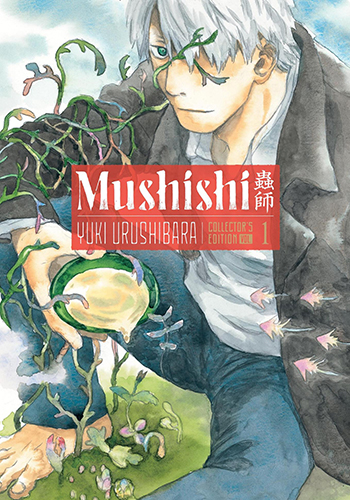
Yuki Urushibara’s ten-volume manga series Mushishi is a gentle but eerie collection of short stories about the uneasy relationship between humans and the natural world. Originally serialized between 1999 and 2008, Mushishi is now available in a series of hardcover Collector’s Editions from Kodansha, which has done a marvelous job with the release.

Mushishi is set in Japan during an unspecified time around the late nineteenth century. Some people wear Western clothing and smoke cigarettes, but traditional ways of life still persist in isolated rural areas, which seem untouched by time.

Ginko is a mushishi (“mushi scholar”) who travels to remote villages to study and document “mushi,” a collective term for a variety of lifeforms that exist partially in our world and partially in the realm of the supernatural. Like germs or bacteria, mushi are tiny and exist unseen by the vast majority of people. Problems arise when mushi form large colonies, especially within human bodies. Even as he studies and admires mushi, Ginko is often compelled to eliminate them in order to restore health to their human hosts.

As is the case with non-supernatural illnesses, people severely impacted by mushi often find themselves unable to return to normal life. In the manga’s second story, “The Tender Horns,” people living in a village deep in the mountains find that they go deaf in one ear when the snow falls. Ginko tells the village chief that this is the result of a mushi called “Un,” which lives in human ear canals and eats sound. This is a temporary inconvenience for most people, but one woman was so deeply impacted that she died. Now her son seems to bear the same affliction, which has manifested as a set of small horns on his forehead.

The tone of Mushishi occupies a liminal space somewhere between nostalgia and horror. Many of the stories have happy endings, but they’re nevertheless pervaded with the uneasiness of living at the edge of an unseen world that has little regard for human life. Mushi, which are something in between plants and animals and spirits, act in keeping with their nature, which is simply to grow and replicate. To most mushi, humans are little more than substrate.

Some species of mushi seem to possess something akin to sapience, however, and their relationship with humans is complicated. One of my favorite stories in the opening volume of Mushishi is “The Traveling Swamp,” in which a marshland appears and disappears seemingly at will. When Ginko studies the pattern of the manifestations on a map, he realizes that the colony of mushi is traveling through underground waterways. The young woman who appears and vanishes with the mysterious swamp has become saturated with the mushi, which have welcomed her as a companion on their journey to the sea.

What Ginko sees of mushi growth and behavior is akin to many written records of Japanese folklore, such as The Legends of Tono and Tales of Times Now Past, in which inexplicable things happen to people seemingly at random. In a time before modern science and infrastructure, the natural world was just as dangerous as it was awe-inspiring. As much as people in rural areas were dependent on nature for their livelihood, they were also at its mercy.

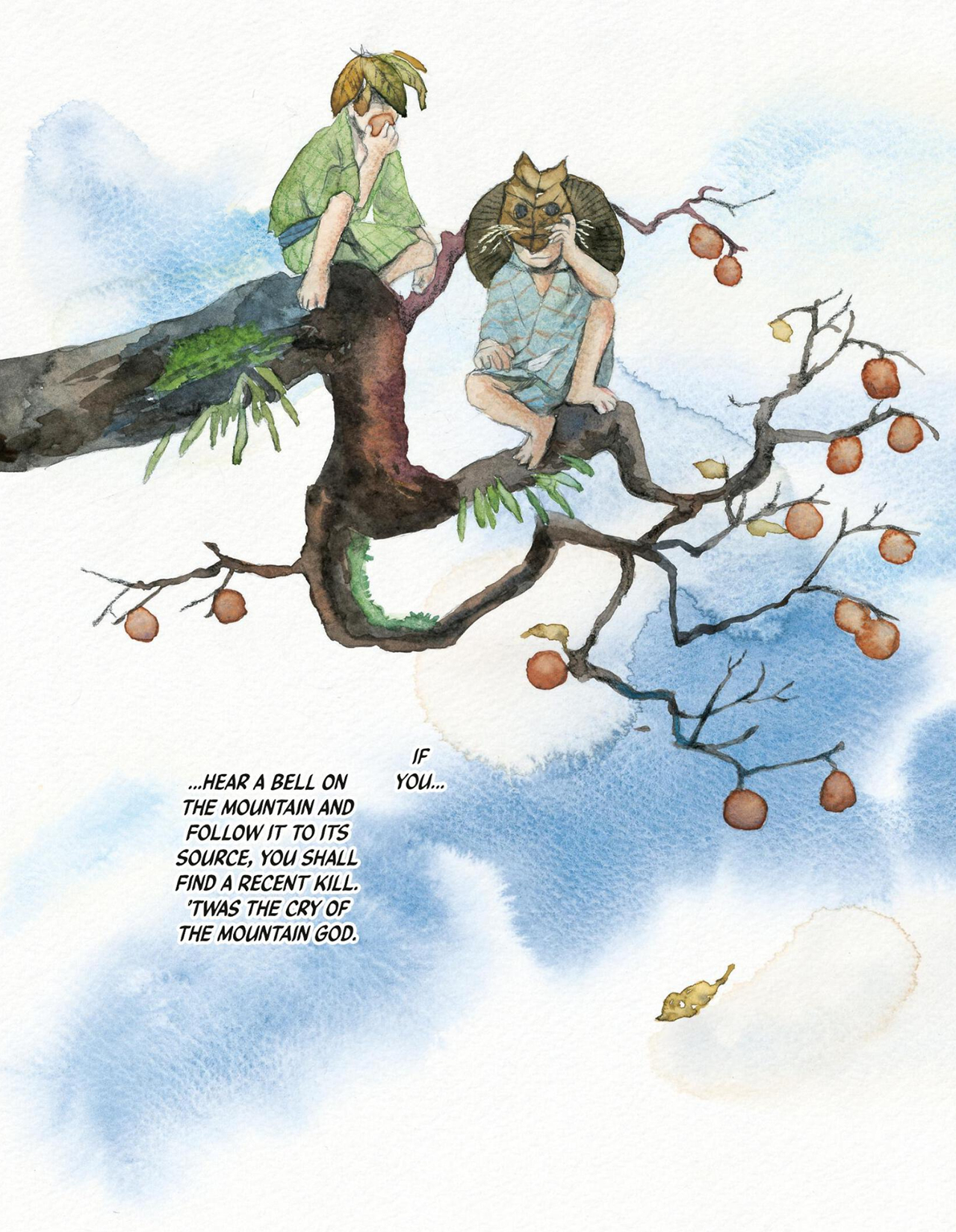
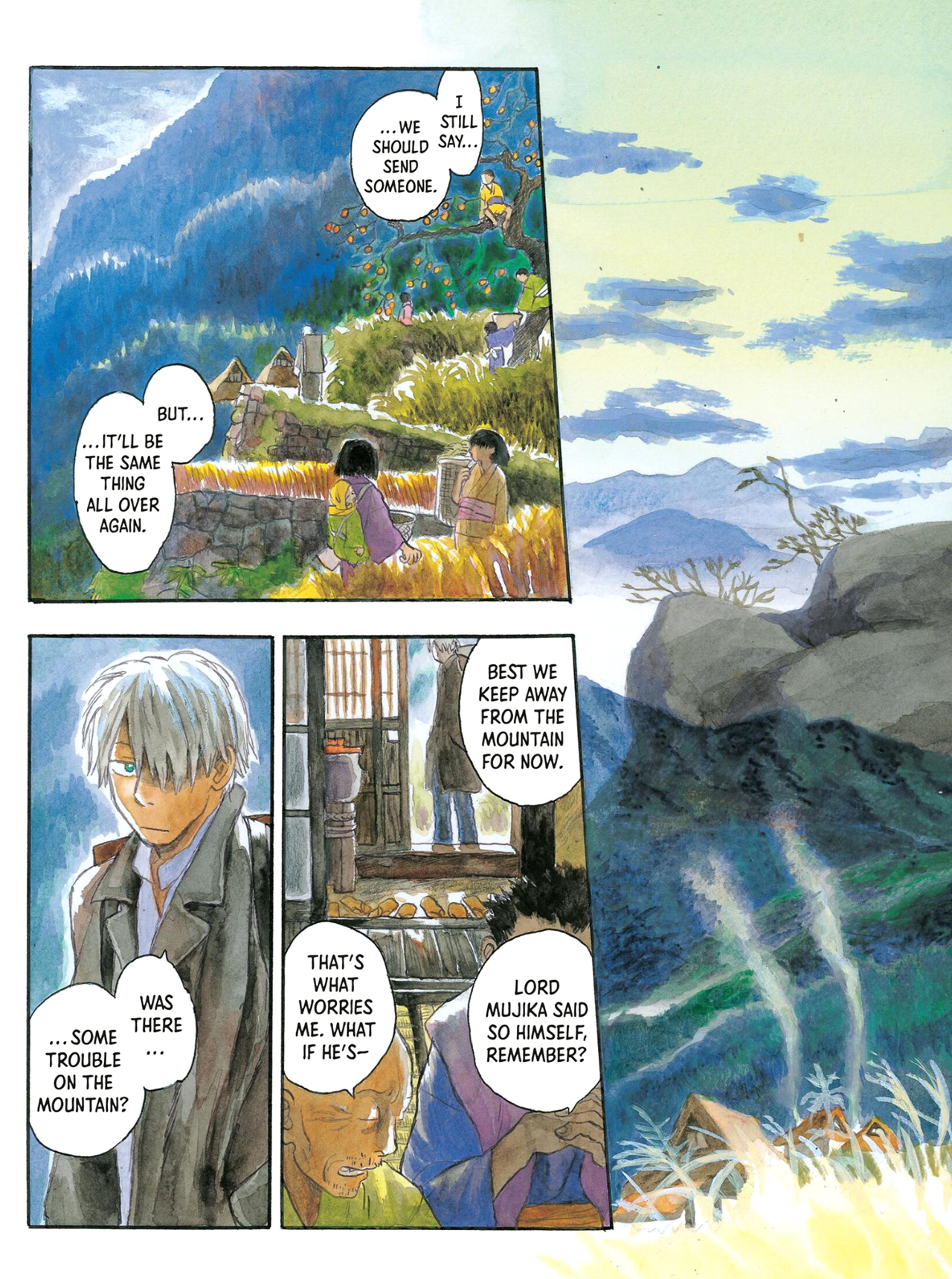
Yuki Urushibara’s artwork delights in wild spaces, from mountain roads to deep forests to ocean vistas to overgrown villages, and her depictions of premodern architecture and clothing are equally impressive. Urushibara is especially skilled with the use of etching and screentone to convey a sense of dim lighting while still using enough contrast to creatively highlight the focal points of each composition. The inkwork is truly impressive, as are the watercolor inserts, and Kodansha’s release of the manga allows Urushibara’s art to shine.

If you’d like to bask in the twilit atmosphere of a deep mountain forest, I might also recommend watching an episode or two of the Mushishi anime (available on Crunchyroll in the U.S.), which is extraordinarily well-produced. The anime is slow and quiet and isn’t for everyone, perhaps, but there’s really nothing else like it.  

The Shadow Over Innsmouth Manga

The Shadow Over Innsmouth is a gothic horror story in four acts. A college student on a self-guided architectural tour of New England takes an inexpensive bus that stops over in the isolated port town of Innsmouth. The student explores the town, and an elderly resident tells him about a wealthy sea captain who made an unholy bargain with ocean-dwelling fishpeople generations ago. The student is forced to stay in the town overnight, and the town’s hidden half-human residents chase him from his hotel. After successfully escaping Innsmouth, the student begins to question his own family lineage.

The writing in Lovecraft’s original 1931 novella can be difficult to parse, and the xenophobia of the narrative isn’t attractive to contemporary eyes. Regardless, this is an extremely influential story in the field of speculative fiction, with adaptations ranging from Alan Moore’s strikingly upsetting graphic novella Neonomicon to the ruined Fishing Hamlet of Bloodborne, not to mention countless stage plays, radio dramas, television episodes, indie films, video games, tabletop games, and even delightfully bizarre Christmas songs. Many of these adaptations, though excellent, assume a familiarity with the original that may not exist in an audience that isn’t already embedded in the speculative fiction fandoms of the twentieth century.

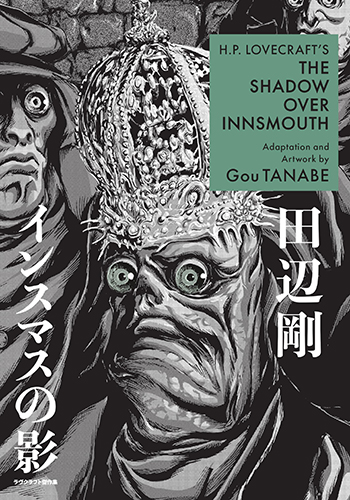
If you’re curious about Lovecraft’s work but put off by his prose, Dark Horse’s release of Gou Tanabe’s manga adaptation is an artistic marvel presented with an excellent translation in a handsomely published single volume.

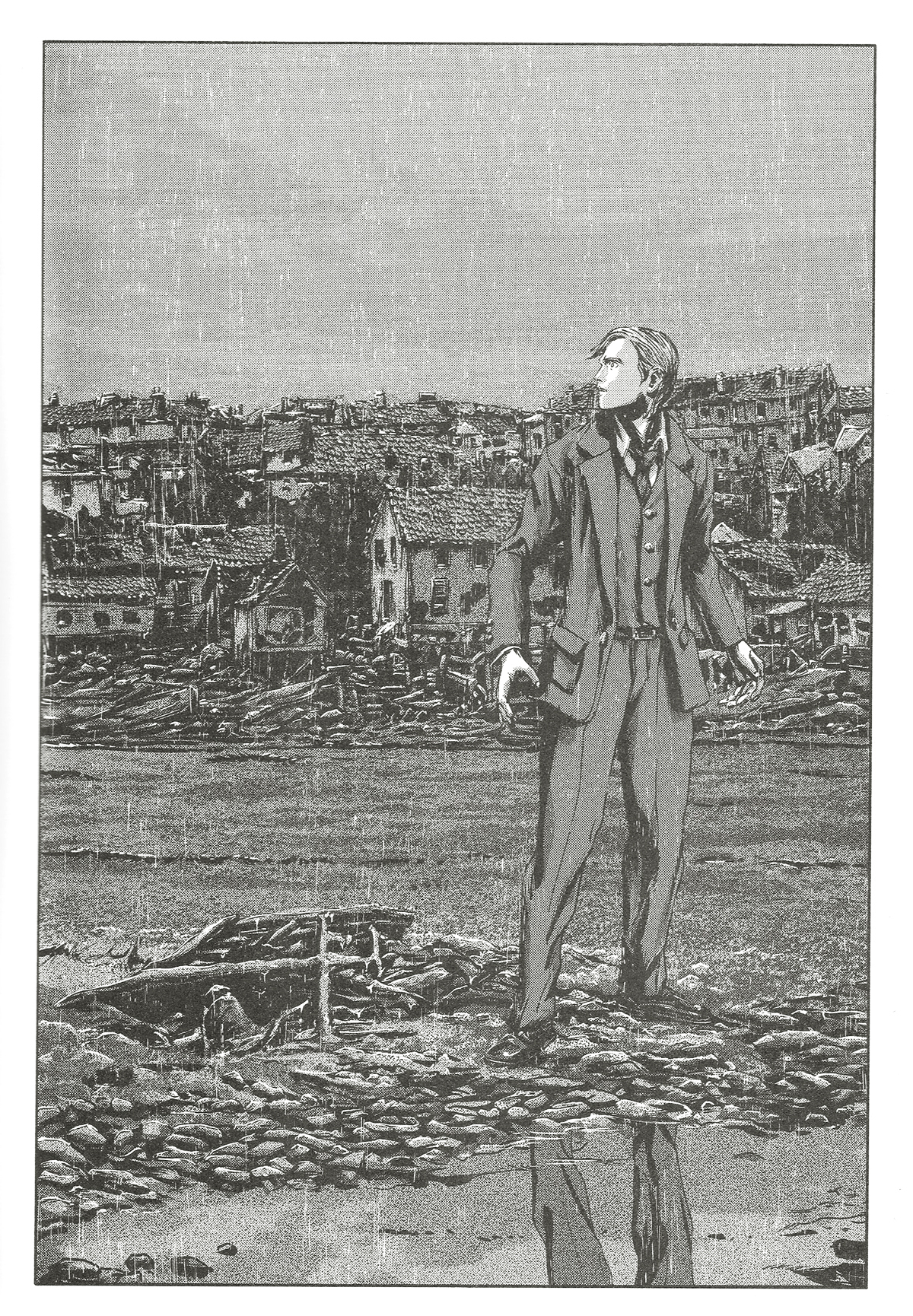
Tanabe’s adaptation of The Shadow Over Innsmouth brings the story to life with the distinctive visual language of horror manga while maintaining as much accuracy to the original as possible. Just like the story’s protagonist, Tanabe is fascinated by the architecture of the rotting Massachusetts town. The immaculately detailed cityscapes that sprawl across the pages encourage immersion into the horror of social and moral decay. Moreover, whereas Lovecraft only hints at what lies underwater, Tanabe is gleefully explicit in his depictions of throngs of fishpeople so horrific they’d make even Guillermo del Toro uncomfortable.

Tanabe’s The Shadow Over Innsmouth succeeds not only as a faithful retelling but also as a standalone work of gothic horror. By pairing Lovecraft’s oppressive atmosphere with his own meticulous draftsmanship, Tanabe bridges the gap between early twentieth-century weird fiction and contemporary horror manga. The manga adaptation of The Shadow Over Innsmouth preserves the unsettling allure of the original while offering both longtime fans and newcomers an invitation to experience Innsmouth’s decayed splendor in disturbingly compelling detail.

NonNonBa

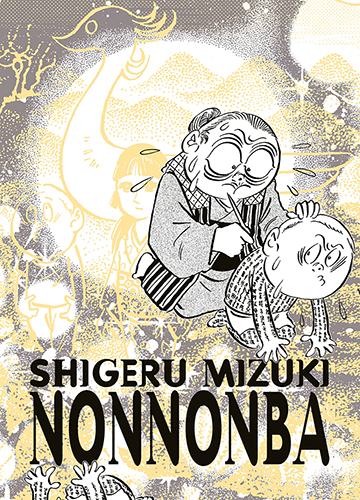
Shigeru Mizuki was one of the twentieth century’s most prolific and influential manga artists. Today he’s known primarily for documenting the culture and folklore of his childhood in rural western Japan. The single-volume graphic novel NonNonBa, originally published in 1992, is perhaps Mizuki’s most accessible work, as well as a fantastic gateway into the study of indigenous Japanese religion and folklore.

NonNonBa tells a coming-of-age story about the artist’s childhood relationship with an elderly family friend, the poor but kind Nonnonba of the title. Nonnonba is a repository of local folklore, and she sincerely believes in yokai, a term that refers to any number of species of Japanese fantastical creatures. The world of NonNonBa is indeed populated with yokai, but the manga is primarily a realistic account of life during the early 1930s.

NonNonBa opens with an introduction to the coastal town of Sakaiminato in the Kansai-region prefecture of Tottori. Despite being a port on the East Sea, the town wasn’t wealthy, and most houses remained unchanged from the nineteenth century. Mizuki’s family was relatively comfortable, and he lived with his mother, his two brothers, and his father, who worked at a bank but had creative ambitions and operated a small cinema on the side. Nonnonba was occasionally employed by the family to help with housework and childcare, as she was by several families in town. 

The artist, who goes by the name of Shige, is a mediocre student but deeply fascinated by the natural world, often bringing home strange objects like animal bones in order to study and draw them. When he’s not at his desk, Shige plays at being a soldier in the “boy army” that roams around the town and beach staging pretend wars with other roving bands of children.  

Shige’s uncomplicated boyhood is disrupted by Chigusa, a cousin from Osaka who is sent to Sakaiminato to recover from tuberculosis. Nonnonba cares for Chigusa while she’s bedridden, and the girl is just as interested in Nonnonba’s yokai stories as Shige is himself. The two become friends, and Shige is heartbroken when his cousin succumbs to her illness. He begins drawing in earnest, no longer as invested in the boy army as he once was.

After losing Chigusa, Nonnonba begins working for a family from the city that has moved into a house rumored to be haunted. She’s charged with the care of Miwa, a young girl who lives in the family’s house and seems to be able to see and hear yokai. Shige believes the girl is a victim of human trafficking, which seems highly likely given the number of other young girls who have passed through the house. Regardless, there’s not much he can do about this as a young boy.

As he develops a close friendship with Miwa, Shige matures, and he understands that growing up isn’t growing away from yokai, but rather realizing that the stories of these creatures are part of a much larger world. Despite their flaws, Shigeru’s mother and father are both portrayed sympathetically, as are his brothers and friends. NonNonBa overflows with sympathy and compassion, gently poking fun at the characters while also encouraging the reader to see them in their best light.  

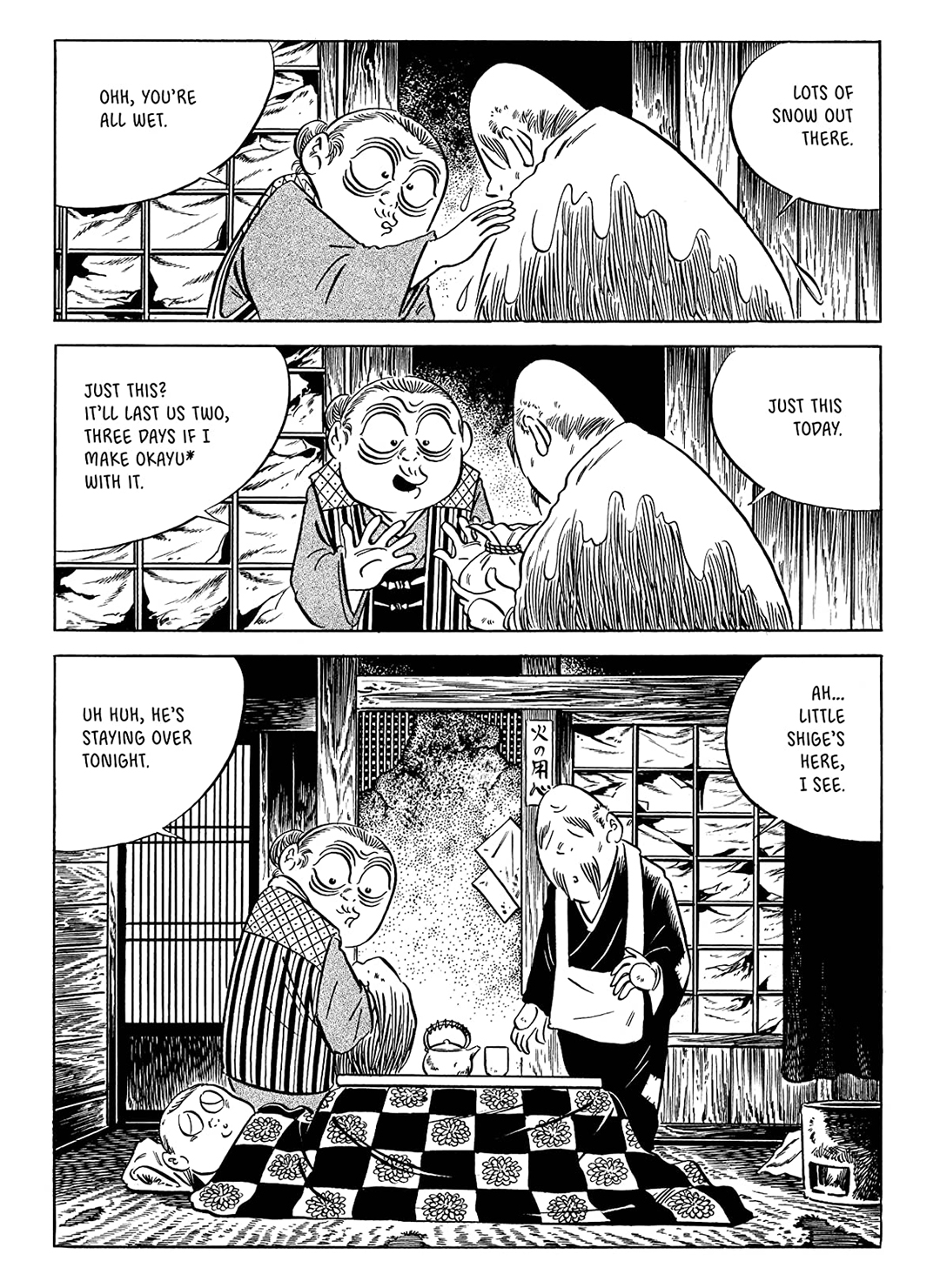
Despite being published more than thirty years ago, NonNonBa doesn’t feel dated. The stylizations of Mizuki’s artwork are timeless, and his character designs are clean and fresh. The high quality of Jocelyne Allen’s translation contributes to the contemplative yet entertaining tone of the story, whose episodes move briskly but never feel cartoonish. 

Through Mizuki’s sensitive storytelling and evocative artwork, NonNonBa celebrates how folklore inspires imagination and facilitates resilience in the face of loss and change. Despite the occasionally heavy subject matter, this graphic novel is accessible to readers of all levels, and I imagine it would be a fantastic text to spark discussion about history, family, and folklore in the classroom.

Mothers

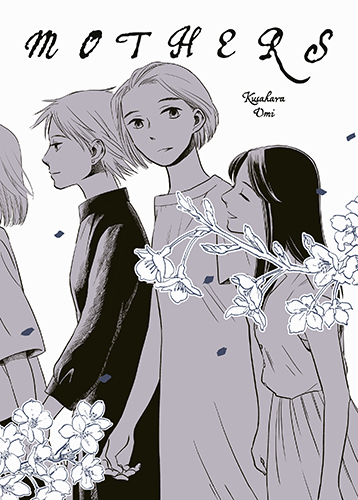
Mothers, released by Glacier Bay Books in April 2023 after a successful Kickstarter campaign, collects twelve one-shot manga stories about small but significant moments of kindness enacted in uncommon ways.

Umi Kusahara’s work is accented by touches of the fantastic but grounded in a reality that doesn’t pull its punches. These stories are particularly concerned with grieving and the emotional impact of loss, which is represented delicately but without sentimentality.

In the piece that lends its title to the collection, “Mothers,” two women visit the hospital beds of two teenagers who have only barely survived a horrible car crash. Each woman has a complicated relationship with the patient she visits, but they find sympathy and support in the connection they create with each other. As in the other stories in the collection, the catharsis lies in the moment of clarity when the characters can be finally honest with themselves about what they want and what will make their lives worth living.

Umi Kusahara originally self-published these short manga as dōjinshi, and it’s wonderful to see an American publisher uplifting noncommercial indie work that doesn’t fit into established genres. All of the titles in the Glacier Bay Books catalog are worth checking out, but I’m especially fond of Mothers, which I continually find myself returning to. Kusahara’s shōjo-inspired artwork is a lovely source of inspiration, and it’s a joy to bask in the sweetness of her worldview.

Glacier Bay Books is currently running a crowdfunding campaign for Fall 2025. The campaign will run until September 11, and this is a great way to check out and preorder their upcoming indie manga titles.

Shimeji Simulation

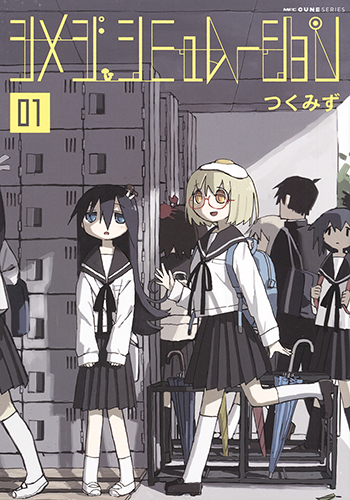
Shimeji Simulation (シメジ シミュレーション) is a gentle but deeply surreal slice-of-life manga about two teenage girls living through the end of the world – or perhaps not “the” world, necessarily; but rather, an artificial world that they happen to inhabit. The focus of the manga isn’t on the apocalypse, which passes mostly unremarked and unexplained. Instead, the core of the story is the friendship (and understated romance) between the two girls, Shijima and Majime. 

Shijima Tsukishima has spent the past two years of middle school quietly living inside a closet, and the manga opens when she decides to begin attending high school at the beginning of the school year. Why Shijima became a hikikomori is something of a mystery, but her primary personality trait is that she dislikes being bothered. She plans to spend her time in high school silently reading books at her desk.

This plan is interrupted by a classmate named Majime, who aggressively demands that Shijima become her friend. Since a pair of shimeji mushrooms sprouted from the side of Shijima’s head during her period of isolation, Majime immediately gives her the nickname “Shimeji,” an appellation that quickly becomes as pervasive and persistent as Majime herself.

Majime bluntly inserts herself into Shijima’s life and persuades her to join the school’s Hole Digging Club, which is managed by an art teacher named Mogawa. Majime assumes that the club is little more than an excuse to hang out after school, but Mogawa is oddly committed to the endeavor, especially when encouraged by the quiet presence of a second-year student named Sumida who only communicates through abstract drawings. Meanwhile, Shijima’s older sister has dropped out of college to devote herself to the ongoing construction of a bizarre machine with an inexplicable function.

For the most part, the girls engage in mundane slice-of-life adventures. They chat in the classroom, visit one another’s houses, and attempt a study session at a family restaurant. Mogawa teaches her art lessons. Majime catches a cold. A group of girls in their homeroom start a rock band. Shijima meets a super-senior named Yomigawa who’s decided to stay in high school just to hang out in the library and read philosophy books.

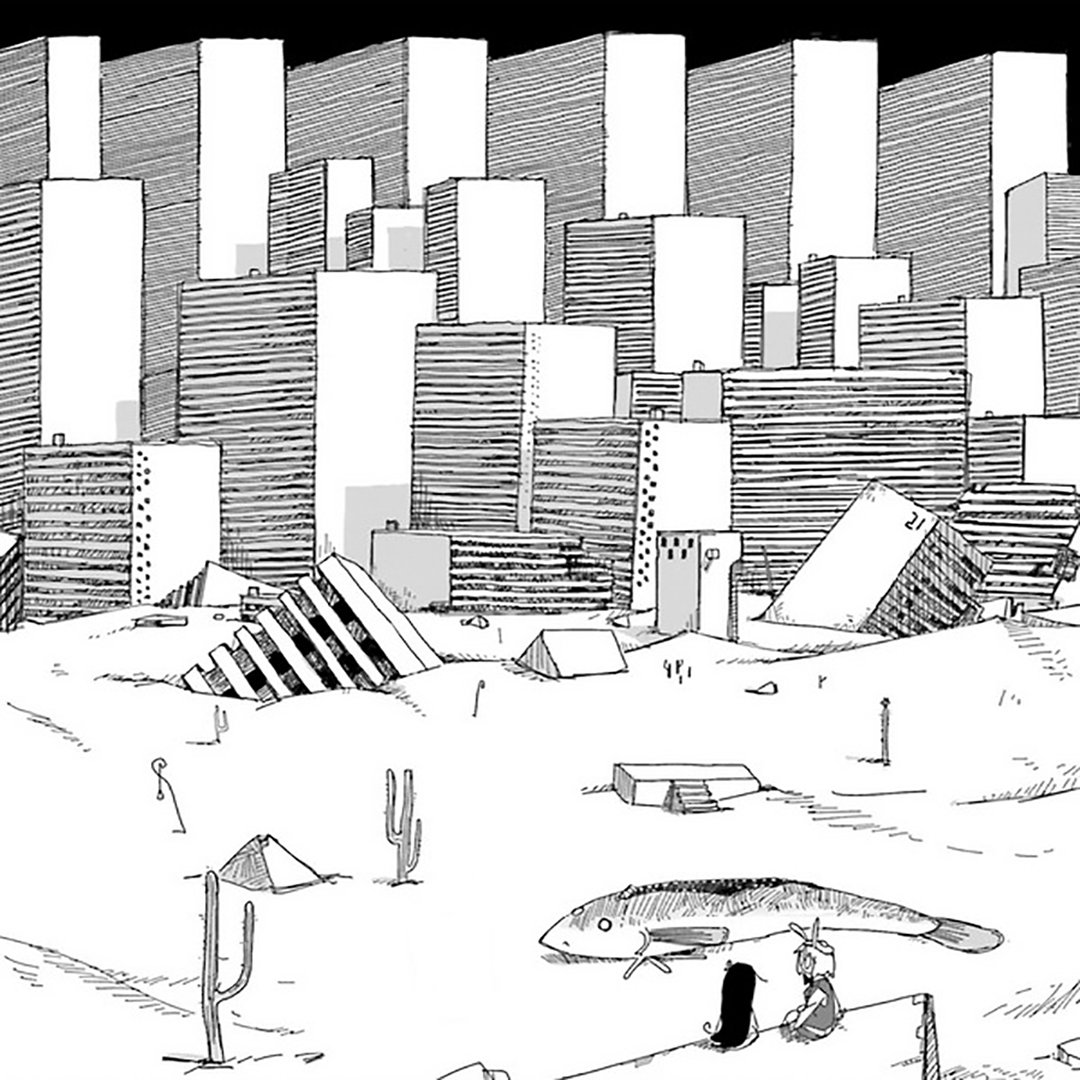
What makes this manga interesting are the strange glitches in the world surrounding the characters. The mushrooms sprouting from Shijima’s head are a good example, but there’s also the fact that Shijima and her sister occupy one of the only two tenanted apartments in a giant danchi housing building that’s falling apart yet still somehow livable. 

As the story progresses, more glitches begin to manifest. Everyone wakes up to a snowstorm in the middle of summer, for example. One day, the school building is flipped vertically and becomes a pocket dimension with a separate axis of gravity. Another day, water loses its mass and floats in the air. Suburban streets twist into optical illusions, and fish swim through the sky.

Although small glitches seem to be innate to the world, they’re exacerbated by Shijima’s sister, who’s been building and experimenting with various devices that alter the fabric of reality. Each of the first three volumes of the manga concludes with a longer narrative segment that shows the consequences of these experiments for Shijima and Majime, who are briefly thrown into the gaps between the cracks of reality.

The cumulative damage caused by Shijima’s sister is countered by a godlike entity who presents as a young girl and calls herself “the Gardener.” The Gardener’s role is to ensure that the reality experienced by the characters doesn’t mutate too wildly from one day to the next, but her power is curbed by the features of the universe’s code intended to keep its residents safe. She might be able to repair gaps in reality, but she has no means of forcing her will onto humans, even if it’s for their own good.  

Like Tsukumizu’s previously serialized manga, Girls’ Last Tour, it’s difficult to say that Shimeji Simulation is “about” anything. There’s no plot to speak of, and the only real conflict is between the characters and the entropy eating away at the edges of their slowly decaying world. In addition, it’s never explained how this constructed universe and the characters who inhabit it came to exist. Instead, I think it’s probably fair to say that the manga’s primary concern is existential ontology. In other words, what does it mean to be human, and why do we exist?

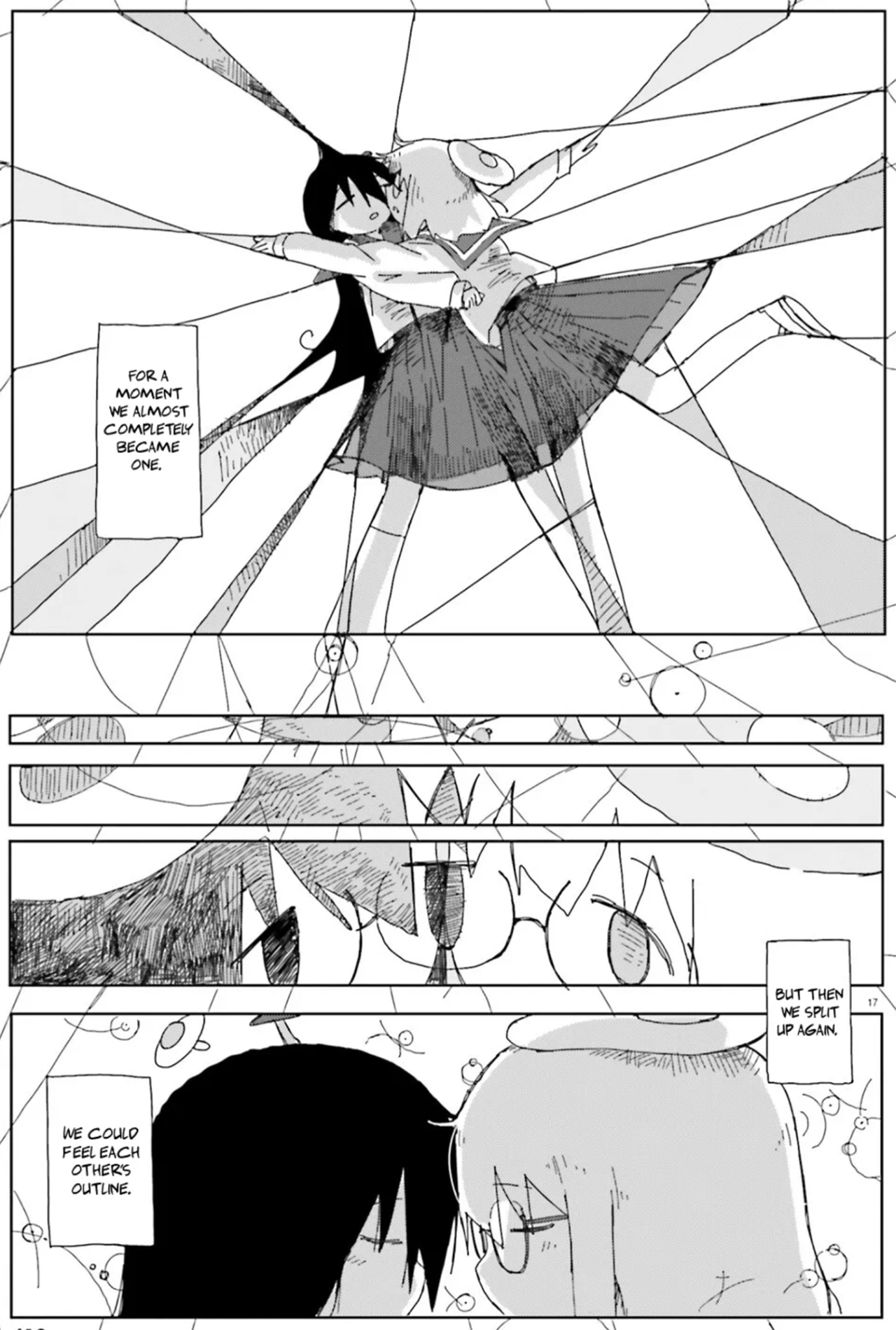
I recently read an interesting essay (here) whose author argues that Shimeji Simulation is about the barriers between people, why we need them, and what happens when they disappear. If everyone were able to get exactly what they want, what happens when the desires of separate individuals come into conflict? If there were a world perfectly tailored for one person alone, could anyone else live there? And, if you retreat into complete solipsism, what’s the point of being alive?

Toward the end of the manga, Shijima finds herself in a situation very much like her self-imposed hikikomori isolation in the beginning, when she lived entirely in the darkness of her closet. In the simulated world she comes to occupy through her sister’s rewriting of the universe’s code, Shijima doesn’t bother anyone, and she never has to deal with any external input that she doesn’t choose for herself. Still, can we really say that such pristine loneliness is preferable to the messiness of human relationships?

I read Shimeji Simulation as a story about the various ways that people communicate and connect with one another. Shijima never becomes a “normal” or friendly person, but she still manages to find joy and meaning in her interactions with other people, even if most of these interactions are nothing special. This is why, in the fifth and final volume of the manga, Shijima breaks the boundaries of her personal universe to find Majime, wherever her friend might exist in the fractured constellation of simulations.

“The meaning of life is to understand love” may seem cliché; but, given how strange and surreal her story becomes, Shijima’s realization feels significant and well-earned. Life is a constant shifting and melding of interpersonal boundaries, and communication and companionship are worth the pain and trouble of being human.

Shimeji Simulation is a remarkable work of science fiction. The manga may seem to have an unassuming beginning, but its narrative structure gradually builds, loops back in on itself, and continually starts over from a weirder and more nuanced position. Likewise, Tsukumizu’s art may initially feel sketchy, but this style is perfectly suited to express the uncanny glitches and fluid malleability of the setting. Shimeji Simulation is gentle and quiet, but also immensely intelligent and creative, and it’s a manga to contemplate and enjoy slowly while allowing yourself to be transformed alongside the characters and their strange but fascinating world.

Shimeji Simulation hasn’t received an officially licensed English translation, but a fan translation is currently available to read on Dynasty Scans (here). If you’re interested in a small taste of the manga’s tone, I’d also like to recommend the short fan anime adaptation of the opening chapter on YouTube (here).

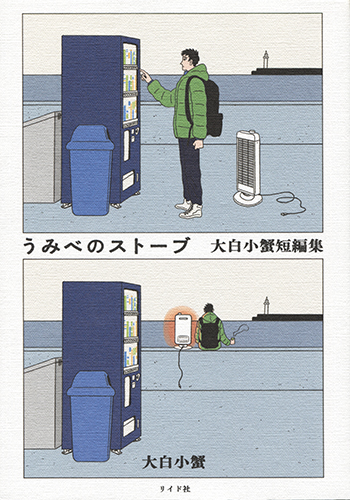
うみべのストーブ

Umibe no Stove (うみべのストーブ), originally published in 2022, is a collection of seven short manga stories by Kogani Ōshiro. In a surprising but well-deserved turn of fate, the collection was listed as the #1 women’s title in the 2024 edition of the Kono Manga ga Sugoi! (“This Manga Is Awesome”) series of mass-market reference books. Ōshiro’s magical realist stories are difficult to categorize, but what they share is a gentle and bittersweet appreciation for the small challenges and victories of growing older and moving on. 

The title story is about a man named Sumio whose girlfriend breaks up with him on her birthday. Left alone in the apartment they once shared, Sumio huddles next to the space heater and cries. The space heater takes pity on him and reveals that it can talk. It suggests that they go to the beach together, a trip Sumio never made with his girlfriend. Sumio agrees and spends the night sitting on a concrete embankment overlooking the ocean as he talks with the space heater and finally accepts the fact that his girlfriend isn’t coming back. Even though it’s unplugged, the space heater keeps him warm by sharing its memories of happier times.

The second story, 雪子の夏 (Yukiko no natsu), is about a trucker who encounters a Yuki Onna while stuck in traffic on a snowy night. The childlike yōkai doesn’t particularly want to kill the trucker; and, after they talk for a bit, she reveals that it’s her dream to see summer fireworks. The trucker invites the Yuki Onna to share her apartment until summer, at which point she can use her refrigerated cargo space to take her guest to see a summer festival. While watching the fireworks explode in the night sky, the Yuki Onna is so overjoyed that snow begins to fall.

My favorite of the stories, 海の底から (Umi no soko kara), is about a young woman named Fukatani who always dreamed of being a professional novelist. Her two friends from college both managed to become published authors after they graduated, but Fukatani lost her motivation to write after starting an office job. During a late-night drinking session, Fukatani’s friends ask her if she’d really be happy never writing another story, but she doesn’t know what to say. She used to love writing, but she just hasn’t felt any inspiration recently.

Later, Fukatani’s boyfriend comforts her, saying that there’s no rush for her to begin writing again. After college, he explains, she found herself standing at the base of a pyramid on the bottom of the sea. She’s been working to climb each step – finding a job, paying off student loans, and so on – but when she gets to the top and rises above the surface of her ocean of worries, she’ll be able to feel the wind of creativity again. This sounds like a silly analogy, but the way Ōshiro illustrates the process of coming up for air is remarkably cool and refreshing.

Something I love about Umibe no Stove is the non-commercial quality of Ōshiro’s visual style. Admittedly, the art of some of the stories feels a bit amateurish, but I find this charming. Even when Ōshiro’s drawings are unpolished, her sense of sequential art is unflaggingly excellent. Her use of panels in Umi no soko kara, for instance, creates a lovely sense of space during the protagonist’s conversation with her boyfriend. Even if Ōshiro’s drawings aren’t always technically precise, her manga still has incredible emotional impact.

I want to recommend this book to manga fans interested in a more indie style of Japanese comics, perhaps along the lines of the graphic novels published by Western presses like Fantagraphics and Drawn & Quarterly. Umibe no Stove may seem unassuming on the surface, but this manga is something special.

As an aside: if you’re looking for something similar that’s been translated into English, I’d like to recommend Natsujikei Miyazaki’s short story collection And the Strange and Funky Happenings of One Day. It’s weird, it’s fun, and the indie manga publisher Glacier Bay Books has done an amazing job with the translation and editing.

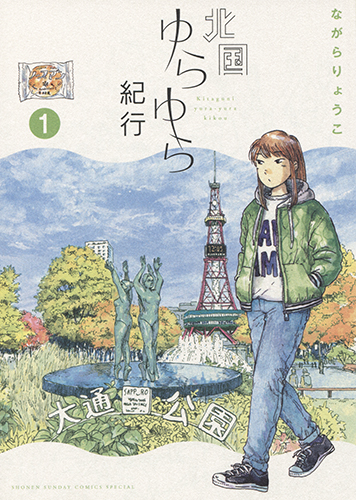
北国ゆらゆら紀行

Ryōko Nagara’s Kitaguni yura-yura kikō (北国ゆらゆら紀行) is an episodic travelogue manga that follows a young woman named Tsukiko who left her job to return to her hometown of Sapporo.

Tsukiko is too burnt out to resume full employment, and her savings are running low. Her friend Chitose invites her to move into a Shōwa-era sharehouse co-rented with her flatmate Kensuke and Kensuke’s girlfriend Miwa. Their landlord, a world traveler who no longer lives in Japan, says that Tsukiko can stay if she can manage to clean up all the junk in the spare room.

As Tsukiko recovers from her recent life changes, she and Chitose explore Sapporo at a leisurely pace. Chitose is a writer who aspires to create a magazine celebrating the city’s regional culture. For the time being, she posts articles on her blog and creates zines. Chitose brings Tsukiko along while she scouts for material at small local stores and restaurants. When they’re not out and about, the two women dig through the cardboard boxes left behind by the landlord and uncover all sorts of treasures, from vinyl records to unique Hokkaido woodcrafts. 

In my review (here) of Tomoko Shibasaki’s short story collection A Hundred Years and a Day, I touch on the phenomenon of “analog nostalgia,” the fascination with tangible media and the objects of an earlier era. Shibasaki’s collection dwells in a gentle sense of decay, but Kitaguni yura-yura kikō is marked by its youthful energy. As they stroll through beautiful streets lined with old houses and enjoy lively conversations over local cuisine in charming restaurants, it’s clear that Tsukiko and Chitose are thoroughly enjoying themselves.

Despite the fun she has with Chitose and her friends, Tsukiko suffers from depression and anxiety. The tiny apartment she occupies at the beginning of the manga is filled with trash, and she loses track of time while doomscrolling late at night. When Tsukiko considers the possibility of finding a new job, she imagines herself as a defenseless egg yolk sweating and apologizing while surrounded by menacing shadows.

When she invites her friend to move into her sharehouse, Chitose gives Tsukiko something tangible to hold. The manga’s emphasis on analog media, from Chitose’s printed zines to the old Walkman and cassette tapes that Tsukiko digs out of the landlord’s cardboard boxes, isn’t just simple nostalgia. Rather, it’s a concrete solution to a distressingly amorphous problem.

As the anonymous author of one of my favorite video game blogs writes (here) regarding the appeal of retro media, “We weren’t meant to live in an endless feed.” The rituals required by analog media once “gave life a shape that wasn’t constant images on a screen to choose from,” and these rituals serve as an anchor in the flow. Kitaguni yura-yura kikō doesn’t glorify the past or fetishize commodified nostalgia. Instead, tangible objects serve as a visual shorthand for places and relationships that don’t vanish when you close an app.

I don’t mean to suggest that Kitaguni yura-yura kikō is an introspective character study. More than anything, it’s a sweet and gentle travelogue, and it’s very charming. This manga makes me want to visit Sapporo and take long walks and eat delicious food. Still, I appreciate the subtext of the story, which is about readjusting to life lived at a slower pace while relearning how to have a meaningful connection with the place you live, the people who share the space with you, and your own embodied existence.  

Higashi Tokyo Machi Machi

Keita Katsushika’s manga Higashi Tōkyō Machi Machi (東東京区区) is a leisurely walking tour of East Tokyo. As suggested by their pen name, the artist lives in Tokyo’s Katsushika Ward, which is known for the retro ambiance of its Shibamata district and its green and pleasant riverside walking paths. Keita Katsushika is keen to show the reader the quiet charm of the area while exploring the depth of its history and the diversity of its communities.

Higashi Tōkyō Machi Machi follows the adventures of three focal characters. 21yo Sarah is a college student majoring in Urban Studies, and 8yo Selam is the daughter of an Ethiopian immigrant who runs a small restaurant near her university. While Sarah and Selam are out on a walk one afternoon, they meet 13yo Haruta, a homeschooled student pursuing his interest in Tokyo’s history. The friendship between these three characters is sweet and uncomplicated, and their personalities facilitate different approaches to urban exploration.

The trio’s first walk together takes them to the Tokyo Skytree, where they’re able to look out over the neighborhood while studying a reproduction of an Edo-period artwork that depicts the region as it appeared in the past. Another adventure takes them to the former site of the Venice Market, a postwar black market that was created by laying boards over a drainage canal. Since then, a normal street was built over the water, and the area hosts a number of stores and restaurants catering to Tokyo’s immigrant populations. If you’re interested in the history of the Venice Market, you can check out a two-page preview of this section of the manga (here).

All three characters were born and raised in Japan, and no one ever treats them with anything less than kindness and respect. As Sarah writes in the opening to her senior thesis, the formerly depopulated areas of Northeast Tokyo have gradually become home to many immigrant communities, who have revitalized the neighborhoods where they settle. Instead of resenting the growth of their communities, many older residents are happy to share their knowledge and memories with curious young people.

For what it’s worth, this portrayal of gregarious retirees is true to my own experiences walking around Tokyo with friends. Whether you’re a visitor or a long-term resident, it doesn’t matter what your face looks like or how you dress. As long as you’re willing to listen, there will always be people willing to share their stories. The manga’s scenes of immigrant community gatherings are equally warm and friendly. It’s lovely to see the diversity of people and life experiences in Tokyo shown as what it really is – not as a social issue to be discussed when something bad happens, but rather as a normal and pleasant aspect of everyday life. 

In many ways, Higashi Tōkyō Machi Machi reminds me of Kiyohiko Azuma’s manga Yotsuba&!, which follows the wholesome everyday adventures of a translator, his friends, and the young girl he adopted abroad. Just as in Yotsuba&!, the art of Higashi Tōkyō Machi Machi places simple and stylized characters into meticulously detailed backgrounds, thus helping the reader feel immersed in the cityscape of Tokyo and its suburbs.

The main difference is that Keita Katsushika’s manga is dense with text and reads more like a collection of illustrated essays than a story. Thankfully, the writing follows the standard shōnen manga convention of glossing the kanji with their hiragana pronunciations. As you might imagine, this is especially helpful with place names.

I’d recommend Higashi Tōkyō Machi Machi to anyone who’s interested in the history and culture of Tokyo. If you’ve read Jorge Almazán’s study Emergent Tokyo and are curious about how the urban design principles Almazán charted in West Tokyo neighborhoods have been adapted to the older neighborhoods in the east of the city, this manga was published for you specifically. Higashi Tōkyō Machi Machi is a treasure, and it’s a joy to explore Tokyo alongside its characters.

Kanda Gokurachō Shokunin Banashi

The first volume of Akihito Sakaue’s manga Kanda Gokurachō Shokunin Banashi, which won the Tezuka Osamu New Creator Prize in 2024, collects five stand-alone short stories about the everyday lives of artisans during the Edo Period. As might be expected from a manga about craftsmanship, Sakaue devotes meticulous care and attention to creating an accurate visual depiction of the tools and techniques used in these traditional arts. 

Shokunin Banashi opens with a twelve-page account of a day in the life of a carpenter who creates and repairs wooden buckets. Although the work may seem unglamorous, the skill involved is readily apparent. An additional layer of accuracy lies in the fact that this story’s star craftsperson is female, as were many of the artisans who kept Edo period society functioning.

The next two stories feature a blacksmith who specializes in swords and an indigo dyer who dreams of creating her own fabric pattern designs. My favorite of these opening stories is the fourth, which follows a young but talented seamster who sews and binds the edges of tatami mats. Along with the rest of his team, he’s been hired to replace the tatami in a high-end establishment in the Yoshiwara red light district. The courtesans are impressed by the craftsman’s skill with his hands, but he remains focused on his craft and maintains an appropriate professional distance. Once he’s finished the job, however, he allows himself to be a little flattered. This is a cute story that’s also very sympathetic to the craft of the women who work in Yoshiwara.

The three-chapter story in the second half of the volume is a workplace drama about a company of contractors who specialize in laying plaster walls. This is intense physical labor that requires a good eye, a steady hand, and careful group coordination. The leader of the team, Chōshichi, is an undisputed master of her craft, but a new recruit, Jinsaburō, soon learns that there’s trouble among the ranks of her subordinates. A master craftsman himself, Jinsaburō supports Chōshichi during the construction of a townhouse. For the reader, this is a marvelous opportunity to get an inside look at each stage of how these houses were built.

I’d recommend Shokunin Banashi to anyone who enjoyed Fumi Yoshinaga’s Ōoku series, especially for the high quality of its historical representation and the subtlety of its human drama. I might also recommend Shokunin Banashi to any illustrator who’s interested in studying hands depicted in a variety of positions while manipulating all sorts of specific tools. The art in Shokunin Banashi is something special, as is the physical book itself, which was designed to be a beautiful object.

Edited to add: This manga has been licensed by Yen Press as Neighborhood Craftsmen: Stories from Kanda’s Gokura-chou. Excellent!

Kamimachi

Machiko Kyō’s Kamimachi (かみまち) was serialized from June 2019 to December 2022 and published as a two-volume graphic novel in August 2023. The story follows four homeless teenage girls who find themselves at a privately run youth shelter called Kami No Ie (“Family of God”) in the Tokyo suburbs.

Although he initially seems kind and welcoming, the middle-aged man who runs this shelter is a sexual predator, and he has assaulted and murdered one of his young charges prior to the beginning of the story. The ghost of this young woman, in the form of a Christian angel, helps the girls find the courage to escape the Kami No Ie shelter.

Each of the four main characters in Kamimachi has become homeless after escaping a toxic home environment.

Uka is the only child of a single mother who projects her loneliness and frustrated ambitions onto her daughter. The story begins as Uka leaves home and seeks shelter by means of a roomshare app. After a number of awkward situations, Uka comes to the attention of a group of men who use the app to recruit sex workers. These men force Uka into a situation in which she’s expected to trade a night at a short-term rental space for sex. She breaks out of the apartment and wanders the streets of Tokyo before finding herself at the Kami No Ie shelter.

Uka’s closest friend at the shelter, Nagisa, has been sexually abused by her stepfather for years. She finally flees from home after her mother witnesses one of these assaults and turns away in disgust.

Arisa was raised as a television idol by a single mother. After her mother’s sudden death in an accident, Arisa is given to the care of a talent manager who steals her inheritance and financial assets, leaving her destitute.

Yō is one of five siblings. She’s so neglected by her family and bullied by her brothers that she finds it preferable to sleep in subway stations. Eventually she stops returning home altogether.  

For each of these young women, Tokyo becomes a wilderness whose anonymous open spaces serve as a refuge from the enclosed interiors where they’re coerced into enduring abuse. Kyō draws indoor scenes using small panels with blank backgrounds, and these scenes often feature close-ups of the characters’ faces in moments of distress. Meanwhile, Kyō depicts outdoor scenes with large panels that frame the characters with trees and buildings. The expansive outdoor settings often serve as the stage for small moments of kindness and emotional clarity.

In Chapter Three, for example, Uka flees into the night after an attempted sexual assault at a roomshare apartment. After her escape, she wanders through the rain with nothing but the clothes on her back. Out of context, the rainy cityscape may seem bleak, but the large panels filled are a visual relief after the oppressively small and claustrophobic panels that depict the apartment.

One of the anonymous figures passing in the rain, whom the reader later learns is Yō, stops beside Uka to give her an umbrella. Page 71 opens with a close-up of Yō’s extended hand before spreading into an open panel in which Uka and Yō stand at the center of a composition framed by misty buildings and puddles on the concrete. The two small figures reaching out to one another are enclosed in a soft curtain of rain, and the sense of relief at being a part of a larger world is palpable.  

Chapter Seven contains a similar scene in which the open sky and background cityscape suggest freedom from the violence that occurs behind closed doors. Nagisa, who’d encountered Uka in a roomshare arrangement, takes Uka’s discarded uniform and attends school in her place. One of Uka’s former classmates approaches Nagisa, offers to share her lunch, and asks that Nagisa talk with her on the roof. Nagisa initially tries to be normal, showing the girl photos of her mother and stepfather’s new infant daughter.

During this scene, the panels become progressively smaller until Nagisa finally admits the truth about having left her family. The shift to a full-page panel depicting the city’s jumble of buildings spreading under the open sky signals Nagisa’s admission that something has to change. This moment also serves as the catalyst for Uka’s classmate to begin searching for her missing friend, a decision that ultimately results in Uka’s rescue from the Kami No Ie shelter.

The openness of Tokyo cityscapes in these scenes suggests that the sort of hidden abuse endured by these young women needs to be brought into the open and exposed to the light of public scrutiny. Along those lines, I can’t help but feel that Kyō’s depictions of outdoor spaces in Kamimachi also reflect the artist’s emotional response to the Covid pandemic. For people in precarious situations, being physically stuck inside often exacerbated the experience of feeling trapped within oppressive social systems.

As an artist who documented the pandemic years through evocative illustrations posted to Instagram, Kyō’s project is not simply to depict the beauty of architecture and greenery within the city, but also to comment on the importance of open outdoor “third places” for young people suffering from social pressure and economic strain. Kamimachi doesn’t provide easy solutions, but it’s cathartic to see the issue of youth precarity brought out into the open air. 

Machiko Kyō is a prolific and award-winning artist whose illustration collections have been celebrated by The Comics Journal (here). If you’re interested in reading more about the artist’s work, I published a short essay on her 2013 graphic novel Cocoon – whose animated adaptation is scheduled to premiere on NHK in Summer 2025 – on Women Write About Comics (here). Here’s hoping that English-language readers will be able to experience Kyō’s compelling and thought-provoking work in the near future.