Until I Meet My Husband

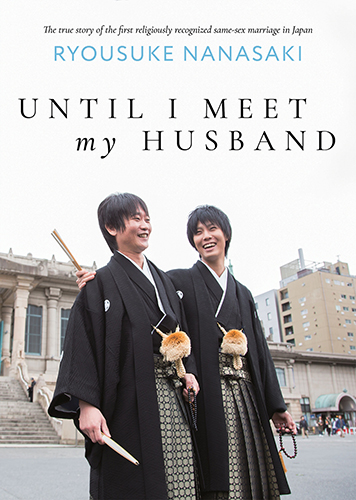
Until I Meet My Husband is a collection of short autobiographical essays by Ryousuke Nanasaki, an activist who established LGBT Community Edogawa in 2015 and a wedding planning company called Juerias LGBT Wedding in 2016, both of which contributed to Tokyo’s Edogawa ward officially recognizing same-sex partnership by issuing marriage certificates.

Nanasaki lays out his motivations for becoming an activist toward the end of the book, but the majority of his essays are humorous stories about life and love. As Nanasaki explains in the final chapter, “In Place of an Afterword,” he wants readers to understand the “raw, uncut truth” of queer identity, which is that gay people experience happiness and make mistakes like everyone else.

As a result of Nanasaki’s honesty, the essays in Until I Meet My Husband are immensely entertaining and compulsively readable. Many of the stories will be familiar to queer Millennials, from receiving a stern lecture from a well-meaning teacher in elementary school to dating other closeted queer kids in high school to falling a little too hard for your first serious partner as an adult. Nanasaki leans hard into friendship drama, relationship drama, and family drama, but he’s so funny and good-natured that you can’t help but support him through his misadventures.

Molly Lee’s translation is pitch perfect, conveying the confidence and enthusiasm of Nanasaki’s voice in natural English that’s a pleasure to read. Along with the original essay collection, Seven Seas has also released the manga adaptation, which features dreamy artwork by BL manga author Yoshi Tsukizuki

Memento Bento

Memento Bento is a 65-page chapbook created by the Italian artist Alessandra Criseo. The chapbook, which is structured like an annotated sketchbook, chronicles Criseo’s trip to Japan with her partner Andreas in April and May of 2014. Over the course of two and a half weeks, the pair visited Tokyo, Kyoto, Nara, and Yokohama.

At the time, Criseo was working in London as a freelance character designer and concept illustrator for video game development studios. Criseo’s primary interest in Japan lay in its culture of cuteness, and the pages of Memento Bento are filled with sketches of clothing, characters, and street fashion. This fascination with cuteness is supplemented by photos of cute food, such as strawberry-themed pastries and the popular Tokyo Banana souvenir cakes.

Despite her stay in the popular tourist destinations of Kyoto and Nara, Criseo cares less about traditional Japanese architecture and handicrafts than she does about common urban cityscapes and mundane everyday objects. “I love taking the train. [It’s] one of the pleasures of life, especially in a country with such pretty houses as this one,” she writes next to an ink drawing of herself sketching on a commuter train.

Along with the urban tangle of telephone poles and power lines, Criseo is also fascinated by vending machines, instant ramen packaging, toilets, umbrellas, disposable cameras, and the uniquely non-aerodynamic shapes of domestic Japanese automobiles. Having submerged herself in the visual clutter of Japan, Criseo writes that she’s not looking forward to returning to the “boring and gray” monotony of London.

The heterodox and chaotic aesthetic often decried by older observers of Japan is a source of fascination and delight for Criseo. As an artist and professional designer, Criseo has translated her study of Japanese commercial design to her own clothing and stationery, which she distributes through her independent label, Mezzolume.

When I wrote about Ryōko Nagara’s recent manga about the local material culture of Sapporo (here), I was reminded of how many visual representations of Japan created by Europeans (such as Onibi: Diary of a Yokai Ghost Hunter) often emphasize “Shōwa retro” objects and spaces. In a time when the speed and productivity demanded by neoliberal capitalism leave many people anxious and exhausted, there’s a certain appeal to old and “useless” things, which artists like Criseo present as visually charming and emotionally compelling.

If you’re interested, you can order an English-language edition of Memento Bento (here), and you can follow Alessandra Criseo on Instagram (here).

Higashi Tokyo Machi Machi

Keita Katsushika’s manga Higashi Tōkyō Machi Machi (東東京区区) is a leisurely walking tour of East Tokyo. As suggested by their pen name, the artist lives in Tokyo’s Katsushika Ward, which is known for the retro ambiance of its Shibamata district and its green and pleasant riverside walking paths. Keita Katsushika is keen to show the reader the quiet charm of the area while exploring the depth of its history and the diversity of its communities.

Higashi Tōkyō Machi Machi follows the adventures of three focal characters. 21yo Sarah is a college student majoring in Urban Studies, and 8yo Selam is the daughter of an Ethiopian immigrant who runs a small restaurant near her university. While Sarah and Selam are out on a walk one afternoon, they meet 13yo Haruta, a homeschooled student pursuing his interest in Tokyo’s history. The friendship between these three characters is sweet and uncomplicated, and their personalities facilitate different approaches to urban exploration.

The trio’s first walk together takes them to the Tokyo Skytree, where they’re able to look out over the neighborhood while studying a reproduction of an Edo-period artwork that depicts the region as it appeared in the past. Another adventure takes them to the former site of the Venice Market, a postwar black market that was created by laying boards over a drainage canal. Since then, a normal street was built over the water, and the area hosts a number of stores and restaurants catering to Tokyo’s immigrant populations. If you’re interested in the history of the Venice Market, you can check out a two-page preview of this section of the manga (here).

All three characters were born and raised in Japan, and no one ever treats them with anything less than kindness and respect. As Sarah writes in the opening to her senior thesis, the formerly depopulated areas of Northeast Tokyo have gradually become home to many immigrant communities, who have revitalized the neighborhoods where they settle. Instead of resenting the growth of their communities, many older residents are happy to share their knowledge and memories with curious young people.

For what it’s worth, this portrayal of gregarious retirees is true to my own experiences walking around Tokyo with friends. Whether you’re a visitor or a long-term resident, it doesn’t matter what your face looks like or how you dress. As long as you’re willing to listen, there will always be people willing to share their stories. The manga’s scenes of immigrant community gatherings are equally warm and friendly. It’s lovely to see the diversity of people and life experiences in Tokyo shown as what it really is – not as a social issue to be discussed when something bad happens, but rather as a normal and pleasant aspect of everyday life. 

In many ways, Higashi Tōkyō Machi Machi reminds me of Kiyohiko Azuma’s manga Yotsuba&!, which follows the wholesome everyday adventures of a translator, his friends, and the young girl he adopted abroad. Just as in Yotsuba&!, the art of Higashi Tōkyō Machi Machi places simple and stylized characters into meticulously detailed backgrounds, thus helping the reader feel immersed in the cityscape of Tokyo and its suburbs.

The main difference is that Keita Katsushika’s manga is dense with text and reads more like a collection of illustrated essays than a story. Thankfully, the writing follows the standard shōnen manga convention of glossing the kanji with their hiragana pronunciations. As you might imagine, this is especially helpful with place names.

I’d recommend Higashi Tōkyō Machi Machi to anyone who’s interested in the history and culture of Tokyo. If you’ve read Jorge Almazán’s study Emergent Tokyo and are curious about how the urban design principles Almazán charted in West Tokyo neighborhoods have been adapted to the older neighborhoods in the east of the city, this manga was published for you specifically. Higashi Tōkyō Machi Machi is a treasure, and it’s a joy to explore Tokyo alongside its characters.

Ryokan: Mobilizing Hospitality in Rural Japan

Chris McMorran’s Ryokan: Mobilizing Hospitality in Rural Japan is an academic monograph about gender and society that’s surprisingly entertaining and enjoyable to read. McMorran is an anthropologist at the National University of Singapore who spent more than a year working at an onsen hotel in the idyllic town of Kurokawa on Japan’s southern island of Kyūshū. His account of how such resorts operate is informed by his own experience, as well as a decade of talking to people with fascinating life stories.

McMorran is discrete and never exploitative, but he uses a fair amount of behind-the-scenes drama to illustrate the conflicting views at play in the construction and maintenance of Kurokawa’s fantasy of “traditional Japan.” Not every aspect of these traditions is worth preserving, especially the pressure placed on firstborn sons (and their wives) to inherit the family business, often at the expense of the ambitions of a family’s daughters.

Despite stubbornly persistent gendered expectations, one aspect of these onsen hotels that seems almost utopian is their willingness to employ women who might otherwise be in danger of falling through the cracks of society, such as divorcées and single mothers with small children. Even though McMorran tackles serious social issues, his approach is always sympathetic and accessible, and his writing is so crisp and clear that this study often feels remarkably akin to a literary memoir.

Ryokan: Mobilizing Hospitality in Rural Japan has the potential to be an entertaining read for fans of Japanese pop culture interested in indulging in a bit of armchair tourism while gaining a deeper understanding of contemporary Japanese society. To enhance the experience, I’d also recommend the gorgeous travel guide Onsen of Japan: Japan’s Best Hot Springs and Bath Houses, which perhaps might be enjoyed alongside a viewing of the beautiful slice-of-life anime movie Okko’s Inn.

Emergent Tokyo

Emergent Tokyo: Designing the Spontaneous City is a fascinating study of urban space augmented by a wealth of photographs and illustrations. Jorge Almazán convincingly argues that, instead of being designed from the top down, Tokyo’s distinctive cityscape emerged from history and opportunity.

Almazán focuses on five distinguishing characteristics of Tokyo, from the famous zakkyo “mixed-use” highrise buildings that line the main boulevards to the dense shopping areas that crowd the bays between support columns under elevated train tracks. Each feature of Tokyo’s cityscape is illuminated by three case studies that are meticulously documented and analyzed.

My favorite chapter is about the narrow and winding ankyo streets of West Tokyo, which were built on top of old canals and have gradually become pedestrian oases. The most famous is Harajuku’s Mozart-Brahms Lane, the chill and ambient twin to Takeshita Street. As in the case of Mozart-Brahms Lane, ankyo streets have often become communal backyards for neighborhoods with flashier public faces.    

I especially appreciate the Conclusion section, in which Almazán demonstrates that corporate-led urbanism has created unwelcoming and visually unappealing spaces that have none of the vibrancy of the more organic spaces fostered by collectives formed by homeowners and small business managers. While urban planning is still necessary, Almazán argues, emergent communities should not be stifled. 

Emergent Tokyo isn’t a book for tourists, but I imagine it will be of interest to anyone who’s curious about urban design. Also, although some of the more academic text might fly above the heads of small children, I think Emergent Tokyo would be a wonderful book to give a kid. The illustrations and diagrams are truly fantastic, and they’re so immersive that I found myself disappearing into the details as I imagined walking through the Tokyo gorgeously laid out across the pages.

Being Dead Otherwise

Being Dead Otherwise is an anthropological account of the shifting cultures of death and dying in contemporary Japan. Despite its seemingly grim topic, this is one of the most hopeful academic books I’ve read in recent years.

Anne Allison is primarily concerned with Japan’s aging population, who have begun to form communities surrounding their preparations for burial. Due to urbanization and an increase in nuclear family households, it’s no longer feasible to rely on one’s children or relatives for end-of-life arrangements. Still, older generations have been finding practical solutions.

I especially enjoyed the chapter about the social meetings of the future occupants of urban columbaria (repositories for burial urns), who call themselves “grave friends” and get together to make scrapbooks and other creative projects that will commemorate their lives for their children and grandchildren.

Allison argues that this type of self-care is often necessary to work around Japan’s outdated burial laws, in which only the formally registered Head of Household (who is almost always male) is allowed to make arrangements with a Buddhist temple. Thankfully, many temples are starting to ignore this law in order to serve the needs of older women who survive their husbands. 

Without a doubt, many problems still exist in an increasingly fragmented society, but Allison is optimistic and respectful as she interviews death workers ranging from priests to city officials to entrepreneurs. Being Dead Otherwise is an academic book that achieves the highest standards of scholarship, but it’s also a fascinating read that’s easily accessible to a wide audience.

A word of warning, however: Being Dead Otherwise contains photos of human remains that may be disturbing to those who aren’t used to such things. Sensitive readers may want to skip Chapter 6 entirely.

The End of the Line for the Shinra Corporation

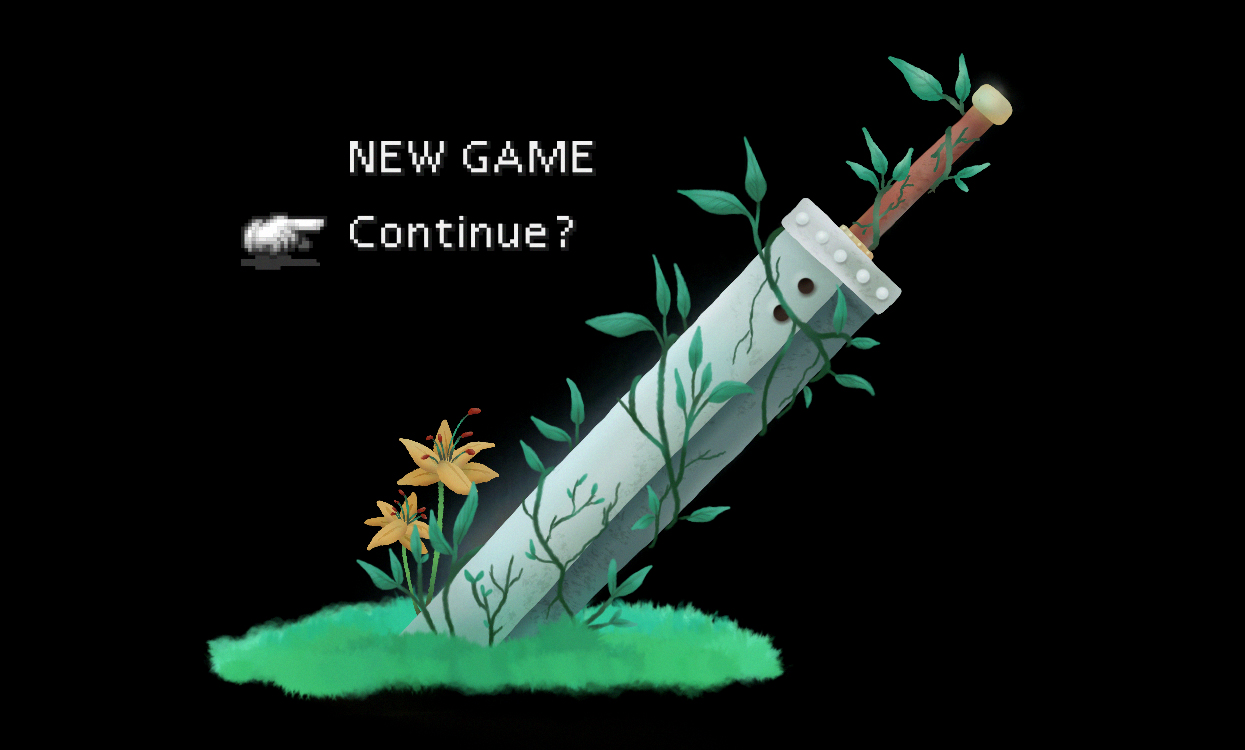
One of the most iconic images of Final Fantasy VII is Cloud standing tall as he faces the dark tower of the Shinra corporate headquarters. Over the meandering course of its expansive story, Final Fantasy VII changes direction and shifts focus, but its story holds fast to the end goal of saving the world from a crisis created by Shinra. Even if there were no interstellar demons or mad scientists, the planet would never have survived were it not for a small group of activists who dared to challenge the most powerful corporation in the world.

Many players may have initially questioned the morals of Barret Wallace, the leader of the ragtag group of guerilla activists calling themselves Avalanche, but Barret’s anger and frustration prove to be justified when Shinra brings an entire section of the suspended concrete city of Midgar down on the slums, just as it had once ruined the towns of Corel and Nibelheim. The Shinra Electric Power Company authors its own demise with its destruction of the environment and the people whose lives depend on the land. It seems therefore natural, and perhaps even validating, when Shinra’s massive office tower becomes the target of an avenging meteor.

But why was the fantasy of saving the world from an evil corporation so powerful and pervasive in Japan, a wealthy country famous for its powerful economy?

This essay situates Final Fantasy VII within the political and cultural context of the 1990s, a decade of economic depression characterized by social malaise in Japan. I will begin by explaining the collusion between Japan’s public and private sectors before sketching an outline of how local groups protested and disrupted corporate destruction of the natural environment. I will then discuss how Avalanche reflects real-world grassroots environmental activism in Japan. I hope to demonstrate that, while Cloud and Aerith become heroes by saving the planet from a magical meteor, Barret and Tifa’s stand against the Shinra Corporation is just as brave and inspiring.

Japan’s postwar economic recovery was admired throughout the world, and the country boasted the second-largest global economy by the 1980s, when it was considered to be a serious threat to American economic hegemony. Japan’s swift economic recovery was facilitated by the coordination of the country’s “iron triangle” of elected officials, career bureaucrats, and large corporations known as keiretsu.

The expression keiretsu designates a “grouping of enterprises,” and it primarily refers to holding companies that oversee a diverse range of business interests. To give an example, the Mitsubishi keiretsu controls holdings ranging from Japan’s largest private bank to automobile manufacturing plants, as well as an electronics company that produces everything from industrial robots to home appliances. The economic activities of keiretsu like Mitsubishi were enabled by bureaucratic subsidies and adjustments to corporate law, which were in turn engineered by politicians, many of whom also served on the board of directors of various keiretsu. Through the coordination of activity between the public and private sectors, Japan’s economy was able to expand at a rate that amazed even the United States.

When Final Fantasy VII was released in 1997, however, Japan was deep into what has become known as “the Lost Decade,” a period of severe economic depression. Like the global financial crisis of 2008, Japan’s Lost Decade was partially the result of the implosion of a real-estate speculation bubble. Essentially, financial companies made investments without the necessary capital to back their speculation. When they defaulted on their loans and went bankrupt, the entire economy spiraled into a tailspin.

Salaried workers lost their jobs, and middle-class families lost their houses and apartments. People working for hourly wages at the bottom of the economic ladder, a demographic that included foreign nationals and the vast majority of the female workforce, fell into even greater financial precarity. Average middle-class company employees who had sacrificed their personal lives while working long hours could do nothing but watch as their savings evaporate and their investments become worthless.

The fall of the mighty keiretsu resulted in deep cultural tremors. Along with the widespread social unrest that unseated Japan’s long-reigning Liberal Democratic Party, there was an intellectual pushback against the economic philosophy now known as neoliberalism, which refers to a return to nineteenth-century “liberal” policies that hold that the market functions best when unregulated. Not only had the unregulated activities of the keiretsu ultimately resulted in economic collapse and social instability, but the incestuous relationship between the national government, local bureaucracies, and corporate interests was also responsible for unnecessary and absurd incidents of environmental destruction.

The radical activist group Avalanche is representative of growing public support for ecological movements in Japan during the 1990s as coverage of horrific cases of industrial pollution began to appear in the media. Japan ultimately took a leadership position in various protocols of the United Nations to reduce greenhouse gas emissions and slow global climate change, but these top-down initiatives would never have been possible without the ongoing grassroots activism of local groups like Avalanche.

The 1960s saw the rise of Japanese environmental activism. Environmentalism was tied to other prominent activist movements of the decade, such as protests against American military conflicts in East Asia and demands to end institutional discrimination against women and ethnic minorities. In 1970, the Japanese Diet passed a number of laws regulating industrial pollution, thus ending the discharge of dangerous chemicals such as mercury and arsenic into rivers and ocean harbors.

Because of the Iron Triangle collusion driving Japan’s rapid economic growth, the bureaucratic systems in charge of enforcing environmental regulations worked with elected officials, many of whom had close ties to keiretsu with holdings in construction and real estate. The former environmental threat of pollution from mines and factories was therefore replaced by the threat of land development as municipally owned forests, riverbanks, and other uninhabited areas were sold to private business interests and cleared in order to build apartment complexes and shopping centers.

Essentially, the government facilitated the sale of public land to corporations, which destroyed natural environments for short-term economic gain. In Japan, the “economic bubble” years of the 1980s are notorious for absurd development projects in remote areas that included malls, museums, and amusement parks that have since closed and been abandoned. Contracting companies with ties to politicians and bureaucrats also received government funding to build unused bridges and tunnels in the countryside while needlessly coating mountainsides and shorelines with concrete reinforcement.

Widespread popular protest movements had become rare by the early 1980s. Nevertheless, local citizen’s groups once again banded together to take action against environmental destruction during the early 1990s. Along with raising public awareness, these groups pooled their resources to file lawsuits against corporations and buy land under consideration for development. A few high-profile cases, such as acclaimed director Hayao Miyazaki’s ongoing efforts to conserve a forest in Saitama, have been celebrated by the international news media, but most of these activist groups were treated as nuisances, as their activities intentionally disrupted corporate development.

Barret Wallace is very much a representative of the “disruptive” guerilla activism that characterized Japan’s local environmental movements during the 1980s and 1990s. Barret saw his hometown of Corel exploited and abandoned, and he has firsthand experience of the emptiness of Shinra’s promises to create a better future. Barret initially supported Shinra’s plans to build a reactor on Mt. Corel, as the town’s mining economy had fallen into a gradual decline as a result of the spread of mako energy. At the slightest hint of trouble, however, Shinra burned Corel and converted it into a prison. Barret therefore understands from firsthand experience that it’s not possible to peacefully disagree with Shinra, as the corporation is essentially the government, legal system, and military.

Tifa, whose hometown of Nibelheim was destroyed by Shinra in order to protect its assets, also understands that Shinra cannot be resisted using conventional means. Unlike Barret, who is interested in combating a corrupt system, Tifa seems to be more concerned with nurturing personal relationships and protecting her community. Barret and Tifa’s goals are not in opposition, however. “Protecting the planet” is a lofty ambition, but environmental activism in Japan is grounded in the efforts of local communities attempting to deal with the effects of industrial pollution and overdevelopment in specific areas. Activist groups have often formed around small community meeting spaces like Tifa’s Seventh Heaven bar, especially as public spaces have become increasingly corporate owned.

In the Final Fantasy VII Remake, Avalanche is a large paramilitary organization with multiple branches; but, in the original release, Avalanche is exactly what Japanese environmental activist groups are like in real life – small, local, underfunded, and dependent on community support and grassroots communication networks. Midgar may have been partially based on New York City, but the spray-painted slogans and paper billets that appear both above and below the city’s plate reflect the real-life edginess of Japanese activism, where graffiti in public places is rare and extremely eye-catching. This style of grassroots outreach occurred online as well. It’s easy to imagine Jessie, the tech guru of Avalanche, making the sort of clunky but charmingly hand-assembled website associated with Japanese activist groups.

This DIY style of environmental activism isn’t about the countercultural aesthetic of “punk” or “street,” nor is it mystical or intellectual, like the scientists in Cosmo Canyon who sit around the fire and gaze at the stars while pondering the nature of the universe. Rather, the people involved in activist groups are often older, with jobs and families and strong ties to the community. Disenfranchised but politically active people like Barret and local business owners like Tifa understand from personal experience that you can’t fight Shinra with academic monographs or polite editorials. Direct action is necessary, even if it’s uncomfortable and disruptive.

When Cloud returns to himself after falling into the Lifestream, Barret and Tifa encourage him to continue their quest to protect the planet. Whether it’s standing up to the destructive excesses of a large corporation or preventing the fall of a magical meteor, the actions taken to ensure the survival of humanity are important and necessary, even if the cause may seem hopeless. As Barret says, “You gotta understand that there ain’t no gettin’ of this train we’re on, till we get to the end of the line.” Midgar, Corel, and Nibelheim may be fictional, but human suffering caused by environmental destruction is real. Final Fantasy VII therefore functions as a form of modern storytelling that enables the children of the 1990s to understand why conglomerates like the Shinra Corporation failed while serving as a model demonstrating just how heroic it is to protect the planet.

. . . . . . . . . .

Selected References

Journalist and translator Matt Alt possesses an encyclopedic knowledge of Japanese popular culture, and his book Pure Invention: How Japan Made the Modern World (2020, Crown) discusses the Lost Decade and its influence on various aspects of media from the 1990s.

Simon Avenell’s Transnational Japan in the Global Environmental Movement (2018, University of Hawai’i Press) features an overview of postwar environmental activism and discusses its reemergence in the 1990s as local groups protested environmental degradation due to corporate development.

Alexander Brown’s Anti-Nuclear Protest in Post-Fukushima Tokyo (2018, Routledge) provides a solid background on contemporary environmental activism in Japan and demonstrates how the ethos of local citizen’s movements has carried over to the present day.

Rachael Hutchinson’s Japanese Culture Through Videogames (2019, Routledge) serves as an excellent model for how to discuss the “Japaneseness” of JRPGs and includes an insightful and meticulously researched chapter on Final Fantasy VII.

Matt Leone’s 500 Years Later: An Oral History of Final Fantasy VII (2018, Read-Only Memory), which is based on a lengthy Polygon article of the same name, contains a fascinating account of Squaresoft before the studio became a giant, Shinra-esque corporate media conglomerate.

Anna Lowenhaupt Tsing’s The Mushroom at the End of the World: On the Possibility of Life in Capitalist Ruins (2015, Princeton University Press) details a few case studies of local citizen’s groups around Kyoto banding together to purchase forests threatened with development.

. . . . . . . . . .

This essay is my contribution to Return to the Planet, a fanzine celebrating the original 1997 release of Final Fantasy VII. The zine is free to download and filled with stunning artwork, moving fiction, and insightful meta essays. You can check out the zine on its website (here) and preview the contributors’ work on Twitter (here).
Onibi: Diary of a Yokai Ghost Hunter

Onibi: Diary of a Yokai Ghost Hunter
Artists: Atelier Sentō (Cécile Brun and Olivier Pichard)
Translator: Marie Velde
Publication Year: 2016 (France); 2018 (United States)
Publisher: Tuttle
Pages: 128

This story was inspired by one of our trips to Niigata, during the fall of 2014. We dedicate it to the people we’ve met there. They welcomed us with overwhelming generosity and helped us discover the region and its secrets. Some of these people will appear in this book. We hope they will enjoy it.

This paragraph prefaces Onibi, a diary-style graphic novel written and drawn by Cécile Brun and Olivier Pichard, who work together as a creative team called Atelier Sentō. In the late summer and fall of 2014, Brun and Pichard were able to spend ten weeks living in the small village of Saruwada thanks to the efforts of Kosuke and Sumie Baba, who run a small restaurant and international guesthouse called Margutta 51. At the beginning of their stay, Brun and Pichard bought a toy Polaroid camera from a man who assured them that it could photograph spirits, so they went out ghosthunting. Onibi is the result of their travels and conversations.

Along with a short prologue and epilogue, Onibi has seven chapters, each of which chronicles a local legend related to the yōkai of Niigata prefecture in northern Japan. A few of Brun and Pichard’s excursions were facilitated by the proprietors of Margutta 51, who introduced them to people with stories to share. Some of their encounters happened completely by chance, however, and most don’t play out as expected. In the second chapter, for example, Brun and Pichard take the train to a small village to find a creature called “Buru Buru-kun,” but they find that the old forest where it’s said to live has been cut down to make room for rice fields. In the seventh chapter, Brun and Pichard visit Osorezan, a temple located in the caldera of an active volcano where the world of the living and the world of the dead are believed to meet. They misplace their ghost camera as they explore the strange landscape surrounding the temple, but the conversations they have with their fellow pilgrims make the journey worthwhile.

I especially enjoyed the fourth chapter, “Mountain’s Shadow,” which is about the pair’s chance encounter with a man who gives them a walking tour of Yahiko. The village is famous for its fall foliage, but it’s deserted during the week. After taking in the sights, Brun and Pichard step into a small udon restaurant, where they’re approached by a man who offers to tell them about the local yōkai. He takes them to a large tree in town and then up a hill to a mountainside temple, after which they embark on a hiking trail through the woods. Instead of taking the tram down the mountain once it gets dark, they decide to walk, and they hear strange noises in the trees as they descend. This episode is enhanced by its visual appeal as the color palette shifts from the brown of the restaurant interior to the gold of the afternoon sunlight in the village to the blue of the forest twilight.

The comic artwork in Onibi is gentle and warm, with a gorgeous color palette and a pleasing compositional balance on each page. The humans who appear in the book are distinctive without coming off as caricatures, and the landscapes, townscapes, and interiors are striking. Brun and Pichard devote special attention to natural and artificial lighting and weather conditions, making the reader feel almost as if they’re walking right alongside the artists as the summer shifts into fall. Tuttle has released a beautiful Kindle edition of the book, but I highly recommend the print version, which allows the reader to appreciate the details and textures of the artwork.

Although it hints at some fairly dark themes, Onibi is more atmospheric than spooky, and it should be suitable for people of all ages. If I were teaching a class about Japanese folklore (and Onibi makes me dearly want to teach such a class), I think the graphic novel might serve as an interesting companion to Marilyn Ivy’s Discourses of the Vanishing, especially its chapter on Osorezan. Even for people with no background knowledge of Japan, Onibi is a fascinating exploration of a beautiful part of the world, as well as a lovely introduction to the people who live there – and the supernatural creatures who might just coexist with them.

So Pretty / Very Rotten

Title: So Pretty / Very Rotten: Comics and Essays on Lolita Fashion and Cute Culture
Authors: Jane Mai and An Nguyen
Publisher: Koyama Press
Publication Year: 2017
Pages: 304

This guest review is by Kyra Wiseman.

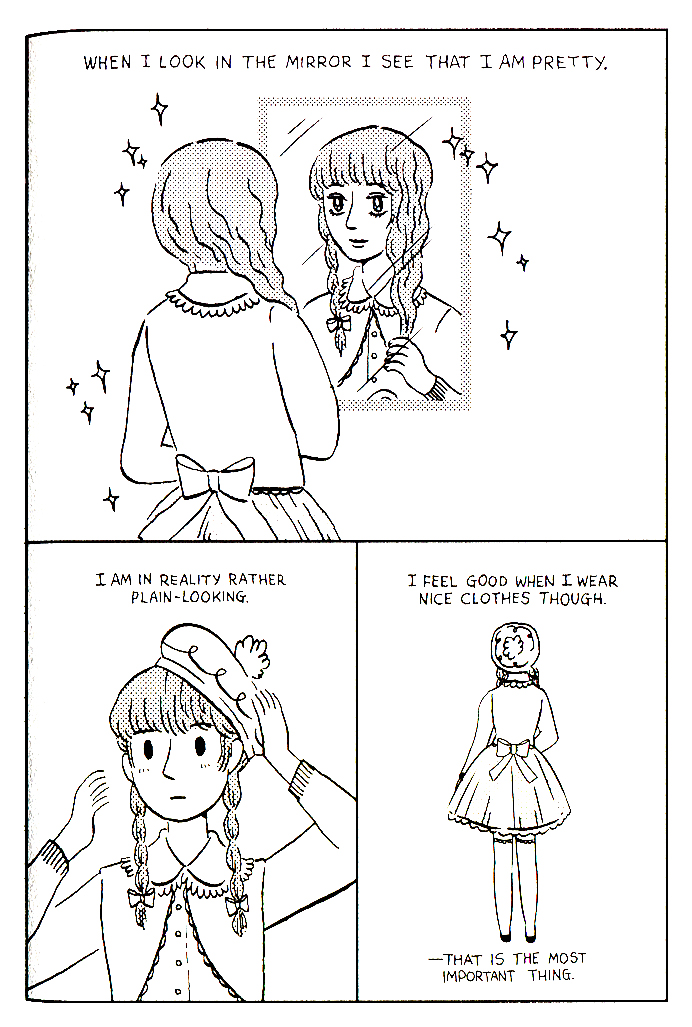
With their poofy petticoats and delicate dresses, aficionados of Lolita fashion stand out as an elegant oasis among a sea of jeans and t-shirts. It is hard to imagine how such a feminine style of dress could have a dark underbelly, but Jane Mai and An Nguyen explore this in their collection of essays and comics, So Pretty / Very Rotten.

Lolita fashion is a Japanese street fashion based off of Victorian children’s clothing. It emphasizes modesty, femininity and elegance. A basic Lolita outfit (co-ordinate, or co-ord for short) consists of a blouse with puffed sleeves and a round Peter Pan collar, a knee-length dress or skirt, over-the-knee socks, Mary-Jane shoes, a headbow, and most importantly, a bell-shaped petticoat. It is an unashamedly feminine style in a time where femininity is undermined and women feel a pressure to dress and present in a more masculine style in order to be taken seriously. I personally have been a part of this subculture since 2010, and my love for it only grows with each passing year.

While it contains several essays that go into the historical and feminine aspects of Lolita, So Pretty / Very Rotten brings to light a more macabre side of the fashion. Mai and Nguyen discuss how there is an innate sense of materialism within the community. The urge to buy, buy, buy and collect pieces to perfect one’s Lolita wardrobe is prevalent. Often one feels as if they don’t belong unless they have a wardrobe of a certain size or pieces by specific brands. One of Jane Mai’s comics depicts a character literally exchanging body parts in order to gain a deeper understanding of Lolita and what it means to be a part of the fashion.

A less macabre theme, though no less troublesome, is that of escapism. Many view Lolita and the window to another time, as it creates a gateway to a world where life is simpler and where teatime and lovely dresses help take away the pain and stresses of real life. The authors express the idea that sometimes Lolitas can get so wrapped up in this world of beauty and luxury that they forget to take care of other aspects of their lives. They do note, however, that there is also a sense of freedom in making the choice to dress in a way that is so outlandish. When you’re surrounded by a supportive community that encourages self-expression through fashion, it feels as though you have the power and opportunity to be yourself, no matter how strange your interests are. As one character says, “Isn’t there a kind of power in announcing so plainly the things that you like?”

So Pretty / Very Rotten is fantastic for readers who are interested in alternative Japanese fashion, whether they are beginners or seasoned pros. I personally enjoyed the illustrations and the love and attention that Mai and Nguyen have brought to recreating Lolita outfits in a way that is representative of their own tastes while portraying the versatility of the fashion. I hadn’t expected the book to touch on ideas relating to Lolita as escapism or to explore the darker side of using clothes to express oneself. I felt as though this unique perspective helped me look at the fashion I love in a new light, and perhaps it has also helped me recognize my own habits in the way I approach the fashion. This collection of short essays and comics will be a welcome addition to the library of those who are Lolitas or those who love them and would appreciate a better understanding of this weird yet wonderful frilly world.

* * * * *

Kyra Wiseman is a Washington D.C. native with a passion for alternative fashion. She has been a part of the DC/MD/VA metropolitan area Lolita community for six years.

The Book of Yōkai

the-book-of-yokai

Title: The Book of Yōkai: Mysterious Creatures of Japanese Folklore
Author: Michael Dylan Foster
Illustrator: Shinonome Kijin (東雲 騎人)
Publication Year: 2015
Publisher: University of California Press
Pages: 309

This guest review is written by Katriel Paige (@kit_flowerstorm on Twitter).

Yōkai are part of an ongoing conversation surrounding global popular culture. Even in the United States we hear about yōkai through games like Pokémon and Yo-Kai Watch, and we happily watch films from Studio Ghibli that feature wondrous and strange creatures.

Although Michael Dylan Foster acknowledges that commercial cultures factor into the continued vibrancy of yōkai lore, The Book of Yōkai does not focus on the portrayals of yōkai in contemporary popular media and fan culture. Rather, the goal of this text is to provide an overview of the folkloristics of yōkai, from how thinkers and artists have interpreted yōkai to how the mysterious entities have been created, transmitted, and continually redefined. Foster is especially interested in how yōkai enthusiasts create their own networks of practice, with popular media cultures as one node in those networks. As he writes, “For many of my students in the United States, for example, the terms yōkai and Japanese folklore are practically synonymous; they have encountered kappa or kitsune or tengu in manga and anime, films and video games, usually in English translation. This exposure inspires them to delve further into folklore, to find the ‘origins’ of the yōkai of popular culture that they have come to love. And that is [a] purpose of this book, to provide some folkloric grounding for yōkai they might encounter” (6).

Foster succeeds in this endeavor, as The Book of Yōkai is an excellent overview, especially for those new to the study of folklore. In his first chapter, “Introducing Yōkai,” the author offers a short introduction to the shifting definition of the term “folklore,” reminding readers that, like yōkai themselves, “folklore” occupies a place-in-between, where it is both traditional and modern, rural and urban. Folklore, like yōkai, can be found both in the shadows of the forest and in the light cast by our computer screens. Just as there is no single definition of “folklore,” there is no single definition of “yōkai,” and Foster’s cogent explanations of liminality and communal creation serve as an excellent introduction to the study of cryptids and the legends surrounding them.

The Book of Yōkai is divided into two sections: “Yōkai Culture” and “Yōkai Codex.” The “Yōkai Culture” section is where the reader will find Foster’s discussions of the history of yōkai, beginning with the mysterious twilight entities of the classical Heian Period (c. 794-1185) and spanning to medieval picture scrolls illustrating yōkai night parades and early modern codices classifying both natural and supernatural phenomena. The majority of this section is centered around important texts, such as the mytho-historical Kojiki and hyakumonogatari compilations of ghost stories, and influential figures, such as the artist Toriyama Sekien and the scholar Inoue Enryō.

The “Yōkai Codex” describes yōkai according to their habitats, such as the countryside, the city, and the sea. This section is similar to the indexes seen in games that involve the collection of strange creatures, such Pokémon and Yo-Kai Watch. Foster’s “Yōkai Codex” also draws on and serves as a link to yōkai indexes past and present, most famously the illustrated yōkai compilations of the manga artist Mizuki Shigeru.

The writing is accessible to academics and non-academics alike, making The Book of Yōkai superb for independent scholars or a general reader with an interest in yōkai. Foster by and large avoids technical jargon, and he clarifies his treatment of Japanese words and names at the beginning of the book, which aids in cross-referencing with other sources. As a folklorist, Foster privileges the storytelling experience, using anecdotes to make the reader feel as if they are having a friendly chat with the author. Although the academic foundation of Foster’s text is solid, his colorful personal stories have the potential to resonate strongly with a non-academic audience.

The Book of Yōkai is a great resource for undergraduates, non-specialists, and other curious readers looking for a comprehensive English-language introduction to the historical complexities and artistic potential of yōkai. It is available in hardcover, paperback, and e-book editions from the University of California Press. Shinonome Kijin, who has provided thirty original illustrations for the text, can be found as @ushirodo on Twitter.

* * * * *

Katriel Paige is an independent scholar of yōkai as well as media cultures and folklore. They earned a MA in Intercultural Communication with International Business from the University of Surrey and a BA from the University of Delaware with a dual focus in East Asian Studies and English, and they currently work in the technology industry. They like cats, video games, and caffeine in both coffee and chocolate forms. You can find more of their work, including their essays on Japanese culture and video games, on their Patreon page.

the-book-of-yokai-page-73