Reader of books and player of games. College professor and pokémon trainer. Writes about Japanese fiction, media, gender, and society. In love with monsters and magic.
https://digitalfantasydiary.com/
Saō Ichikawa’s ハンチバック (Hunchback), which won the prestigious Akutagawa Prize for emerging writers, is about a woman with a congenital spinal condition who lives in a group home and posts her secret desires and frustrations on Twitter. It’s an amazing story and a brilliant piece of writing.
The protagonist, Shaka Izawa, has been provided for by her wealthy parents. Although she doesn’t need the money, Shaka works as a freelance writer, mainly penning reviews for stores and restaurants she’ll never be able to visit in person. She also writes explicit erotica, a selection of which opens the novella.
Hunchback is written in a playful and accessible style, but it asks serious questions about disability. Why shouldn’t Shaka create erotica? Why shouldn’t she experience desire? Why shouldn’t she have sex? These questions become less abstract when one of Shaka’s caretakers discovers her secret writing account, and she presents him with a proposition – she’ll pay him to have sex with her.
I was so intrigued by Shaka’s story that I read Hunchback (which is ninety pages long) in one sitting. Ichikawa’s description of the daily life of someone with severe mobility impairments is honest yet compassionate, and her anger at Japanese society’s ingrained ableism is powerful and resonant.
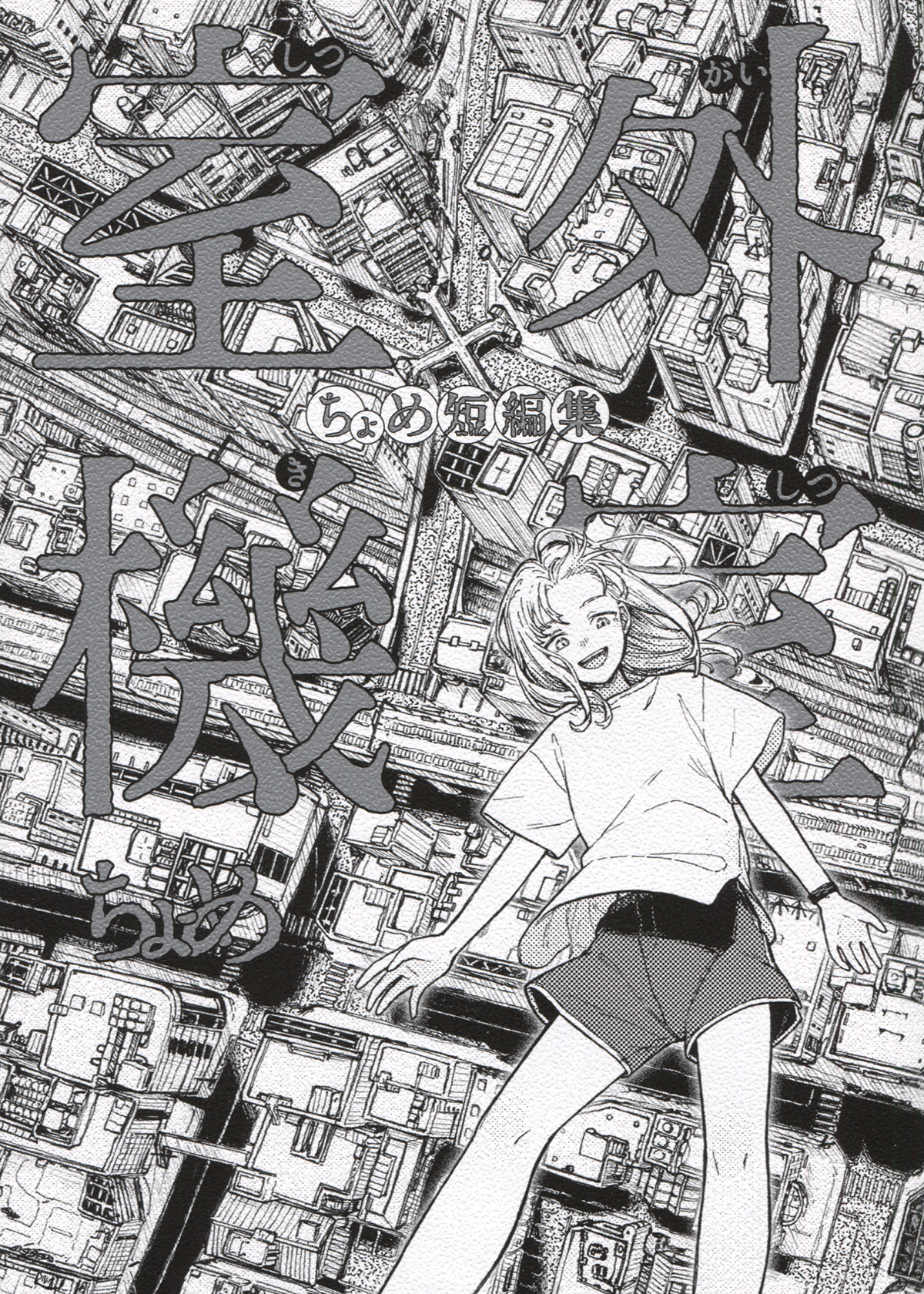
室外機室 collects four gorgeously illustrated magical realist stories drawn by an otherwise unpublished artist who goes by Chome. The stories transport the reader to a reality slightly removed from our own as each of the mundane protagonists catches a small glimpse of a hidden world.
I immediately fell in love with this collection from the opening pages of the first story, Tsugiho, in which a woman attends a large comic convention and finds a self-published minicomic that turns out to be brilliant despite its nondescript cover. The comic doesn’t seem to be documented anywhere online, so the woman starts writing a description. Her project quickly spirals out of control, however, as the pages of the small book seem to change each time she reads it. In the end, the woman’s essay transforms into an original illustrated short story, which she self-publishes and takes to the same comic convention where she found the mysterious comic that inspired her.
Speaking personally, I couldn’t describe the process of creative inspiration more accurately if I tried. What begins as a relatively straightforward act of casual appreciation can easily turn into something that has almost no relation to the original work at all, often to such an extent that the source is entirely forgotten by the end. In addition, it’s not always the case that creative inspiration comes from “the great works” of art and literature, as smaller and more specific stories can create a powerful sense of resonance and creative motivation even despite being unacknowledged by the broader culture. It’s nothing short of amazing that Tsugiho captures this aspect of creativity so perfectly in just twenty pages.
The two middle stories are thought experiments that are far more beautifully executed than they have any right to be. In 21g no bōken (which illustrates the manga’s front cover), a young woman dies and finds that her ghost is able to go anywhere and do anything. This story is primarily an excuse to illustrate the joy of absolute freedom of movement, but the ending is quite touching. Meanwhile, Konshin takes place almost entirely in a woman’s bedroom as she sits at her desk and listens to a strange radio broadcast from a parallel universe in which history has developed in an entirely different direction. The strength of this story lies in its writing, but the uncanniness of the broadcast is augmented by the visual coziness of the woman’s apartment.
The fourth and final story, Chika tosho tankenshō, is a seventy-page graphic novella that blew me away with its creativity and charm. A young woman doing research at the library drops her eraser, which bounces into the crack of a panel at the bottom of a bookshelf. The woman opens the panel to find a staircase. To the woman’s surprise, there’s an enormous library complex underground, but something about it is decidedly strange. The staff is wearing traditional Japanese clothing, and none of the books have titles. The young woman quickly arrives at the conclusion that this isn’t a place she’s supposed to be, but can she escape without being caught by the librarians? And what are all the mysterious books?
If I had the power to snap my fingers and make any manga appear in a licensed English translation, Shitsugai Kishitsu would be at the top of the list. This short story collection is a hidden treasure that easily stands its ground with the experimental but gorgeously polished work of emerging creators published by small presses like Silver Sprocket and Peow, and I could see any of these minicomics being released in the line-up of the ShortBox Comics Fair. Whoever the mysterious Chome may be, they’re creating brilliant and accessible comics that deserve an appreciative international audience.
Maru Ayase’s short magical realist novel The Forest Brims Over is about a young woman named Rui whose husband is a famous writer. Fed up with the words her husband puts in her mouth in his fiction, Rui swallows a handful of seeds that sprout from her body, gradually turning her into a forest.
Despite its fantastic premise, the story is firmly grounded in the psychological realism of the authors and editors who treat women as nothing more than literary symbols to be exploited for sales and awards. In the first four chapters, Rui’s transformation inspires significant shifts in the lives of the people in her husband’s literary circle. In the fifth and final chapter, we finally get to see Rui’s own perspective, and it’s brilliant.
I sympathize with Rui, whose every word is stolen from her by the literary professionals who conspire to confine her existence to a page of pulped paper. If Rui can’t speak in the language of the cultural elite, she’ll find another way of expressing herself, and the vast and mysterious array of life she produces is infinitely more vibrant than her husband’s formulaic literary fiction.
Rui’s husband may have the privilege of publishing award-winning books made of dead wood, but she is the roots and the leaves and the flowers and the wind. The Forest Brims Over is much more subtle and nuanced than perhaps I’m making it seem, but I personally found it joyful and liberating to be reminded that there’s much more room to grow outside the walls built by literary gatekeepers.
Shima Shinya’s four-volume sci-fi manga Glitch opens in a mundane setting in contemporary Japan: a high school student named Minato Lee (who uses they/them pronouns) has moved to a small rural town with their mother and younger sister Akira.
Minato notices that there’s something strange about their new home after a fragmented hole in reality emerges from the ceiling of her classroom. Two of Akira’s friends confirm Minato’s experience, telling them that only some people can see the distortions.
The group consults with the clerk of a neighborhood corner store, a mild-mannered man in flip-flops with a Biblically accurate angel for a face. He tells them that, since the town was constructed on top of open fields thirty years ago, various visitors have been emerging from a mysterious forest. He should know, given that he’s one of them, but the town’s glitches are a mystery to him as well.
Shima is a big fan of Star Wars and a co-author of The High Republic: The Edge of Balance manga series. Glitch captures the fun “weird little creatures in rundown environments” spirit of Star Wars, but the manga also engages with the deeper themes expressed in the movies, especially regarding how the small-scale actions of a diverse coalition are necessary to undermine the mundanity of evil.
Glitch handles its portrayal of diversity in a light-handed and clever way, and the “evil” confronted by the characters isn’t what readers might expect. While its story takes time to develop, the strength of Glitch’s art is immediately apparent, as Shima mixes the dynamic poses and expressions of Disney-style animation with the detailed backgrounds and dramatic panel compositions of indie manga.
Tomoko is only twelve years old when she loses her father to cancer. To learn to support herself, Tomoko’s mother attends a dressmaking school in Tokyo, where she lives in a student dorm. From 1972 to 1973, Tomoko is sent to live with her aunt in Ashiya, an upscale suburb between Osaka and Kobe. Her uncle is the president of an international soft drink company, and his house is extravagantly large and quite grand. Tomoko’s cousin Mina lives a charmed life marred only by her asthma, which is serious enough to necessitate frequent hospital visits.
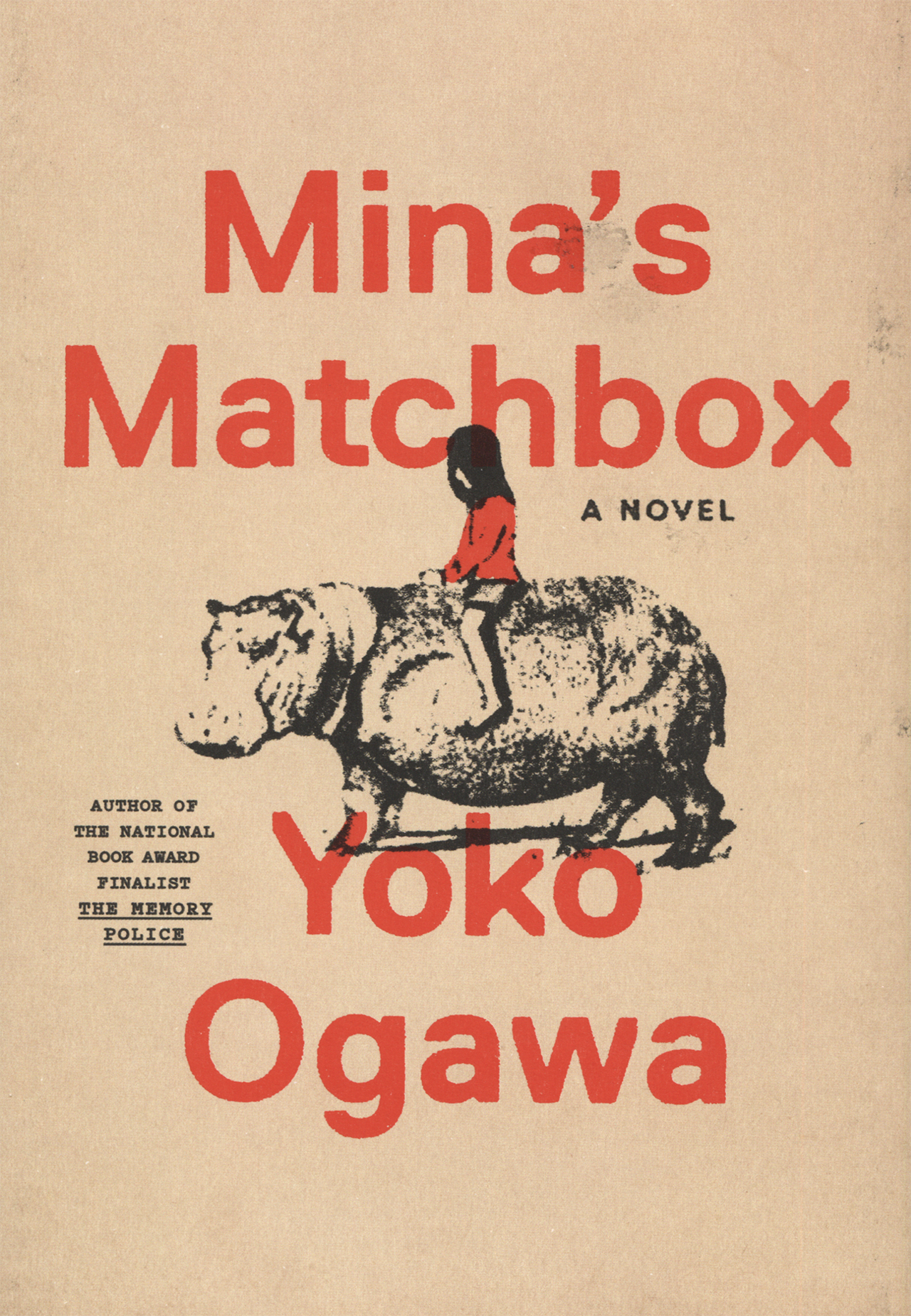
Mina’s grandmother Rosa emigrated from Germany in 1916, and the family’s house is filled with beautiful things, from foreign furniture and luxurious cosmetics to exotic Christmas paraphernalia to a room covered in Islamic tiles and used for a holistic health treatment called “light bathing.” Perhaps the most intriguing thing about the house is Mina’s pet, an aging Liberian pygmy hippopotamus named Pochiko who carries Mina to school every morning. The household is managed by Yone-san, an elderly woman who is ostensibly Rosa’s maid but can more properly be called her companion and life partner.
Tomoko’s aunt is attractive, elegant, and kind. Her uncle is handsome, friendly, and good-natured. The family’s groundskeeper and driver, Kobayashi, is a sweet and patient man whom everyone loves. The entire family welcomes Tomoko with style and grace, and she quickly becomes fast friends with Mina. The opening chapters of Mina’s Matchbox unfold almost like a Studio Ghibli movie, and I couldn’t help envisioning the characters in the style of When Marnie Was There.
To add to the magical atmosphere, Mina is thoroughly charming. She reads well above the level of a sixth grader and asks Tomoko to check out books from the local library like Yasunari Kawabata’s House of the Sleeping Beauties and Katherine Mansfield’s The Garden Party. Mina conveys her comments on these books to Tomoko, who shares them with the gentle young librarian she fancies.
Meanwhile, Mina has a crush on a deliveryman for her father’s company who drops by the house every week. During each visit, he gives Mina interesting matchboxes that he picks up on his rounds. Inspired by the graphics printed on the boxes, she writes short stories on paper that she uses to adorn the inside of the small containers she uses to store her collection. These stories are often fables about animals or other small creatures, and Tomoko loves them.
Mina’s Matchbox is a Yoko Ogawa novel, so it goes without saying that all is not well. Quiet tensions flow underneath the family’s beautiful surface, which is marred by the infidelity of Tomoko’s handsome uncle. To give herself a sense of purpose, Tomoko’s aunt combs through magazines searching for typos so that she’ll have an excuse to send letters of complaint. Mina’s older brother writes to the family from Switzerland but never mentions his father. In her devotion to Rosa, Yoneda-san almost never leaves the house and is frightened by everything outside of her immediate sphere of influence.
Nothing bad happens, and this definitely isn’t the sort of novel where the sick child dies. I hope it’s not a spoiler to say that both Mina and Tomoko go on to live happy lives. Aside from subtle but meaningful character development, Mina’s Matchbox doesn’t have much in the way of plot.
Regardless, this isn’t a slow novel. The pacing is excellent, and I finished the book quickly. In fact, I would have liked to spend more time with it. Every sentence is perfect, and each paragraph is a joy. Despite the child protagonists, Mina’s Matchbox has all the nuance of an adult perspective and steadfastly refuses to engage in melodrama. Reading this novel is like sitting outside and enjoying the sunshine on a warm spring day, and it’s a pleasure to follow the gradual progression of the small stories surrounding Mina and Tomoko as recounted in Ogawa’s impeccable prose.
Emergent Tokyo: Designing the Spontaneous City is a fascinating study of urban space augmented by a wealth of photographs and illustrations. Jorge Almazán convincingly argues that, instead of being designed from the top down, Tokyo’s distinctive cityscape emerged from history and opportunity.
Almazán focuses on five distinguishing characteristics of Tokyo, from the famous zakkyo “mixed-use” highrise buildings that line the main boulevards to the dense shopping areas that crowd the bays between support columns under elevated train tracks. Each feature of Tokyo’s cityscape is illuminated by three case studies that are meticulously documented and analyzed.
My favorite chapter is about the narrow and winding ankyo streets of West Tokyo, which were built on top of old canals and have gradually become pedestrian oases. The most famous is Harajuku’s Mozart-Brahms Lane, the chill and ambient twin to Takeshita Street. As in the case of Mozart-Brahms Lane, ankyo streets have often become communal backyards for neighborhoods with flashier public faces.
I especially appreciate the Conclusion section, in which Almazán demonstrates that corporate-led urbanism has created unwelcoming and visually unappealing spaces that have none of the vibrancy of the more organic spaces fostered by collectives formed by homeowners and small business managers. While urban planning is still necessary, Almazán argues, emergent communities should not be stifled.
Emergent Tokyo isn’t a book for tourists, but I imagine it will be of interest to anyone who’s curious about urban design. Also, although some of the more academic text might fly above the heads of small children, I think Emergent Tokyo would be a wonderful book to give a kid. The illustrations and diagrams are truly fantastic, and they’re so immersive that I found myself disappearing into the details as I imagined walking through the Tokyo gorgeously laid out across the pages.
Being Dead Otherwise is an anthropological account of the shifting cultures of death and dying in contemporary Japan. Despite its seemingly grim topic, this is one of the most hopeful academic books I’ve read in recent years.
Anne Allison is primarily concerned with Japan’s aging population, who have begun to form communities surrounding their preparations for burial. Due to urbanization and an increase in nuclear family households, it’s no longer feasible to rely on one’s children or relatives for end-of-life arrangements. Still, older generations have been finding practical solutions.
I especially enjoyed the chapter about the social meetings of the future occupants of urban columbaria (repositories for burial urns), who call themselves “grave friends” and get together to make scrapbooks and other creative projects that will commemorate their lives for their children and grandchildren.
Allison argues that this type of self-care is often necessary to work around Japan’s outdated burial laws, in which only the formally registered Head of Household (who is almost always male) is allowed to make arrangements with a Buddhist temple. Thankfully, many temples are starting to ignore this law in order to serve the needs of older women who survive their husbands.
Without a doubt, many problems still exist in an increasingly fragmented society, but Allison is optimistic and respectful as she interviews death workers ranging from priests to city officials to entrepreneurs. Being Dead Otherwise is an academic book that achieves the highest standards of scholarship, but it’s also a fascinating read that’s easily accessible to a wide audience.
A word of warning, however: Being Dead Otherwise contains photos of human remains that may be disturbing to those who aren’t used to such things. Sensitive readers may want to skip Chapter 6 entirely.
Takehiro Fukunaga’s 1954 novel Flowers of Grass is considered to be a classic of postwar Japanese fiction, and it’s the sort of book that I imagine many people envision when they think of “literature.” The main narrator is Shiomi, an intelligent but sad young man who’s deeply concerned with spiritual and philosophical matters. As the novel opens, Shiomi has opted to undergo a risky operation at a tuberculosis care facility. Knowing that he won’t survive, he leaves a handwritten account of his life before the war, when he loved and lost both a male classmate and that classmate’s sister.
If one reads Flowers of Grass “straight,” Shiomi is a passionate but pure-hearted young man who has a tendency to fall in love with the idealistic versions of people he creates in his head instead of the actual people themselves. If you’re me, however, it feels much more natural to read Shiomi as a closeted gay man who has an intense sexual crush on a fellow member of his high school archery club but feels obligated to transfer his affection to the boy’s sister once he enters college. Despite being a devout Christian, the sister loves the apostatic Shiomi and twice attempts to initiate a sexual relationship, but Shiomi finds himself unable to reciprocate her physical attraction.
Perhaps this is just my own personal bias, but I also picked up an element of homosexual attraction between Shiomi and the narrator of the novel’s frame story, a fellow patient at the tuberculosis sanitarium. In my reading of Flowers of Grass, the burgeoning romantic relationship between Shiomi and the frame narrator goes a long way toward answering the novel’s opening question: Why does Shiomi decide to undergo a dangerous operation that’s almost certain to be fatal? Essentially, Shiomi has decided to commit suicide, and the point of the testament he leaves behind is to explain why. The answer is complicated, but I get the feeling that Shiomi’s inability to come to terms with his queer sexuality is not inconsequential.
Putting the matter of sexuality aside, the bulk of Flowers of Grass is set during the late 1930s and early 1940s, and the story is of historical interest for its clear and unapologetic stance against the aggression of the Japanese imperial state. Shiomi is eventually drafted, and I think the author intends him to serve as a representative symbol of a typical Japanese soldier in that he really, really wasn’t cut out for the army. No sane military organization would want someone like Shiomi to be a soldier, but the Japanese Imperial Army was not sane.
The two love stories at the core of Flowers of Grass are intriguing, as is the mystery posed in its opening section. Unfortunately, the beginning of the novel is somewhat dull and meandering, and it takes an inordinately long time for the story to find its feet. In particular, your mileage may vary regarding how many dozens of pages of teenagers discussing philosophy you’re willing to wade through. Flowers of Grass requires patience, but it rewards thought and reflection.
As an aside, this novel was translated by Royall Tyler, who is famous for his translation of The Tale of Genji. I was curious about what Royall Tyler is up to these days, and I was amazed and delighted to find that he’s retired from academia to manage a llama farm. I highly recommend checking out his website (here), which is the most charming and wholesome thing I’ve encountered on the internet in a long time.
Shinya Tanaka’s prizewinning novella Cannibals is a harrowing story of how poverty enables a cycle of abuse and assault. The writing and translation are beautiful, but the book is often difficult to read.
In the brutally hot summer of 1988, a 17-year-old boy named Toma is forced to confront the blood he’s inherited from his father, who beats his stepmother and sleeps with various women in their working-class neighborhood along the banks of a polluted river.
To his disgust, Toma realizes that he, too, receives gratification from physical violence, and he struggles to process what this means. Meanwhile, tensions at home threaten to reach a breaking point when Toma’s stepmother confides that she intends to leave his father.
The neighborhood river is never far from the story, and Tanaka’s virtuoso description of its eventual flood is incredible; the violence of the rushing waters is a necessary cleansing and catharsis.
The damage caused by the flood also serves to deny any complacency with violence that the reader may have developed through identification with the narrator. Still, I can’t help but feel that perhaps the author may have taken this violence too far for my own taste, especially as a reader who tends to be critical of how visceral depictions of assault often obfuscate thematic resonance through shock.
Cannibals is a prime example of what feminist scholar Chizuko Ueno has termed “men’s literature” (as opposed to the more commonly used expression “women’s literature”), which delves into specifically gendered issues that may not by sympathetic to a wider audience. The problem I once had with books like Cannibals is that there were so many of them in translation, especially in relation to the exclusion of similarly disturbing stories written by women. Now that there’s a greater diversity of Japanese fiction in English translation, it’s easier to read something like Cannibals on its own terms instead of seeing the explicit misogyny of the characters as a reflection of the implicit sexism of the publishing industry.
In the end, I think Cannibals might be better suited to a college-level literature class than pleasure reading, at least for most people. Without the context of the masculinity narrative of the 1980s that Tanaka is pushing back against in a frankly heroic style, there’s a danger of Cannibals coming off as almost voyeuristic of working-class poverty and sexual violence. Regardless, I appreciate this novella, and I’m grateful it’s been skillfully translated and lovingly published in a beautiful paperback edition with a striking cover design.
Seichō Matsumoto’s Tokyo Express is a slim mystery novel from 1958 whose crime is largely dependent on train schedules. Although two apparent victims of suicide appear to have traveled together to a lonely seaside town, were they in fact being pursued…?
The officer assigned to the case, a young detective named Mihara, suspects the involvement of the president of an industrial manufacturer with close ties to the government. Mihara assumes that his prime suspect, an affable middle-aged gentleman named Yasuda, was attempting to cover up an illegal collusion.
As Mihara pursues various train schedules across the Japanese archipelago, he learns that Yasuda’s elaborate system of alibis checks out. But, if Yasuda didn’t murder the two victims, who could have been helping him?
For me, there were far too many timetables in Tokyo Express, and I found myself skimming to avoid getting bogged down in the numbers. No one in the story has much of a personality, and Mihara is mostly a cipher for the reader. Despite the plot’s emphasis on travel, the locations that Mihara visits don’t really have a sense of place or setting.
I’m given to understand that there are many mystery fans who appreciate this style of writing, namely, just the facts with little by way of atmospheric description. If you’re looking for a puzzle box in book form, Tokyo Express has a lot of fun moving parts to play with. If you read mysteries more for the story, however, it might be better to take a pass on this particular ride.





 Contemporary Japanese Literature