Reader of books and player of games. College professor and pokémon trainer. Writes about Japanese fiction, media, gender, and society. In love with monsters and magic.
https://digitalfantasydiary.com/
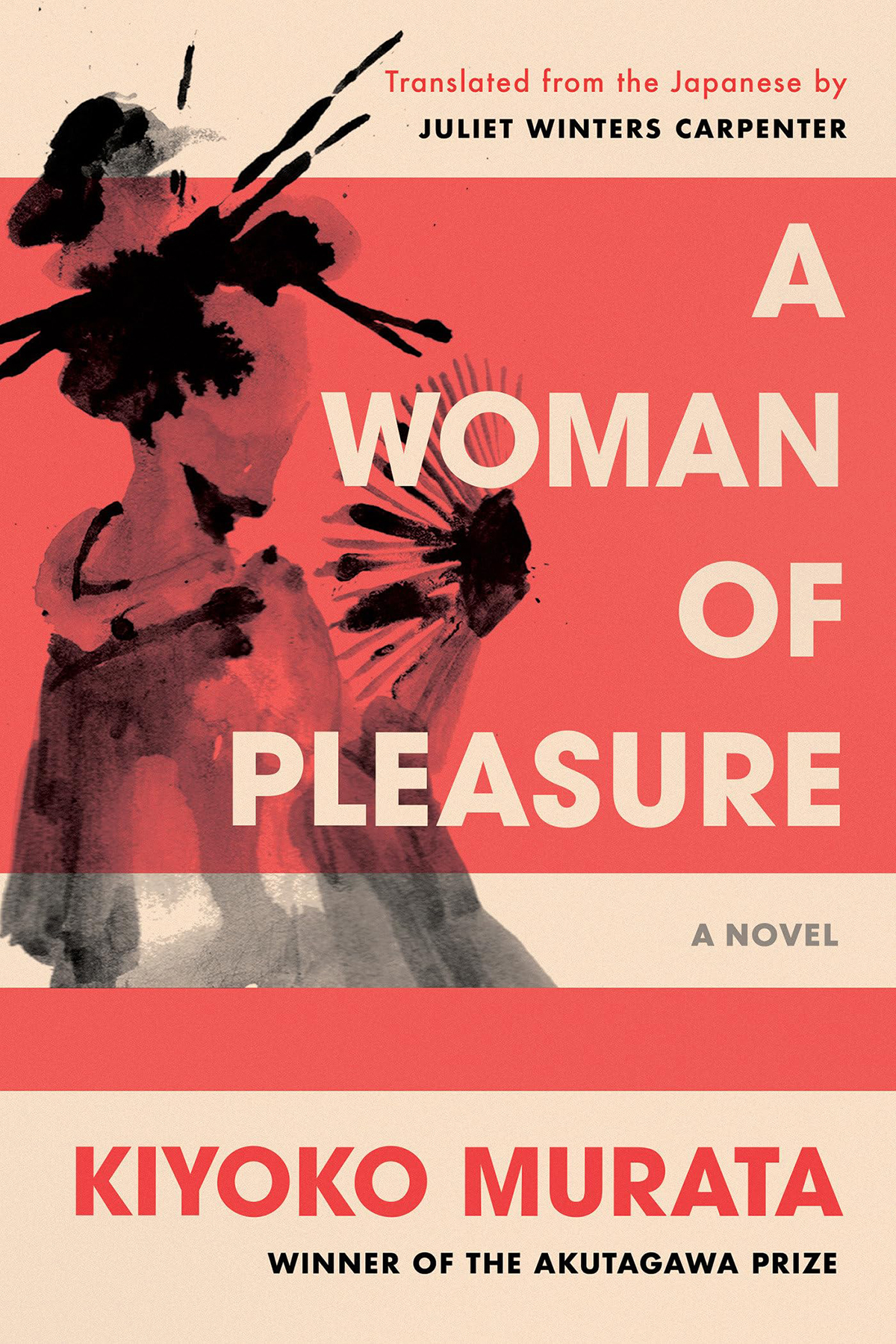
Kiyoko Murata’s A Woman of Pleasure is a feminist novel about the self-liberation of Japanese sex workers in the early twentieth century. It’s also a vibrant window into a different world and a true pleasure to read. Murata’s work has won almost every major Japanese literary prize, and Juliet Winters Carpenter has crafted a beautiful translation of her writing.
A Woman of Pleasure is set in 1903 in the adult entertainment district of Kumamoto, where the fifteen-year-old Ichi has been sold by her impoverished family to a high-ranking brothel. While she apprentices under a senior geisha, Ichi also attends literacy classes run by a retired entertainer named Tetsuko.
Ichi’s honest yet playful diary entries are interspersed between third-person accounts of her everyday life, the mundanity of which comprises the bulk of the novel. Despite the unfairness of her situation, Murata portrays Ichi with sympathy and dignity, as well as with a welcome touch of light humor.
While the last fifty pages of the book describe how the women at Ichi’s establishment decide to exercise their legal right to leave, the majority of the story explains – very gently – why they would choose to do so. For a contemporary reader, there’s a lot to be upset about, but Murata never degrades her characters or their agency in shaping the course of their lives.
A Woman of Pleasure reminds me a great deal of Jun’ichiro Tanizaki’s classic novel The Makioka Sisters. Despite several startling and high-tension incidents, the book doesn’t have much of a plot. This is to its benefit, I think, as what’s interesting about Ichi’s story would be ruined by melodrama. Murata’s project is first and foremost to celebrate the essential humanity of the women who lived in a different era, but she also presents a compelling demonstration of how normal, ordinary people are capable of powerful political action.
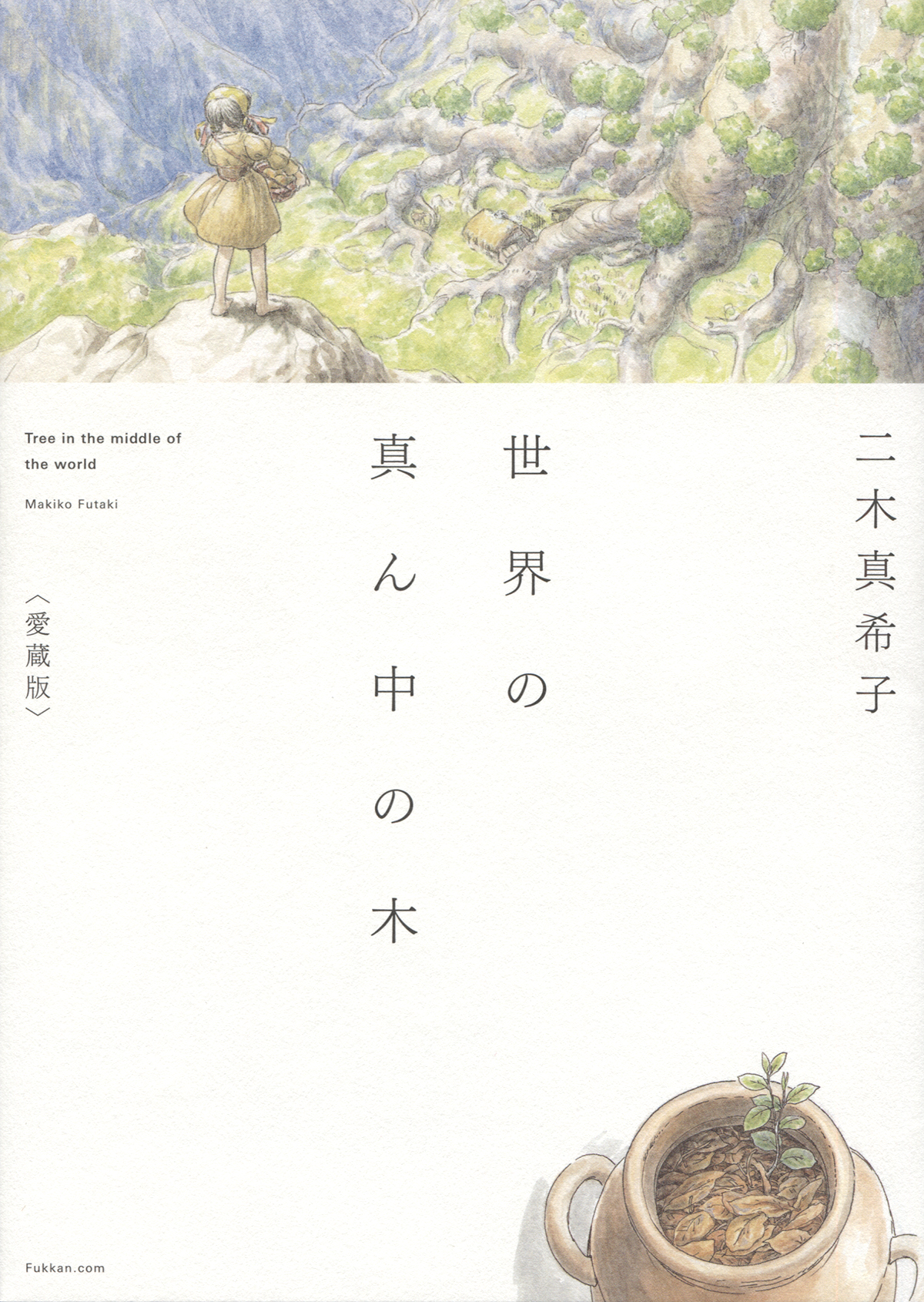
世界の真ん中の木 (Tree in the Middle of the World) is a lushly illustrated picture book written and drawn by Makiko Futaki, a former animator at Studio Ghibli. Originally published in 1989, this book is now available in a beautiful hardcover edition that allows the full glory of the artwork to shine.
In the Afterword to the original softcover edition published by Animage, Futaki wrote that she was inspired to create this story after visiting the Yakushima natural heritage forest, where she conducted visual research for My Neighbor Totoro. Despite its young protagonists and verdant greenery, however, Tree in the Middle of the World is a complex ecofable that has more in common with Princess Mononoke.
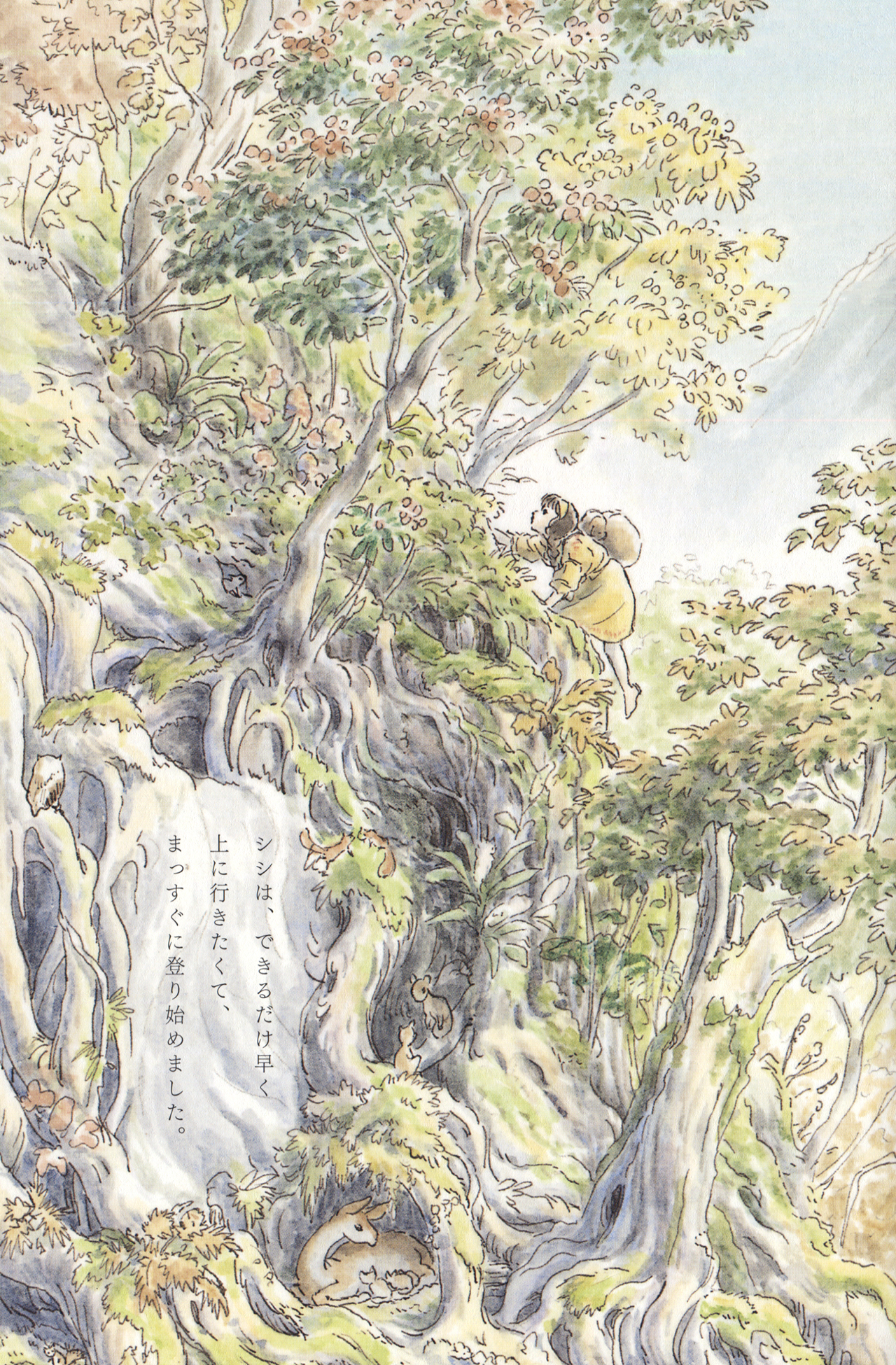
A preteen girl named Cici lives in the mountains with her grandmother. Their small cottage lies at the base of the gargantuan “tree in the middle of the world,” and their modest livelihood is supported by its ecosystem. One year, the tree’s cycle of seasons goes strangely awry, and the sapling Cici attempts to grow from one of the tree’s seeds withers. Hoping to learn more about the malady affecting the tree, Cici resolves to speak with the legendary golden bird that lives in its uppermost branches.
During her epic three-day climb, Cici realizes that the state of the tree’s health is far more dire than she suspected. To make matters worse, she seems to be followed by a young archer from the steppes named Dimo. Dimo is an inexperienced speaker of Cici’s language, but he manages to communicate that he intends to kill the very bird she seeks. Thankfully, Cici does not have to bear her worries alone. Early in her climb, she gains a travel companion in the form of a talking frog whose avuncular good nature serves as a welcome relief from the hardships of her journey.
When Cici finally finds the golden bird, she learns that it has gone insane in its old age, and the putrescence it sheds from its rotting feathers is the cause of the tree’s sickness. Just as he intended, Dimo appears in the nick of time to slay the bird, which answers Cici’s question with its dying breath – in order to save the tree, Cici must venture underground to scatter the tree’s seeds below its roots.
This is a fearsome undertaking, to be sure, but Dimo promises to lend his aid. The two children thus embark on a second journey that proves to be just as dangerous as the first. Just when all hope seems lost in the darkness, Cici and Dimo arrive on the shore of a golden sea that might just be the very stream of life itself. Having succeeded in the quest, the two children return to the surface, where the first winds of spring greet them with verdant laurels of fresh greenery.
Although I’ve outlined the contours of the story, Tree in the Middle of the World is a substantial book whose plot contains a number of twists, turns, and quiet spaces for rest and contemplation in between. The writing is simple but evocative, especially during the portion of the story that takes place underground. Miraculously, every page boasts gorgeous illustrations, each of which is more magical than the last.
Tree in the Middle of the World reminds me a great deal of Hayao Miyazaki’s Shuna’s Journey, albeit with two key differences. First, the visual layout of Tree in the Middle of the World makes its text much clearer and easier to read than the text in Shuna’s Journey; and second, Futaki is far more focused on guiding the reader along a journey through the space of a fixed setting. Like Shuna’s Journey, however, Tree in the Middle of the World contains moments of genuine fear and menace that might not be appropriate for younger children.
Tree in the Middle of the World doesn’t skirt around the shadows of its themes. Like everything in nature, the life of the giant tree exists in cycles, as does that of the giant bird that nests in its branches. Sometimes, like Cici, we find ourselves at the end of a cycle, and there’s not much we can do to prevent the death and destruction we see everywhere around us. Still, it’s our responsibility to preserve the seeds of what we hold dear and plant them carefully in the hope that they will grow strong and healthy in the future when the cycle turns once again.
Tree in the Middle of the World is an uplifting and optimistic story guided by a fantastic sense of adventure. Through her luminous artwork, Futaki conveys the joy of being surrounded by green and growing things, and the action is easy to follow even if your Japanese reading ability isn’t perfect – or if you don’t read Japanese at all. If nothing else, it’s impossible to read Tree in the Middle of the World and not feel inspired to go outside and interact with the world with a renewed sense of hope and purpose.
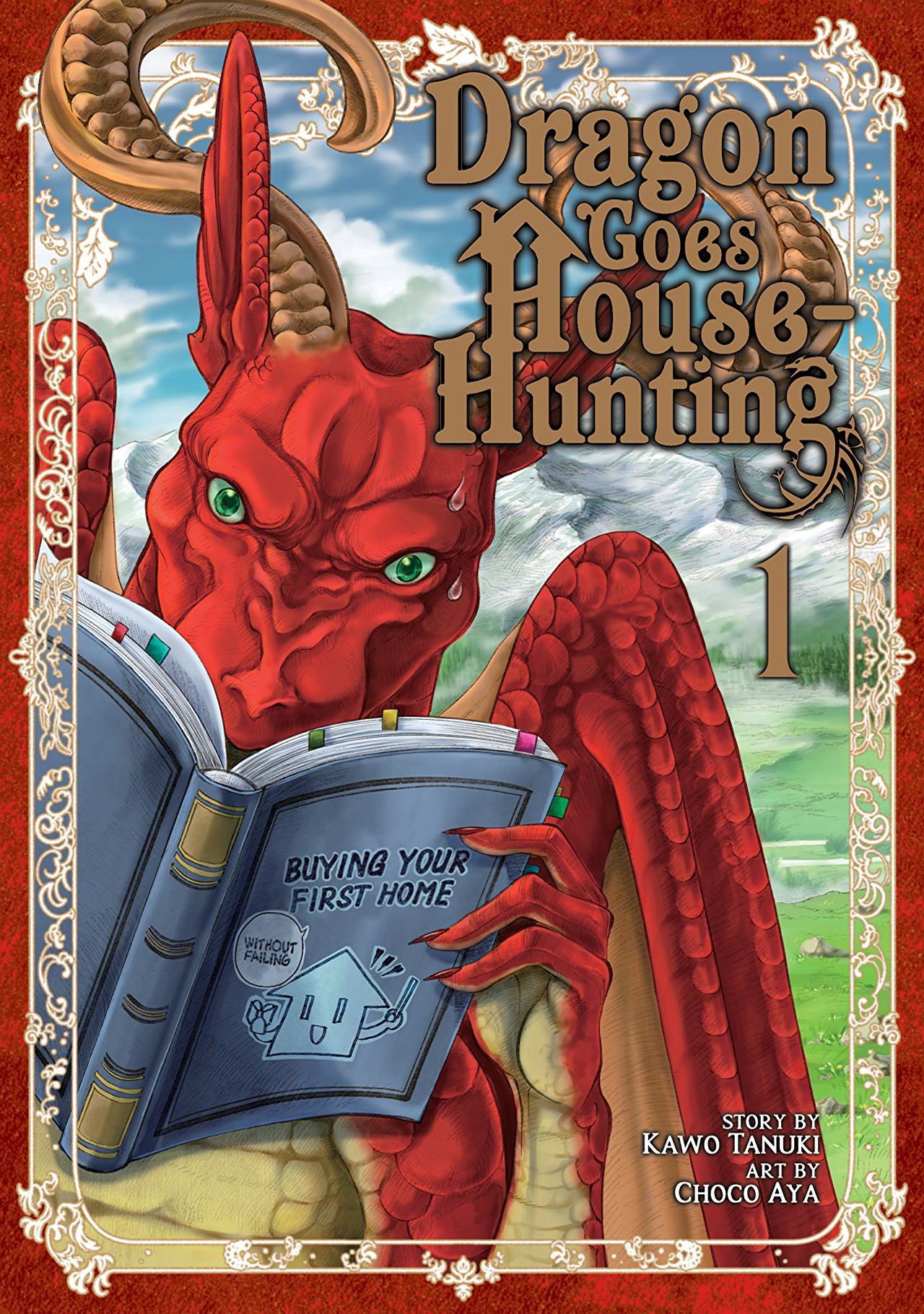
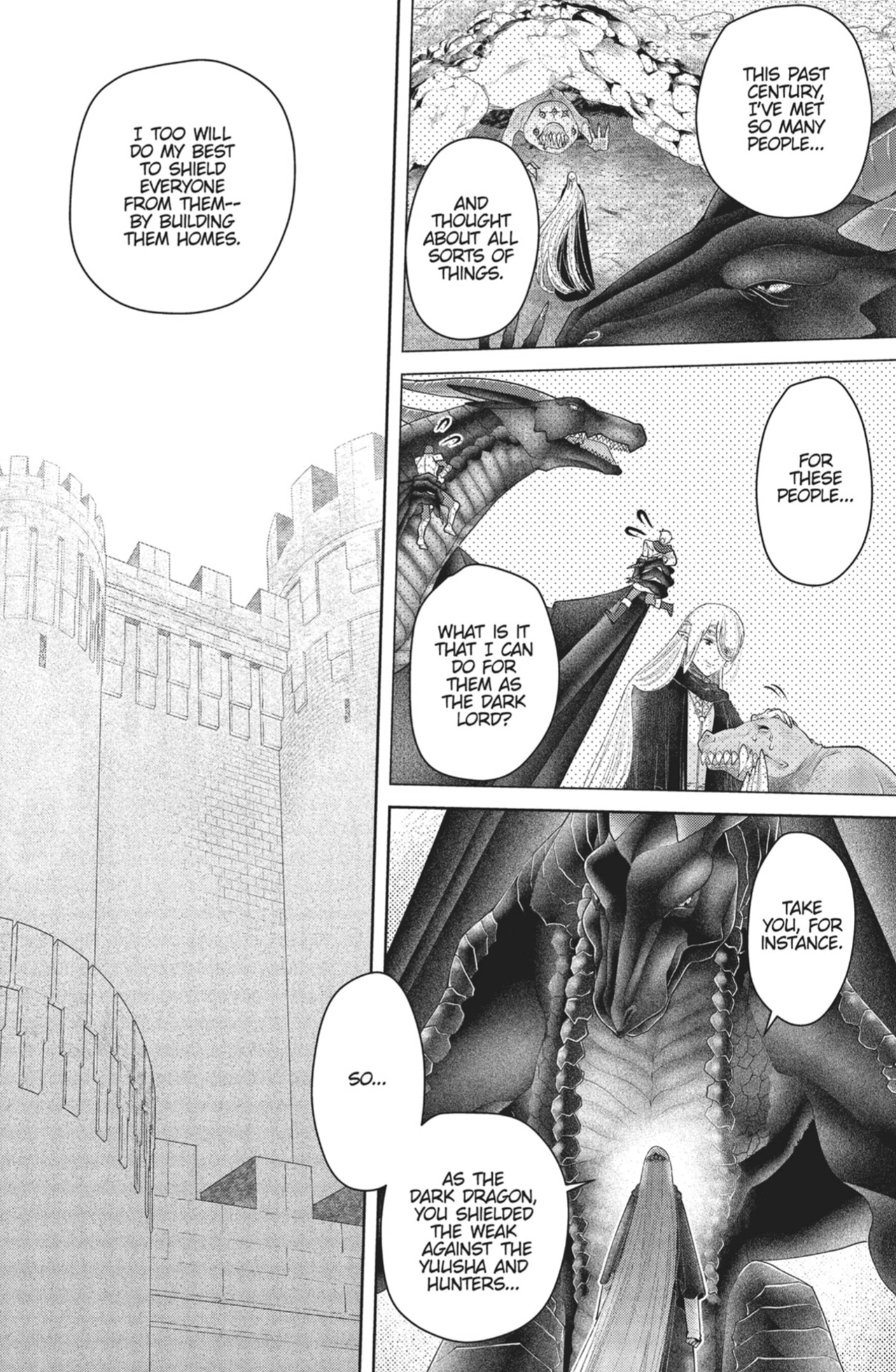
Earlier this year, Seven Seas released the tenth and final volume of Kawo Tanuki and Choco Aya’s fantasy series Dragon Goes House-Hunting. This manga follows the misadventures of a gentle but cowardly dragon named Letty and his real estate agent Dearia, a massively powerful and inhumanly beautiful dark wizard. Letty is searching for a comfortable house that will accommodate his size while also protecting him from the pesky adventurers trying to hunt him for crafting materials. While Letty pictures himself in a cozy cottage, Dearia encourages him to be more pragmatic and dungeon-minded.
What makes Dragon Goes House-Hunting stand out in the “slice-of-life fantasy” genre is the consistently high quality of its art, which references the detailed monster designs from video game manuals of the 1990s while still feeling fresh and contemporary. For video game fans especially, it’s quite entertaining to look at dungeon design from the perspective of the monsters, who are just trying to make it through the day without being harassed by heroes. The manga’s situational humor is gentle and sweet, but each volume still managed to surprise me with at least three or four devilishly sharp jokes.
Perhaps the easiest way to describe Dragon Goes House-Hunting is to say that it’s the high fantasy version of the wholesome yakuza comedy The Way of the Househusband. Like The Way of the Househusband, Dragon Goes House-Hunting is designed to be accessible to all ages, but it will resonate most strongly with readers old enough to have some experience with real estate (even if that experience is limited to looking for a student apartment). For a more action-oriented and kid-friendly take on the concept of “building homes for monsters,” I’d also like to recommend the ongoing shōnen series Soara and the House of Monsters, which is a gorgeously creative celebration of fantasy architecture.
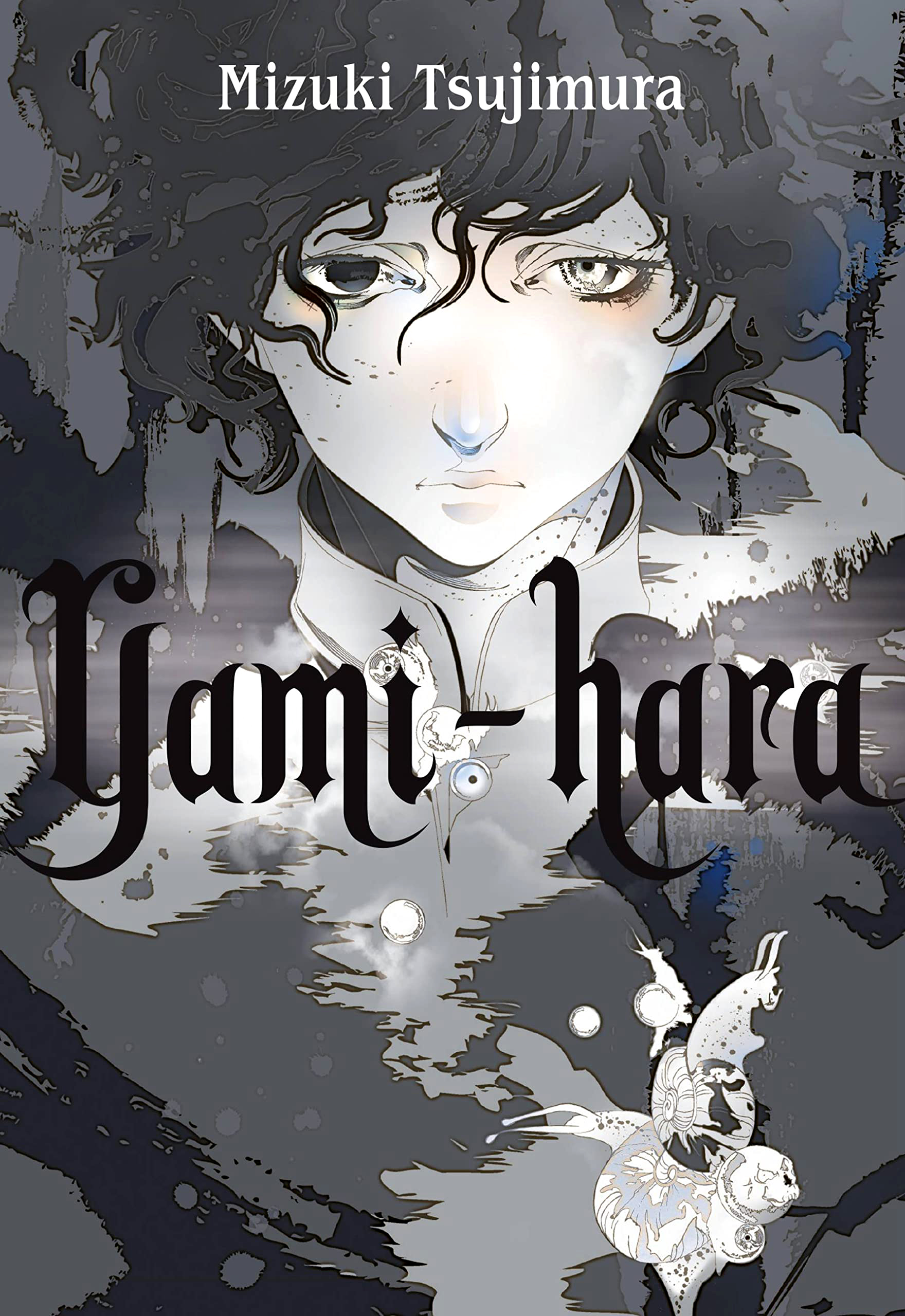
Mizuki Tsujimura’s Yami-hara is a collection of four disturbing stories about toxic social dynamics connected by a fifth chapter about the sinister force at the center of each of the conflicts. Although Yami-hara eventually reveals itself as supernatural horror, it’s entirely possible to read this linked story collection as a viciously cutting work of social satire.
The “yami-hara” of the title means “shadow harassment,” a term that indicates ostensibly benevolent behavior employed in such a way as to target a victim with gaslighting, self-doubt, and eventual social ostracization. Because there’s nothing technically “wrong” with the bullying, it’s not only tolerated but also actively facilitated by the broader community.
The first story, “New Student,” is about a toxic romantic relationship between two high schoolers. Straight-A student and class representative Mio is thrilled when her crush offers to walk her home from school, but his “protection” quickly escalates to constant texts and accusations that she isn’t taking their relationship seriously. Mio has trouble talking about her discomfort with her friends, because isn’t this just what boyfriends do? Isn’t this what she wanted? And what reason does someone who presents herself as “perfect” have to complain? Shouldn’t she be happy?
The fourth story, “Group Leader,” is an even better example of shadow harassment. In a class of elementary school students, there’s an obnoxious rich kid named Toranosuke who constantly causes trouble and gets away with it. A seemingly friendly but very intense boy named Niko transfers into the class but has little patience for the rich kid’s nonsense. Niko therefore volunteers to spend time with Toranosuke after school to help him study.
Toranosuke soon becomes the target of the “help” of the entire class, clearly against his will. No one does anything to prevent this, because none of the students are technically doing anything wrong. Isn’t it good to help someone study? Especially since Toranosuke was having trouble to begin with? And wouldn’t it be wrong, actually, to tell his classmates to leave him alone? Isn’t this for Toranosuke’s own good?
The third story is about “secret” workplace harassment that everyone sees, while the second story is about the lowkey passive-aggressive harassment between the women who live in the same posh apartment complex. This latter story, “Neighbor,” is particularly disturbing in its exploration of the many ways adult women can be evil to one another.
Speaking personally, I don’t think the final chapter that ties everything together is necessary. While it’s amusing to think that this sort of bad behavior is caused by literal monsters, nothing that any of the characters do is all that out of the ordinary.
Regarding the chapter about workplace harassment, I’ve unfortunately seen variations of this exact situation any number of times with my own eyes. It would be lovely if a troubled but handsome teenage exorcist could show up and fix everything, but real life is never so simple. After all, it’s notoriously difficult to confront abusers who are clever enough to keep their harassment in the shadows, especially when the larger community tacitly supports them.
Yami-hara is by the same author who wrote Lonely Castle in the Mirror, a YA novel that explores the concept of bullying from the genre angle of escapist fantasy. Unlike Lonely Castle in the Mirror, however, Yami-hara is quite bleak in its outlook. If I hadn’t already been familiar with the author’s work, I’m not sure it would have occurred to me that these two books were written by the same person.
Despite the anime-style illustration on the book’s cover and the “handsome teenage exorcist” plotline that emerges at the end of the story, I wouldn’t classify Yami-hara as YA fiction. This is a very smart and very sharp horror novel that requires the reader to think critically about all of the characters while rarely providing a sympathetic viewpoint.
Although the story contains no explicit violence or assault, I can’t deny that parts of Yami-hara are deeply uncomfortable. At the same time, it feels refreshingly cathartic to see a taboo subject like shadow harassment discussed openly and with such a high degree of sensitivity. If nothing else, I was morbidly fascinated by the panoply of bad behavior on display in this book, and I’d recommend Yami-hara to any fan of social horror looking for a strange and unique story that’s specific enough to be intriguing but relatable enough to be introspective – often painfully so.
Rin Usami’s Idol, Burning is only 115 pages long, but this masterfully translated literary novella paints a vibrant portrait of a young woman’s search for community in online fandom.
School has always been tough for Akari, whose dyslexia makes writing Chinese characters by hand extremely difficult. Akari has no problem typing, however, and she pours all of her energy into a fanblog devoted to her oshi Masaki, an actor and member of a popular boy band. During the summer, Akari works as many shifts as she can pick up at her part-time job so that she can buy Masaki’s merch and attend his concerts.
Akari’s world begins to fall apart when Masaki punches an overeager fan, thus becoming the target of intense social media discourse. Akari, who has found friendship and personal fulfilment in her fandom, can’t help but take this abuse personally. To make matters worse, when she returns to high school, she’s informed that she’s failed her junior year.
Usami is unflinching in her portrayal of online cultures, and she’s refreshingly honest about the adverse effects that flamewars can have on vulnerable people seeking support in fandom communities. Akari is never presented as pathological, and the members of her family offer support despite not really understanding the life she leads online. If there’s a villain in this story, it’s the Japanese education system, which refuses to accommodate Akari’s learning style while constantly pressuring her to “try harder.”
Usami’s writing shines during the quiet scenes of loneliness Akari experiences as she watches her communities crumble apart in real time. While it’s easy to mock the intensity of pop star fandom, Akari’s story helps the reader to understand how the power of a dream can keep a teenager moving forward, especially when they feel that their paths are limited in the offline world. Akari is a beautifully unique and well-realized character, but her failed attempts to find meaning and belonging carry much broader implications concerning how Japanese society views difference and disability.
The English translation of the book includes short essays by the author and her translator Asa Yoneda, as well as short statements from the cover designer (surrealist photographer Delaney Allen) and the illustrator (comic artist Leslie Hung). The novel’s story stands on its own, but it’s a pleasure to read about the inspirations of the writers and artists who brought it to life.
Natsuko Imamura’s Asa: The Girl Who Turned into a Pair of Chopsticks collects three short literary thought experiments that go to strange places. Each of the characters is missing something essential, and where that lack ultimately leads them is impossible for the reader to predict.
Asa, the eponymous “girl who turned into a pair of chopsticks,” has trouble getting other people to accept any sort of food that she’s touched with her hands. Meanwhile, Nami, the “Girl Who Wanted to Get Hit (and Eventually Succeeded),” is strangely unable to be touched by other people at all. Asa’s quest to understand what makes other people perceive her as unclean has fantastic consequences that become humorous in their absurdity, while Nami’s desire to be touched sinks her into a dark mire of self-harm.
In my favorite of the three stories, the protagonist of “A Night to Remember” claims to have spent fifteen years laying around and doing nothing after graduating from school. This woman is so lazy, in fact, that she spends the majority of the story casually slipping across the ontological boundary that separates human and animal. If “A Night to Remember” were a story about a cat, it would be super cute, but the narrator is definitely a person. The resulting uncanniness is superb.
It’s fitting that the collection’s Afterword is contributed by Sayaka Murata, the author of Convenience Store Woman and Life Ceremony. “These stories give the reader another way of seeing,” Murata writes, “transfiguring what you should be seeing, and sometimes contaminating it.” Like Murata, Imamura refuses to allow the reader to take “common sense” for granted. The stories in The Girl Who Turned into a Pair of Chopsticks thereby offer a glimpse into a strange world where socially acceptable normality doesn’t apply. Imamura’s visions are playfully surreal, occasionally upsetting, and never boring.
Chris McMorran’s Ryokan: Mobilizing Hospitality in Rural Japan is an academic monograph about gender and society that’s surprisingly entertaining and enjoyable to read. McMorran is an anthropologist at the National University of Singapore who spent more than a year working at an onsen hotel in the idyllic town of Kurokawa on Japan’s southern island of Kyūshū. His account of how such resorts operate is informed by his own experience, as well as a decade of talking to people with fascinating life stories.
McMorran is discrete and never exploitative, but he uses a fair amount of behind-the-scenes drama to illustrate the conflicting views at play in the construction and maintenance of Kurokawa’s fantasy of “traditional Japan.” Not every aspect of these traditions is worth preserving, especially the pressure placed on firstborn sons (and their wives) to inherit the family business, often at the expense of the ambitions of a family’s daughters.
Despite stubbornly persistent gendered expectations, one aspect of these onsen hotels that seems almost utopian is their willingness to employ women who might otherwise be in danger of falling through the cracks of society, such as divorcées and single mothers with small children. Even though McMorran tackles serious social issues, his approach is always sympathetic and accessible, and his writing is so crisp and clear that this study often feels remarkably akin to a literary memoir.
Ryokan: Mobilizing Hospitality in Rural Japan has the potential to be an entertaining read for fans of Japanese pop culture interested in indulging in a bit of armchair tourism while gaining a deeper understanding of contemporary Japanese society. To enhance the experience, I’d also recommend the gorgeous travel guide Onsen of Japan: Japan’s Best Hot Springs and Bath Houses, which perhaps might be enjoyed alongside a viewing of the beautiful slice-of-life anime movie Okko’s Inn.
A young woman named Kiyose was recently promoted to the position of manager at an independent café. She devotes her love and attention to the business, but all is not well. One of her employees is a constant source of frustration, and she hasn’t spoken to her long-term boyfriend Matsuki since they had an argument about how Kiyose should handle the situation.
One day, Kiyose randomly gets a call from the hospital informing her that Matsuki is in a coma. The nurse in charge of his care informs her that she’s the closest thing he has to a next of kin, so she dutifully goes to confirm his identity. During her visit, Kiyose learns that Matsuki suffered a head injury sustained under mysterious circumstances, and his only other visitors are two unrelated people she’s never met.
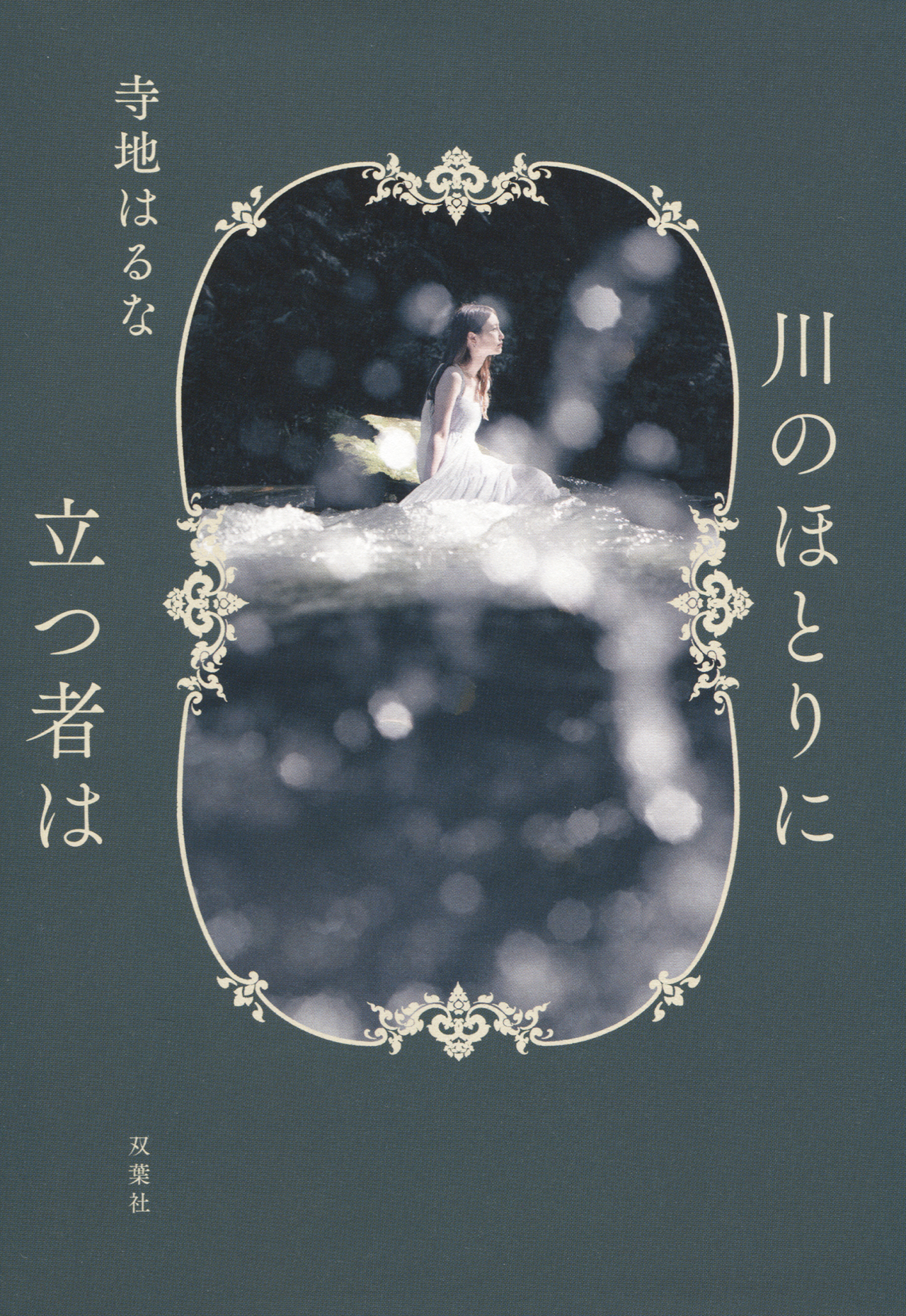
川のほとりに立つ者は initially seems as though it’s going to be a mystery about crime, but it’s actually a character drama about living with invisible disabilities, specifically ADHD and dyslexia. As Kiyose begins digging into Matsuki’s life, she learns that, despite being alienated from his uptight family of professional calligraphers, Matsuki was teaching an adult with dyslexia how to write so that he could pass letters to a woman trapped in an abusive housing situating.
The novel’s title is taken from the proverb 川のほとりに立つ者は水底に沈む石の数を知り得ない, “Those who stand on the river’s shore can never know the number of stones under the water.” After learning about the discrimination faced by Matsuki’s friend, however, Kiyose begins to understand how unfair it is to tell someone with a disability that they’re just being lazy and irresponsible. She realizes that she was being cruel to her employee, who had come out to her as having ADHD, and she resolves to make her café a more accessible and welcoming space while being kinder to the people in her life.
Although her work hasn’t yet been translated into English, Haruna Terachi is a prolific writer who has won a number of literary prizes since her debut in 2014. This is my first encounter with Terachi’s writing, and I enjoyed this short novel, especially the chapters that were narrated from Matsuki’s perspective. I also found it satisfying to watch the mysteries presented at the beginning of the story slowly unravel. That being said, I was unsatisfied with the novel’s conclusion that the solution to systemic discrimination falls on individuals, who simply need to “walk at the same pace” as people with disabilities.
Still, it’s always good to see sympathetic stories about disability – especially invisible disability – and I appreciate Terachi’s pushback against the toxic misconception that disabled people simply aren’t trying hard enough. Along with people interested in the experience of living with disability in contemporary Japan, I’d recommend this book to anyone looking for a fast-paced and wholesome character drama driven by hidden secrets brought to light.
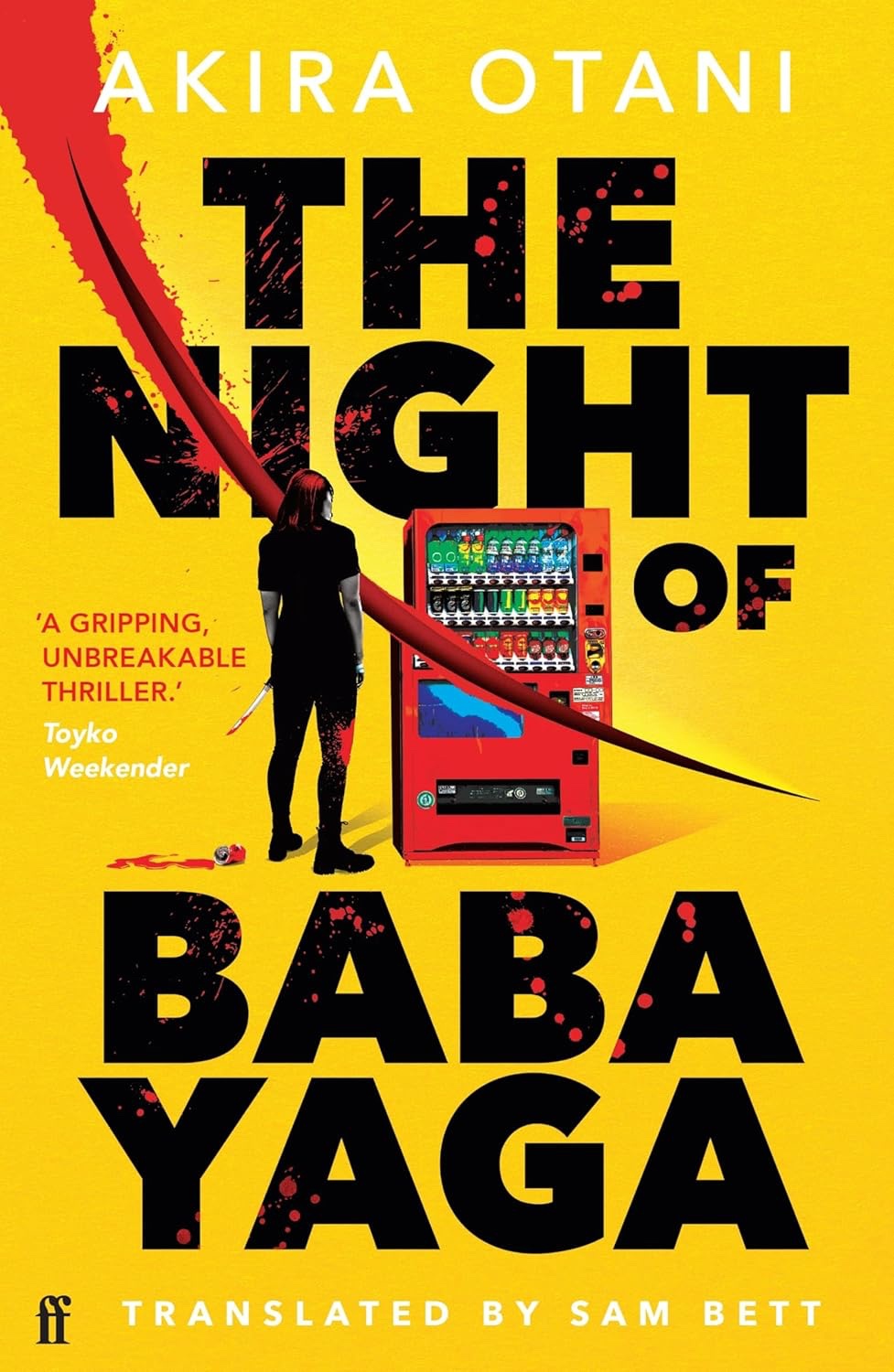
The Night of Baba Yaga is two hundred pages of violence, torture, and rape. All of the novel’s descriptions of violence, torture, and rape are graphically explicit; and again, there are two hundred pages of them. I enjoyed this book, but it’s not for everyone.
The bulk of The Night of Baba Yaga is set in Tokyo in 1979. A 22yo street brawler named Yoriko Shindo is pressed into the service of a notorious yakuza crime syndicate whose boss has ordered her to become the chauffeur for his precious only daughter, a prim-and-proper college student named Shoko. The yakuza boss assumes that, because Shindo is female, she won’t attempt to romance Shoko, but of course the two women fall in love and help each other escape the family.
I’d like to say that The Night of Baba Yaga is a love story, but it’s more of a series of fight scenes occasionally broken by scenes of torture and rape. The novel begins and ends with Shindo getting the shit beaten out of her, and most of the gaps in the fighting are created by the aforementioned torture and rape. I’m not saying this is a bad thing. The Night of Baba Yaga is what it is, which is a lesbian BDSM hurt/comfort fantasy in which male characters enact hurt so that female characters can provide comfort. Aside from the brief comfort scenes, there’s not much romantic chemistry or character development.
The Night of Baba Yaga is empowering for the woman who wrote it, no doubt, and I get the sense that there will be queer readers (such as myself) who will be amused to see this sort of openly horny fantasy in print. The Night of Baba Yaga isn’t empowering for any of the characters, however. Short interstitial chapters jump ahead in time, but I hope it’s not a spoiler to say that nobody gets a happy ending. Not in this sort of story. The tragedy is so over-the-top it’s Shakespearean.
Personally, I thought the ultraviolence was a lot of fun. The action is so gory and exaggerated that it’s difficult to take seriously, and The Night of Baba Yaga feels silly and campy in the same way that Takashi Miike movies like Ichi the Killer do. If you (like me) are a fan of the horror movie mindset that inspires you to cheer with delight when somebody’s hand gets chopped off, The Night of Baba Yaga delivers.
The translator, Sam Bett, has done an amazing job. Fight scenes are notoriously difficult to write, yet the translation is snappy and remarkably fast-paced. The character voices aren’t “natural” by any means, but they’re pitch-perfect for the genre. When it comes to descriptions of rape and violence, Bett doesn’t pull any punches. It’s an incredible translation, and I am in awe.
I’ve seen social media reviews hailing The Night of Baba Yaga as “an inspirational queer romance,” and it 100% most definitely is not that. Nobody does any learning or growing in this story, which has exactly zero social commentary. Rather, The Night of Baba Yaga is an adrenaline-laced lesbian power fantasy about being the most badass fighter you can be until you die. If you’re not the target audience, The Night of Baba Yaga probably isn’t for you. Like Wolverine, it’s the best at what it does, and what it does isn’t very nice. This short and compulsively readable novel gets in, gets messy, and gets what it came for.
Nahoko Uehashi’s fantasy epic The Deer King is the story of two characters who find themselves caught in an ongoing conflict fought on two fronts – an imperial war for conquest, and the spread of a mysterious disease.
The Deer King works best when it focuses on its primary viewpoint character, a middle-aged warrior named Van who lost his homeland when he was captured in battle and sent to the imperial salt mines to work and die as a slave. After the mines are attacked by black wolves, Van passes out and wakes to find he is the sole survivor – with one exception, a small child named Yuna who was stuffed into an oven in the kitchens aboveground.
With Yuna in tow, Van escapes into the forest, where he encounters an injured traveler who has been abandoned by his pyuika, a cross between a deer and a reindeer that Van’s people have traditionally ridden like horses. When Van befriends the missing pyuika, the traveler invites him back to his village to teach everyone how to raise the animals properly. Van agrees, and he and Yuna find peace in the isolated village. Unfortunately, the ongoing war is not far behind them, and Van begins to manifest strange abilities that pull him in the direction of the black wolves.
Van’s portions of the story are wonderful. Van is a careful observer of the world around him, and his perspective allows the reader to appreciate the details of the natural environment while learning about the cultures of the people who live on the borders of the empire. Despite his background as a military leader, Van is primarily concerned with establishing peaceful human relationships. This facet of his character allows worldbuilding to occur organically through conversations about mundane matters.
Unfortunately, The Deer King becomes borderline incomprehensible when it shifts to the secondary viewpoint character, a young and brilliant physician named Hohsalle who seeks to combat the deadly disease supposedly spread by the phantasmic black wolves that attacked Van. Hohsalle’s chapters are exposition dumps filled with fantasy names and places and ranks that feel uncomfortably decontextualized.
All of the characters operating within the empire have lords, and they also have servants, and their servants have servants, and their lords have family histories. To my dismay, all of these characters are presented as though the reader were already familiar with their relationships. What could have been an interesting medical drama is thus buried under a slurry of fantasy names and meaningless titles.
I had the same problem with Uehashi’s novel The Beast Player, a coming-of-age story that’s interesting and compelling right up until the point when the narrative suddenly shifts to the machinations of a dozen new characters active in the succession drama of a large and labyrinthine imperial court. The poor pacing and uneven structure of both novels render their stories unnecessarily difficult to follow, which is a shame.
In addition, while I’m always hesitant to critique Japanese-to-English translation, I feel that veteran translator Cathy Hirano’s signature style of simple and lucid clarity might not be the best fit for a work of epic fantasy. When I read fantasy, I want the prose to be at least a little purple, with the beauty (or darkness) of the language reflecting what’s unique about the world imagined by the author. I also want the characters to have distinct voices, especially if they’re coming from vastly different cultures. I personally feel it’s something of a drawback for the translation of The Deer King to be so smooth, as I’d prefer the writing to have more texture.
The Deer King: Survivors is only the first half of the story, but I don’t think I’m going to read the second volume. Even though the novel contains numerous themes that interest me, such as the ecological impact of war and the moral compromises of marginal communities resisting oppression, the flawed execution of these themes failed to hold my attention.
What I’d strongly recommend is for anyone interested in the premise of The Deer King to check out the animated cinematic adaptation, a breathtakingly beautiful film that deserves far more attention than it’s received. The movie version of The Deer King is on par with Princess Mononoke in terms of its depiction of a green world filled with mystery and populated by sympathetic characters who are doing their best to understand one another despite their competing goals.
Unlike the original novel, the pacing of the movie is excellent. Many of the side characters and their subplots have been cut or simplified, thereby allowing the physician Hohsalle to shine like the star he’s meant to be. The film version of The Deer King is the sort of animation for intelligent adults that harks back to an earlier generation of filmmakers like Satoshi Kon and Mamoru Oishii, and I can’t help but wish that the original novel had been able to meet the same standard.



 Contemporary Japanese Literature