Reader of books and player of games. College professor and pokémon trainer. Writes about Japanese fiction, media, gender, and society. In love with monsters and magic.
https://digitalfantasydiary.com/
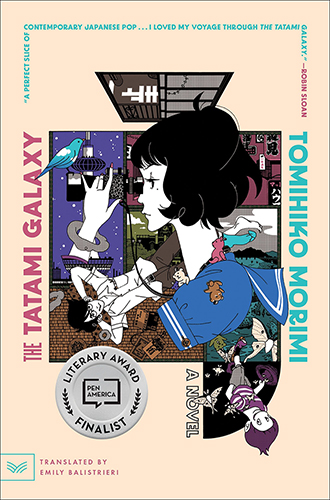
The Tatami Galaxy is a magical realist comedy set in Kyoto in the early 2000s. The author, Tomihiko Morimi, is famous for his over-the-top characters and offbeat urban fantasy, and The Tatami Galaxy takes the reader on a wild ride through a set of parallel universes.
The unnamed narrator is a third-year student at a university in Kyoto. He came to campus, he says, with dreams of pursuing a rose-colored student life full of friends, scholarship, and wholesome extracurricular activities.
This is not how things turned out, unfortunately. After joining a student club that he didn’t quite click with, the narrator develops a friendship with a fellow student named Ozu, a slimy but charming manipulator who drags him into all manner of unsavory plots.
What would happen, the narrator wonders, if he had joined another club? Could he have escaped Ozu’s influence and enjoyed his ideal rose-colored campus life?
The Tatami Galaxy collects four versions of the narrator’s story. At the beginning of each version, the narrator joins a different student club. Though the details are different, the characters remain the same.
The narrator never manages to break his “black thread of fate” with Ozu; but, then again, that’s not really what he wants. After all, what good is a rose-colored campus life without friends?
The Tatami Galaxy is very silly and sweet, and it also feels like a window into what college was like before the pandemic. Remember the world before neoliberal enshittification really started to take hold? Remember when eating out was cheap, drinking was fun, and your life wouldn’t be completely ruined by a few bad grades and stupid mistakes?
As a university professor myself, it’s painful to see how exhausted my students are, and it’s wild to think about how different everything was even ten years ago. The Tatami Galaxy is a perfectly preserved time capsule, and it’s as good of an opportunity as any to remember that college isn’t supposed to be about optimizing your metrics. If you aren’t drunkenly setting off fireworks at a rival student club across a river on a warm spring night, the author argues, you’re wasting your chance at a rose-colored campus life.
I really love Emily Balistrieri’s short “Note from the Translator” at the end of the book, in which she discusses how much fun it was to translate Tomihiko Morimi’s distinctive style of writing and sense of humor. This joy definitely comes through on the page, and Balistrieri’s translation feels remarkably fresh and energetic.
If you’re interested, the (subtitled) anime version of The Tatami Galaxy is free to watch on YouTube (here). It’s something of a cult classic, and with good reason. The art and animation are unique and creative, and the voice acting is genius. Still, I have to admit that the visual eyestrain is intense. The anime boasts the same high energy and twisted sense of humor as the original novel, but mercifully (for those of us past our student days) the book version is much easier to enjoy at a chill and relaxed pace.
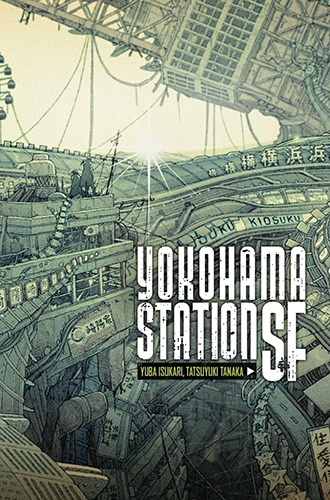
Two hundred years after the end of a devastating global conflict, Yokohama Station has expanded to cover almost all of Honshu, Japan’s central island. Once governed by artificial intelligence, the station now grows uncontrollably through ceaseless self-perpetuation. Most of what remains of Japan’s population lives inside the structure, where order is maintained by patrolling robots and automated systems that manufacture necessities.
Hiroto was born and raised in one of the small coastal communities of people who live outside the station. Since this village is able to subsist on the excess food and goods discarded from the station, Hiroto’s vague dreams of making something of his life have no target, especially since people who don’t a possess Suikanet registration are quickly ejected from the Yokohama Station structure by robotic constructs known as Automated Turnstiles.
This changes when an exile from inside the station washes up at Hiroto’s settlement. Before passing away, the man gives Hiroto an 18 Ticket, a digital pass that will allow him to remain inside the station for five days. He asks Hiroto to find and rescue the leader of the Dodger Alliance, a group of hackers that aims to shut down what remains of the artificial intelligence that governs Yokohama Station.
Another exile, an elderly man suffering from dementia known only as “the professor,” adds to the mystery by telling Hiroto to search for Exit 42, where all questions about the station’s history will be answered. Hiroto, who’s happy to have an excuse for adventure, wastes no time in leaving, assuming that he’ll simply see what he can see in the five days before his 18 Ticket expires.
With no access to digital currency or knowledge of the rules and customs that govern life inside the station, Hiroto quickly finds himself in trouble. Thankfully, luck is on his side, and he’s aided in his journey by Shamai, an android sent to gather intelligence from Hokkaido, which is still free from the station’s growth. Hiroto also crosses paths with a beautiful otaku techno-wizard named Keiha, who turns out to be the very resistance leader he was sent to rescue. Keiha is fine, as it turns out, and she remotely assists Hiroto’s journey to Exit 42 while mining Shamai for information about the ultimate goal of the organization that governs Hokkaido.
Hokkaido isn’t the only independent territory; and, about a third of the way through the novel, the perspective switches to a weapons specialist named Toshiru who is employed by the military government defending the island of Kyushu from the station’s encroachment. Toshiru is a lone wolf who isn’t suited for military bureaucracy, so his commanding officer gives him implicit permission to take a ferry to the island of Shikoku, which is partially occupied by the station.
On Shikoku, Toshiru meets a Hokkaido android named Haikunterke (whose name, like Shamai’s, is taken from the language of the Ainu people who once lived in northern Japan). Together they navigate the lawless territory on the fringes of Yokohama Station, where people who were unable to flee to Kyushu live in constant fear of starvation and roving gangs of brigands.
The horrors that Toshiru witnesses raise a moral dilemma. If the central A.I. core of Yokohama Station is shut down, and if the station loses its ability to maintain itself, what authority will rise to fill the power vacuum? And how will humans produce food on land that’s been so utterly destroyed?
Once Hiroto finds Exit 42, he’ll have to make a decision. In one of the most interesting scenes of the novel, it turns out that what remains of the original station A.I. has thoughts of its own, and the message it shares with Hiroto is kind, wise, and refreshingly unexpected.
For such an intriguing setting and premise, Yokohama Station SF contains surprisingly little worldbuilding, and its exposition is delivered in short conversations that are frequently interrupted by the hazards the characters encounter as they travel. A full-color illustrated insert at the beginning of the book helps to fill in some of the gaps, as does a short glossary at the end, but most of the information the reader picks up will be through osmosis.
Speaking personally, I appreciate that the steady clip of the plot progression isn’t unduly interrupted by lore, and I feel that the character-focused narration serves the story well. At the same time, though the writing and translation are both excellent, Yokohama Station SF feels a bit like Dark Souls in the way it obfuscates its background story in favor of immediate action. Even as the characters navigate an unmapped maze of corridors, the reader must find their own way through a labyrinth of words.
Yuba Isukari writes that Yokohama Station SF began as something akin to fanfiction based on the manga (specifically Blame!) of Tsutomu Nihei, who sets his stories in the interiors of infinitely sprawling sci-fi megastructures the size of small planets. Though the novel’s chapter-opening character illustrations by Tatsuyuki Tanaka are lovely and filled with charm and personality, they don’t really convey a sense of the setting.
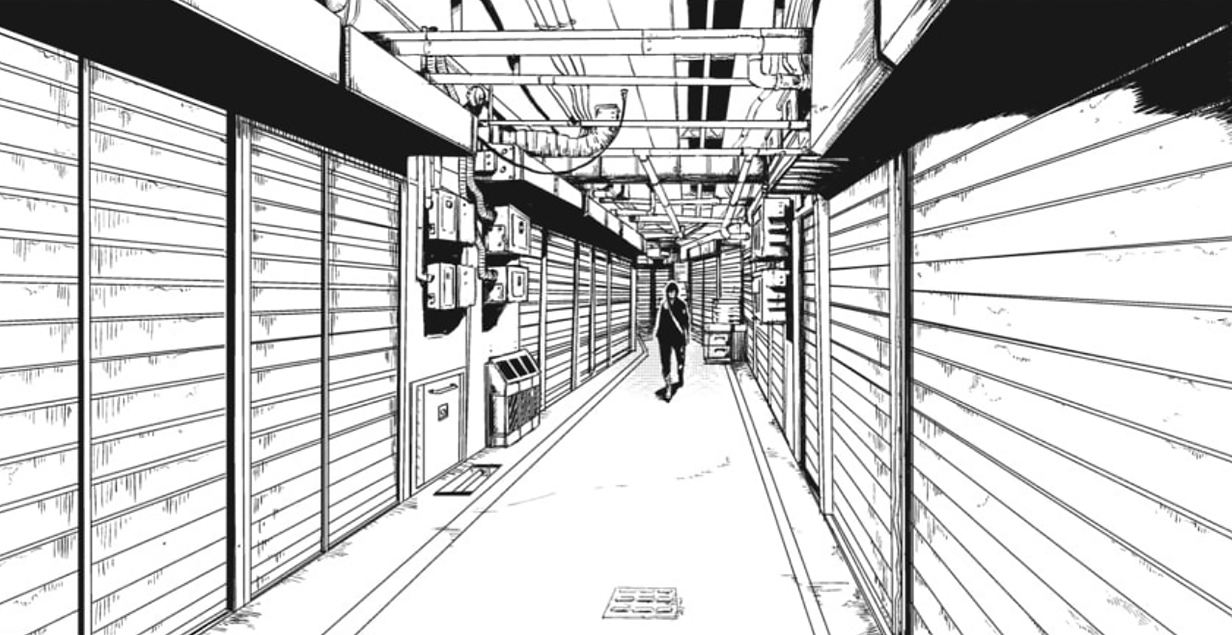
Along with the novel itself, I might therefore also recommend the three-volume manga adaptation drawn by Gonbe Shinkawa, which contains a number of fun architectural illustrations that convey the absurdity (and dead-mall liminality) of the station’s growth. The person who translated the novel, Stephen Paul, also translated the manga, and his notes at the end of each manga volume are extremely insightful.
As someone fascinated by the experience of navigating Japan’s monstrous urban train stations, I had a great time with Yokohama Station SF and its manga adaptation. Though the more technical details of Isukari’s writing may come off as opaque to readers who aren’t veterans of hard science fiction, the human stories at the center of the labyrinth make the journey worthwhile.
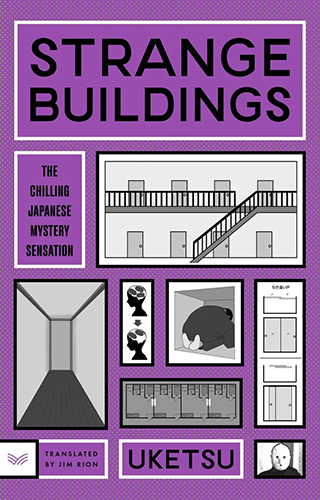
Strange Buildings, the 2023 follow-up to Uketsu’s smash hit Strange Houses, collects eleven illustrated stories about horror-themed architectural riddles followed by a lengthy exposition that reveals how these mysterious places are connected.
One of my favorite stories is “The Mousetrap House,” in which the wealthy heir to a large construction firm builds a luxurious mansion in order to kill a disabled elderly woman. If he puts a steep stairway next to the bathroom, he reasons, the woman will eventually lose her footing and tumble down the stairs.
When this eventuality fails to come to pass, he bullies his daughter into creating exactly the right set of conditions to make it happen. This horrible story is recounted decades later by the girl’s childhood friend, who was there on the night the old woman finally fell to her death.
I also enjoyed “The Watermill in the Woods,” which is presented as an old travelogue that recounts a curious building in the woods that’s nowhere near water. Its mechanical wheel instead powers the movement of an interior wall, but why would anyone need that?
This question is answered in the story “The House Where It Happened,” in which the frame narrator (who is styled as Uketsu himself) visits the old watermill in its current form as a remodeled modern house. When the village residents illuminate the shadows of the area’s history, the sinister purpose of the watermill becomes clear.
As in Uketsu’s other books, the overarching conspiracy is extremely silly. I don’t consider this a flaw, as there’s a certain sense of satisfaction in how delightfully outlandish the scenario is.
It should probably be said, however, that Uketsu is playing with acute cases of human misery as if they were Lego blocks. If one were to stage a gendered critique of this book, for instance, the ground is fertile. Still, I think it’s probably fair not to expect nuanced character portrayals from the weird architecture guy.
I enjoyed Strange Buildings, and I flew through this book as quickly as I could turn the pages. Jim Rion’s translation is compulsively readable, and I appreciate how Rion’s minor reconfigurations smooth over the “info dump” awkwardness of the original Japanese.
If you’ve never read Uketsu, Strange Buildings is a great introduction to the writer. If you’re already a fan, this is four hundred pages of the same, and it’s fantastic. Uketsu has found his niche, and it gives me joy to know that he’s out in the world being strange and living his best life.
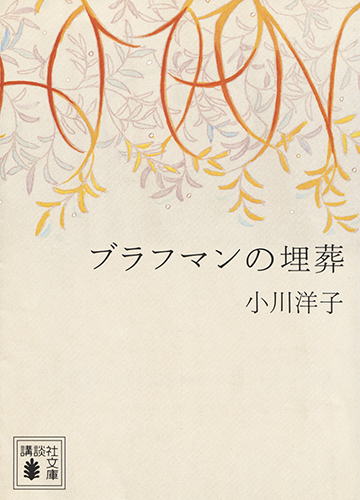
Yōko Ogawa’s 2004 novel Burafuman no maisō (Brahman’s Funeral) is a story about the lonely caretaker of an isolated artist’s retreat who adopts a forest creature of indeterminate species. Though this short novel features many of the tropes common in bestselling stories of animal companions, it was awarded the Izumi Kyōka Prize for literary fiction that explores the darker side of the human condition.
On the first day of summer, the unnamed caretaker finds a forest creature outside the back kitchen door. The creature is injured, and he doesn’t object when the caretaker picks him up and takes him inside. In fact, the creature almost seems to be asking for help, and his puppylike tameness inspires the caretaker to adopt him as an indoor pet.
The mansion where the narrator lives and works used to belong to the wealthy owner of a publishing company, but it has since been converted into an artist’s retreat. After a conversation with the stonemason who maintains a permanent studio on the grounds, the narrator decides to name the creature Brahman after the Sanskrit word the mason has carved onto a gravestone.
While Brahman recovers, the caretaker keeps the creature in his room. The caretaker’s personal space is stark and empty, but Brahman finds ways to keep himself occupied by opening drawers and gnawing on the coat hangers in the closet. At night, Brahman sleeps on the bed while curled up against the caretaker.
Once Brahman figures out how to operate the door handle, the caretaker begins taking him outside. The scenes in which he describes the meadows and forests surrounding the retreat through Brahman’s eyes are gorgeously written. Brahman delights in the sun and the wind and the grass, and he especially loves the garden pond, swimming and diving to his heart’s content as the caretaker watches.
Though the caretaker seems amiable enough, he seems to have no friends save for the stonemason. Aside from the artists visiting the retreat, the only person the caretaker speaks with is the young woman who works at the small general store outside the train station. Though the caretaker clearly has a crush on her, she’s dating an older man who lives in the city, and all she wants is to move away from the isolated village. The caretaker clearly doesn’t have a chance with her, and his yearning for connection is poignant yet gently pathetic.
The purpose of contemporary popular pet fiction is to comfort the reader, often by anthropomorphizing the animals in service to the human protagonists. Burafuman no maisō is certainly beautiful and joyous in many places, but Ogawa has little interest in cozy vibes. To me, at least, this is an intensely gothic novel.
Brahman dies at the end, but hints of death suffuse the entire story. Aside from the artists’ retreat managed by the caretaker, the most notable feature of the town is its sprawling cemetery, which has a strange but poetic history.
Because the mountainside town has a plentiful supply of both stone and stone carvers, people who lived upriver once commissioned its artisans to create coffins for their dead. Stone coffins were difficult to transport, however, and so the remains would be placed in wooden coffins that were sent downstream to be buried in the hillside cemetery. The isolated village thus became the final resting place for the dead who were all but abandoned by the rest of the world, a description that mirrors the position of the caretaker himself.
Ogawa has something of a fetish for sensitive but lonely men, and I have to admit that the caretaker breaks my heart a little. Along with having no name, he also seems to have no family, nor any past at all. What he has instead is an old family portrait photo that he buys from a Sunday antique market in the town square. The traveling merchant gives him an old wooden frame to go with it, so the caretaker hangs the photo in his room, where he sits on the bed and imagines the lives of the long-dead family. The only living joy in the caretaker’s life comes from his interactions with Brahman.
The genre of “cozy pet fiction” is almost always about people. As such, it often treats animals as human, even going so far as to give them human narrative voices so that the reader can better understand the human characters they observe. Burafuman no maisō does the opposite by using its nameless human narrator as a vehicle to document the short life of Brahman.
Though a human reader can never perceive the world in the way that an animal does, Ogawa asks us to sympathize with Brahman through the narrator’s documentation of his umwelt: what he sees and tastes and smells, and how he reacts to the world. To the caretaker, the behavior of other humans makes little sense, but he joyfully devotes himself to chronicling Brahman’s appearance and behavior through a series of annotated lists of observations with titles such as “Brahman’s Tail,” “Brahman’s Meals,” and “Brahman’s Footsteps.”
And finally, through no fault of his own, the caretaker is forced to close his account with a list titled “Brahman’s Funeral.” Through Brahman’s death and subsequent burial in a tiny stone coffin, Ogawa succeeds in making the reader care deeply about a semi-wild animal that was never anthropomorphized in any way. I appreciate the thematic artistry, but it’s nevertheless a difficult ending.
Hikaru Okuizumi (author of The Stones Cry Out) writes in his postscript to the Kodansha paperback edition that Ogawa more than likely started this short novel during a literary festival in the small French town of Fuveau, where she apparently bowed out on a large group dinner to stay alone in her room and write. This makes perfect sense to me, as Okuizumi’s anecdote accurately reflects the tone of the story. Despite Brahman’s death and the caretaker’s loneliness, Burafuman no maisō dwells in the quiet and contemplative corners of the gothic genre, and this short novel feels like a small but meditative retreat.
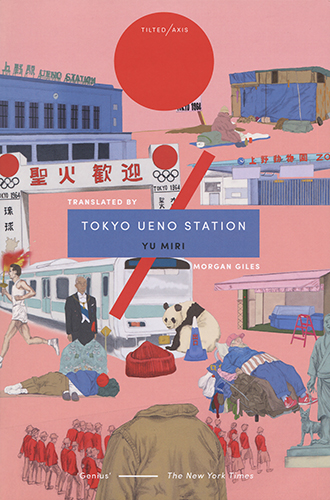
Yū Miri’s 2014 novel Tokyo Ueno Station is a compelling portrait of one man’s life and a pointed critique of the inequalities that support the supposed national prosperity championed by the Tokyo Olympics.
Kazu, an unhoused man living in Ueno Park, was born in the town of Sōma in Fukushima in 1933. In order to support his family, Kazu moved to Tokyo in 1963 as a laborer engaged in the construction of athletic facilities for the 1964 Tokyo Olympics.
Kazu has lived in Tokyo since then, only visiting his family occasionally. When he finally retires and returns to Fukushima, his wife dies seven years later. Not wanting to become a burden to his daughter and granddaughter, Kazu takes the train back to Tokyo. He’s so exhausted when he disembarks at Ueno Station that he simply lies down in the large public park outside the station and goes to sleep. In this way, almost by accident, he becomes homeless. As Kazu reflects:
If you fall into a pit you can climb out, but once you slip from a sheer cliff, you cannot step firmly into a new life again. The only thing that can stop you is the moment of your death. But nonetheless, one has to keep living until they die.
Though Kazu’s story is easy enough to follow, it’s narrated in fragments broken by the conversations of people walking through the park, which juxtapose the comforts of middle-class leisure against the day-by-day existence of unhoused people. The men and women living rough in Ueno Park aren’t abject by any means, as they’re cared for by each other and a network of local communities. Still, their lives are precarious, and they can be ordered to leave at any time.
Tokyo Ueno Station isn’t misery porn. Rather, it’s about helping the reader notice what was always visible. In a rare aphorism toward the end of the novel, Kazu remarks, “To be homeless is to be ignored when people walk past, while still being in full view of everyone.”
In another sense, however, the conversations Kazu overhears in Ueno Park are indicative of how most people living in Tokyo don’t view the unhoused as dangerous. If two middle-aged housewives chatting about their pets don’t care about whether an unhoused person is chilling out on the next bench over, are homeless people really so much of an eyesore? They’re not criminals, so why shouldn’t they have the same right to occupy public space as everyone else?
And why should the police have the right to force the unhoused away from their belongings and their communities every time a member of the imperial family visits the area?
The novel closes with Kazu being kicked out of Ueno Park and forced to seek shelter elsewhere until an imperial visit is concluded. During this intensely uncomfortable period, he suffers a minor stroke and decides to throw himself on the train tracks at Ueno Station, a decision that happens to coincide with the 2011 Tōhoku earthquake and tsunami. In his last moments, Kazu’s spirit returns to the Fukushima town of Sōma, which was directly impacted by the tsunami and resulting nuclear crisis (as documented brilliantly in Ryo Morimoto’s monograph Nuclear Ghost).
Yū’s irony isn’t subtle: the fantasy of “Japan” can only be celebrated if the people who literally build its monuments and provide its energy are hidden away. Tokyo Ueno Station asks the reader to consider the symbol of the Japanese Emperor, as well as the persistence of the ideologies that once supported Japanese military imperialism and continue to marginalize Japan’s own people.
As an American, I will readily admit that this is not my circus, but I can’t deny that Yū’s writing has given me some strong feelings about clowns. To me, it makes perfect sense that Tokyo Ueno Station was awarded the National Book Award for Translated Literature in 2020, right in the middle of the first Trump presidency.
Still, despite the strength of its argument and the sharpness of its critique, I don’t think that shaping political opinion is the point of this novel. Rather, the beauty of Tokyo Ueno Station lies in Kazu’s individual story, as well the fascinating collage of impressions he creates through his observations of the city, which are linked to his experiences growing up in the regional culture of coastal Fukushima. There is value in seeing what is often ignored, and value in documenting quiet voices that are often unheard.
What Yū demonstrates is the value and dignity of small and personal stories, especially in the face of large national narratives that crush the marginalized in the name of progress. Tokyo Ueno Station doesn’t make any sweeping political arguments or engage in polemics, but rather allows the remarkable individuality of Kazu’s story to shine. The brilliance of Yū’s critique is that, while Kazu’s story is his own, his unfortunate fate feels inevitable in the current of larger forces. Despite its literary style and gut-punch ending, Tokyo Ueno Station isn’t a difficult novel to read, but it’s a difficult story to sit with.
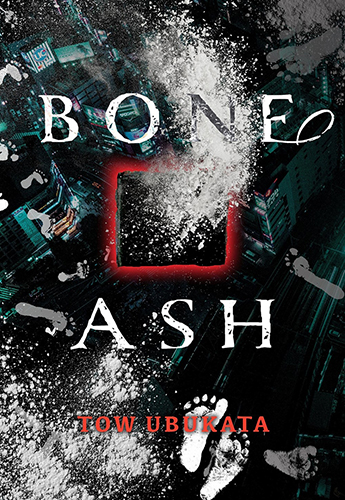
Tow Ubukata’s 2022 horror novel Bone Ash is a story about cursed architecture. The twist is that the architecture in question is the skyscraper outside Shibuya Station that was under construction during the mid-2010s. Deep under the construction site is a hole, and inside that hole is… Just some random guy? What’s he doing there? And what happens if he leaves?
Bone Ash’s everyman protagonist is a white-collar office worker named Mitsuhiro Matsunaga. Mitsuhiro is employed by the PR department of the development firm overseeing the aforementioned construction project contiguous to Shibuya Station, and his job is to ensure that all news is good news so that none of the project shareholders get cold feet. When a pseudonymous Twitter account starts posting creepy photos of the site with sinister captions about contractor injuries, the task of managing the situation falls to Mitsuhiro.
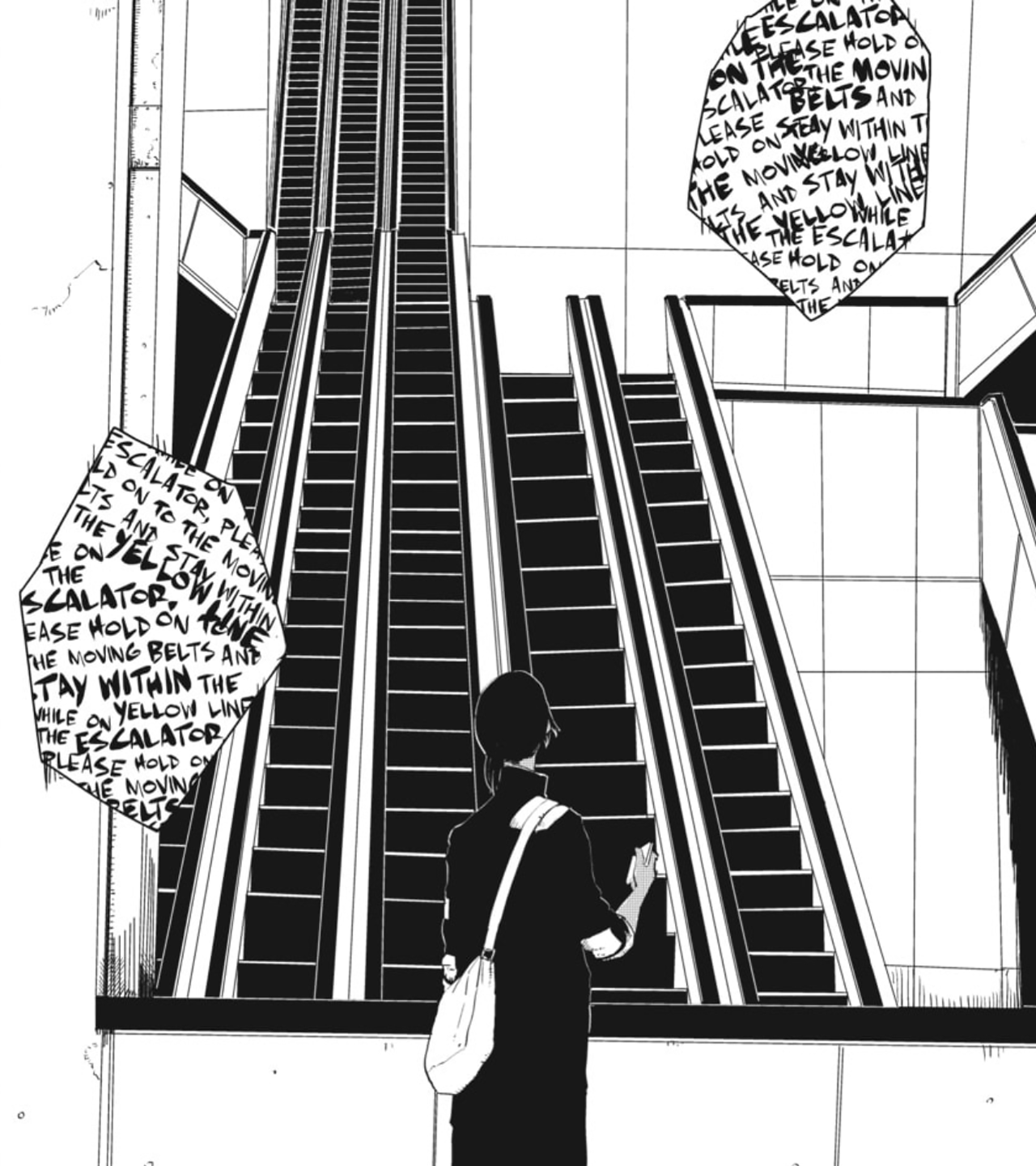
The first order of business is to track down the location of each photo to ensure that there aren’t any code violations. So far, so good. During his investigation, however, Mitsuhiro finds an odd door that isn’t in the floorplans, and behind the door is an impossibly deep staircase that eventually empties into a cavernous concrete space with a bare minimum of lighting. There’s a small Shintō shrine off to one corner, as well as a discarded piece of heavy machinery painted entirely white. And also a pit with a man chained to the bottom.
The man seems somewhat confused, but he insists that he’s happy to stay where he is. Somewhat against the man’s wishes, Mitsuhiro hauls down a ladder, hoists him out of the pit, and hauls him up the infinite staircase. Before he has a chance to recover from this exertion, a fire breaks out on site, and the man disappears.
When he files a report the next day, Mitsuhiro is informed that he entered a “ritual hall,” a space constructed to preserve a shrine (or other place of religious significance) on the land occupied by a large building. The man in the pit was a “mi-keshi,” something like a sin eater who would symbolically absorb the spiritual pollution caused by the displacement of deities. As long as a purification ritual is conducted properly by the appropriate religious authorities overseeing the ritual hall, everything should be fine. Unfortunately, Mitsuhiro has disrupted the ritual, and now there’s going to be hell to pay.
The scenario introduced by Bone Ash is incredible. The overview I’ve provided in four paragraphs is expanded in amazing detail over the span of about 170 pages, and these details are fascinating. Ubukata walks the reader through the deliciously liminal space of the ongoing construction site like a pro, all the while explaining the bureaucracy surrounding large-scale building construction in Tokyo in a way that genuinely caught and held my attention.
By the time the focus of the exposition shifts to the religious history surrounding the ritual hall in the earth under the building, I was hooked. The existence of creepy underground shrines sealing ancient calamities is a fun urban legend, and Ubukata’s skill as a writer is to ground this sort of fantasy in enough historical precedence to make it seem entirely plausible. I know this concept is silly, but as I read Bone Ash I was like Agent Mulder in The X-Files – I want to believe.
Bone Ash unfortunately falls apart once its focus shifts to Mitsuhiro’s attempts to deal with the curse he’s incurred, which influences his behavior in disturbing ways. Though he’s a convenient viewpoint character during the opening exposition, Mitsuhiro doesn’t have much of a personality, thus making his situation somewhat difficult to sympathize with.
I suppose the reader is supposed to identify with Mitsuhiro’s “everyman” qualities, but many of the author’s assumptions in this regard were lost on me. I don’t think it’s normal to feel compelled to work 15 hours a day, for example, nor have I ever been tempted to kill people for the chance to drive the company car.
Because I never really got a sense of who Mitsuhiro is supposed to be as a person, his cycle of making bad decisions for inexplicable reasons felt somewhat boring and repetitive. I get the sense that one solid conversation about what was going on could have gotten Mitsuhiro sorted out, but none of the other characters in the novel behave much more rationally than he does. In addition, though Mitsuhiro’s pregnant wife and young daughter become unwitting victims of his curse, they’re never allowed interiority and only exist to create complications.
I think what Bone Ash really wants to be about is the plight of unhoused people in Tokyo. Large-scale construction on top of open-air parks and other public gathering places often displaces communities of the unhoused, who are additionally exploited as day laborers with no recourse to legal reparations should something happen to them. Whether or not literal curses exist, Ubukata asks the reader to seriously consider the cumulative effect of this human misery, which is not only ignored but actively encouraged by Japanese politicians. Though this theme of housing precarity and labor exploitation is never fully developed, its introduction in the first half of the novel is handled with a remarkable degree of sensitivity.
In the end, it might seem odd to recommend Bone Ash only for the first 170 pages, but they’re really good pages! Despite my criticism of its narrative structure, I’d recommend this novel to anyone interested in the strange complications of urban architecture and the darker corners of Japanese religion and folklore – as well as to anyone interested in exploring uncanny spaces.
I’d like to extend my appreciation to Bone Ash’s translator, Kevin Gifford, whose smooth and confident style grabbed my attention from the first few pages of the novel. In addition, Wendy Chan at Yen Press has done a fantastic job with the book design, which is very cool and clever. I hope the care and attention given to this release helps Bone Ash find an enthusiastic audience of readers interested in the sort of well-researched urban legends and creepypasta stories that are perennially popular on YouTube and Reddit.
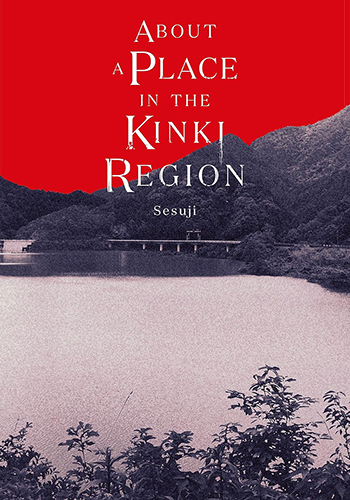
About a Place in the Kinki Region, originally published in 2023, is a horror novel assembled from roughly two dozen short stories presented in various formats, from magazine articles to interviews to YouTube video transcripts to reproductions of forum posts. These materials have been collected by the pseudonymous author, Sesuji, with minimal editorial comment, supposedly in an effort to locate someone who has mysteriously disappeared.
I should probably note here at the beginning that the actual author, an online horror writer who has published under the name Sesuji, is male. The diegetic character Sesuji is female, and it’s the character I’ll be referring to in this review.
Sesuji, a freelance writer living in Tokyo, has been contacted by her friend Ozawa, a junior editor at a publisher that produces a magazine devoted to the paranormal. Though the magazine has stopped putting out regular issues, it occasionally releases special issues, and Ozawa has been tasked with publishing one of these special issues on a very low budget. After combing through the magazine’s archives, he decides to create a collection of older articles that all pertain to a certain place in the Kinki region, the geographic area surrounding Osaka and extending south into the heavily forested Kii Peninsula.
This “certain place” is the location of numerous spooky legends and strange sightings, most of which can be categorized according to several distinct themes. There’s a ghost called Mashiro-san that calls out to children from the mountain forest, as well as a creepy playground game of the same name. There are abandoned buildings tagged with unsettling sticker graffiti, an alarming number of suicides, and perhaps even a creepy New Age cult as well.
Various sources suggest that the more supernatural incidents might be the work of a god whose shrine has fallen into disrepair due to rural depopulation, but it gradually becomes apparent that something much weirder is going on. In order to get to the bottom of the mystery, Ozawa visited the place himself to investigate, but now he’s gone missing. Sesuji therefore asks the reader: Is it possible that you could examine the material he collected and help her find him?
About a Place in the Kinki Region begins as a relatively straightforward collection of articles but eventually starts to experiment with its format in interesting ways. A standout piece is a short story called “Waiting.” This story is first presented as it was published in a magazine and then followed by its original rough draft, which contains a number of odd details that aren’t strictly relevant to the plot but may present clues regrading Ozawa’s disappearance.
Partially due to the author’s experiments with format, and partially due to the sheer variation of situations and narrators, nothing about this book feels repetitive. The careful sense of pacing creates a subtle sense of structure and generates narrative tension, gradually revealing the stakes of the story while pulling the reader into the mystery at hand.
I’m a big fan of “archival horror” narrative podcasts like Archive 81 and The Magnus Archives. I love how these stories simulate the experience of research while conveying the joy of discovering an intriguing rabbit hole. About a Place in the Kinki Region is a fantastic expression of this genre, inspiring the reader to dig ever deeper for a long-buried truth hidden within layers of secrets.
In addition, I enjoyed being an armchair tourist in this “certain place,” which is gifted with natural beauty and an intriguing local culture. If any vengeful revenants or neglected god-demons are searching for someone to spirit away to a mountain forest on the Kii Peninsula, I volunteer myself. I hear the evening twilight is especially magical… and even the ghosts have good internet access, apparently.
The translator, Michael Blaskowsky, has done an excellent job creating a distinct set of narrative voices across a range of tones and styles, from campy to lyrical to journalistic to point-blank horror. The book’s designer and editor at Yen Press, Andy Swist and Emma McClain, have done a marvelous job as well, engineering an unobtrusive flow of stories while occasionally adding small creative touches. I apologize for spoiling the surprise, but the book includes a secret set of illustrations in a semi-hidden section in the back, and it’s extremely cursed.
It’s also worth mentioning that About a Place in the Kinki Region was adapted into a movie released in August 2025 (here’s a mirror of the region-locked trailer on Reddit), but I haven’t yet seen any information about a global release outside of the film festival circuit, unfortunately.
In the years following the pandemic, I’ve encountered a number of “textual found footage” horror novels by Japanese authors capitalizing on the recent boom in YouTube creepypasta videos. Many of these books are very silly, but About a Place in the Kinki Region is surprisingly well-structured and entertaining. I’m happy this book been published in translation, and I hope my fellow archive horror fans enjoy its collection of unsettling little treasures as much as I do.
Kiyoshi Shigematsu’s The Blanket Cats collects seven stories about the clients of a service that rents cats for a period of three days. What I appreciate about these stories is that their human protagonists are messy people who are clearly the villain of someone else’s life. Will three days with a cat fix them? Probably not, to be honest, but it’s still a nice fantasy to imagine that a brief experience of caring for an animal could completely change someone’s perspective.
“The Cat in the Passenger Seat” is a frequent companion of Taeko, a woman on the verge of retirement who often rents this particular cat to accompany her on trips away from Tokyo. With no family to support her through a recent diagnosis of a serious illness, Taeko has decided to splurge on one final vacation. As for where the money has come from, it’s fair to say that Taeko is on the run from more than her worries about the future. She’s always done the right thing and made sacrifices for everyone else, so she might as well be selfish for once, right? Thankfully, Taeko’s cat companion helps her see beyond her immediate problems.
“The Cat with No Tail” is chosen by Koji, a boy in middle school whose growing pains have resulted in the first major crisis of his life. Instead of being bullied, he’s the one doing the bullying. Well, sort of. Koji tolerated an annoying classmate all throughout elementary school; and, now that he’s in a new environment, he finally found the courage to tell this kid to leave him alone. Unfortunately, he didn’t express himself in the most diplomatic way, and his former classmate was so distraught that he made a serious attempt at self-harm and almost died. That’s a wild thing to happen to a twelve-year-old, and Koji processes his guilt by talking to the cat, who responds by showing the emotions that Koji has been suppressing.
“The Cat Who Knew How to Pretend” is rented by Hiromi, a young woman who needs a stand-in for her family’s recently deceased pet in order to fool her grandmother, who’ll be visiting her parents’ house one final time before they entrust her to a facility that specializes in caring for patients living with cognitive decline. To ensure that the visit goes smoothly, Hiromi also asks her boyfriend to attend a family dinner even though she’s on the verge of breaking up with him. It’s all well and good for the cat to pretend that everything is fine, but Hiromi realizes that the time has come for her to be open and honest about what she wants.
I recently encountered the term “joyslop” as an appellation for low-effort entertainment media, and The Blanket Cats is joyslop if I’ve ever seen it. Psychological realism isn’t a concern in these stories, nor is animal welfare. Just so everyone is on the same page, “renting” an animal to any customer who walks through the door isn’t a great idea to begin with, and cats can’t be trained to accommodate different companions in the way that certain other domestic animals can. I apologize for being crude, but I imagine that the reality of a rental service like this would be cat piss everywhere. Still, The Blanket Cats is pure fantasy, like YA fiction for adults. It’s joyslop.
I’ve been thinking about the purpose served by The Blanket Cats and other cozy cat books, and I suspect their appeal probably extends a little deeper than simple guilty-pleasure reading. To varying degrees, the short stories collected in these books address fairly serious social issues such as, for example, dealing with school bullying as a parent or growing old without a social safety net. Books like The Blanket Cats provide a way to playact various scenarios from the comfort of your armchair – again, like YA fiction for adults.
I’m tempted to take this line of reasoning a few steps farther into social analysis and argue that the popularity of bestselling cat books might have something to do with the decline of “traditional” news media like print newspapers, morning radio broadcasts, and nightly news programs. I get the sense that, back when this sort of media was more widely consumed, journalists could provide authoritative editorial opinions of social issues, thus creating consensus and catharsis. In other words, a serious issue exists, but someone is talking about, and therefore someone must be doing something about it.
Now that our consumption of news is so fragmented, who knows what to think? People are still looking for an editorial voice to trust, and I feel like this is partially what’s behind the success of books like The Blanket Cats. The fantasy of these non-confrontational stories about normal people dealing with hot-topic social issues isn’t necessarily that a cat is going to fix you in three days, but rather that these systemic issues can be fixed, because someone is talking about them. All things considered, The Blanket Cats is much easier to consume than, say, a political podcast hosted by wealthy kids in Brooklyn or a series of inflammatory diatribes posted to YouTube.
In any case, I’d like to express my appreciation for the translator, Jesse Kirkwood, who has found himself a lovely (and hopefully fruitful) niche in translating and localizing this sort of fiction, often through the charming vernacular of light Briticisms. This style of casual prose in Japanese requires no small amount of skill to render into the sort of English suited for a mass-market bestseller. I’ve been following Kirkwood’s work since his translation of A Perfect Day to Be Alone, and I’m always impressed.
If you’re in the market for cozy cat fiction, The Blanket Cats has more of a bite than the usual fare, but it’s still sweet and hopeful. This book hopes you’re doing okay. If you’re reading this review, I hope you’re doing okay too. After all, there’s definitely a place for joyslop in the world, and there’s no shame in needing a cat and blanket sometimes.
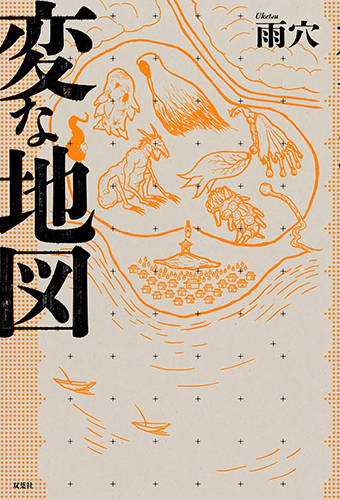
Strange Map (変な地図), published in October 2025, is the fourth book written by Uketsu, the bestselling author of Strange Pictures and Strange Houses. Unlike Uketsu’s previous books, which are collections of seemingly unrelated stories eventually connected by an overarching narrative, Strange Map is a proper novel that follows the actions of a single protagonist, Uketsu’s architect friend Kurihara from Strange Houses. Despite its more conventional narrative format, Strange Map is still filled with Uketsu’s characteristic illustrations and diagrams, which aid the reader in visualizing the uncanny spaces of its horror-themed mystery through a remarkable set of twists and turns.
Strange Map opens with the written confession of an elderly woman named Kimiko Okigami. In her youth, she writes, she took the lives of countless people. Before she dies, she wants to tell the story of the village where she was born and its neighboring mountain, which was supposedly inhabited by demons.
The next section raises the stakes even higher. In the present day of July 2015, Kōsuke Ōsato wakes up after a night of drinking to find himself lying in a train tunnel. He recognizes the tunnel immediately, as he’s the president of the railway company that constructed it. The tunnel has emergency exits, of course, but there’s just one problem – he’s right in the middle between two of them, and the first train of the morning should be coming any second now.
After thoroughly grabbing the reader’s attention, Strange Map shifts to the perspective of its main narrator, a 22yo college student in Tokyo named Fuminobu, who usually goes by his family name of Kurihara. Kurihara is an architecture major who’s currently on the job market, but he hasn’t had any luck so far. This is likely because, as he readily admits, he’s terrible at interviews. When asked why he’s interested in architecture, for instance, he can’t quite bring himself to admit that he wants to follow in the footsteps of his mother, who once played games with him involving engineering problems but died when he was still a child.
After yet another unsuccessful round of interviews, Kurihara’s sister asks him to come home and visit his father, who needs to talk with him. This conversation ends up being about the house left behind by Kurihara’s grandmother – the woman who wrote the letter that opens the novel. Before his father sells the house, Kurihara asks to see it for himself, and he discovers a notebook containing a set of burned photos alongside the “strange map” of the title, which depicts a seaside village below a mountain filled with monsters.
Like his late mother, Kurihara can’t sleep easy until he’s solved the problem in front of him. His father gives him permission to investigate, but only on the condition that he solves the family mystery in time to return home and do practice interviews with his sister before his next real interview, which is only a week away.
Interspersed between chapters, his grandmother’s letter continues. She writes of her hometown of Kasōko, an isolated village surrounded by the sea on one side and forest on all others. While the men caught and sold fish, the women handled the business of maintaining the village itself. Among other things, this maintenance involved carving stone statues to ward off the demons of Mojōyama, the mountain looming over the village.
Kurihara, who doesn’t know any of this history, nevertheless manages to ascertain the location of the village. He travels to the rural seaside only to find that the village was completely abandoned decades ago. To complicate matters, he finds himself smack in the middle of a scandal surrounding the succession of Kōsuke Ōsato, the president of the local railway company who was mysteriously run down by one of his own trains.
Was the death of the railway president truly an accident, or was it murder? What happened to Kasōko village? Who exactly did Kurihara’s grandmother kill – and what are the demons on the mountain?
To help the reader visualize the specifics of the story, Uketsu has provided all manner of simple diagrams illustrating how the space of the narrative is laid out. These visual inserts were necessary in Strange Pictures and Strange Houses; meanwhile, in Strange Map, they’re largely superfluous. The reader probably doesn’t need a visualization of the concept that “there are five equidistant emergency exits in the train tunnel,” for example. Uketsu has also provided slightly silly diagrams of various social relationships, such as an illustration of the railway company president wearing a suit and sitting at a desk while his second-in-command wears a construction helmet and manages a job site.
Still, I’m not complaining. Regardless of whether they’re necessary, I love all of these illustrations. I find their lo-fi clunkiness charming, and the space they create on the page helps to set the pace of the story. It would be all too easy to fly through this book, but the illustrations helped me slow down and focus on details. In addition, I found that the “unnecessary” illustrations help to reveal the inner workings of the narrator’s mind.
To me, Kurihara reads as being on the autism spectrum, an aspect of the character that contributes to the distinctive narrative style of the story. The closest comparison I can make is to Sayaka Murata’s Convenience Store Woman, but there are echoes of Mark Haddon’s The Curious Incident of the Dog in the Night-Time as well. Although he doesn’t identify as autistic, Kurihara understands that he needs to work on his people skills, and the secondary B-plot of the novel involves his carefully considered approach to teaching himself to behave “normally” instead of immediately saying something that’s true but will hurt other people’s feelings.
I’m used to Uketsu’s characters behaving like chess pieces on a game board, so this added depth of character came as a pleasant surprise. Also, while I usually read mystery novels for the pleasure of watching fictional characters die in ridiculous ways, I found myself feeling invested in Kurihara’s safety, as well as his emotional wellbeing. This attachment to the character adds yet another layer of tension to the story as Kurihara becomes personally involved with the family that runs a local inn.
Strange Map is a super fun and fantastically clever mystery novel, and its elements of gothic horror are as darkly brilliant as anything written by Edgar Allan Poe or Arthur Conan Doyle. Jim Rion has done a marvelous job with the translations of Strange Pictures and Strange Houses, and I’m looking forward to what he does with Strange Map. For the time being, the sequel to Strange Houses, which is titled Strange Buildings in English, is scheduled to be published in March 2026, so that’s something to look forward to as well.
It’s a great time to be a fan of Japanese mystery novels, and I’m interested to see how Uketsu’s work in translation might influence other authors. Do I want to see Uketsu copycats? Sure! Absolutely. But do I also want to see a generation of writers raised on YouTube creepypasta take inspiration from Uketsu and translate that sort of multimedia textual fragmentation into a new style of fiction? Hell yes. Let’s go.
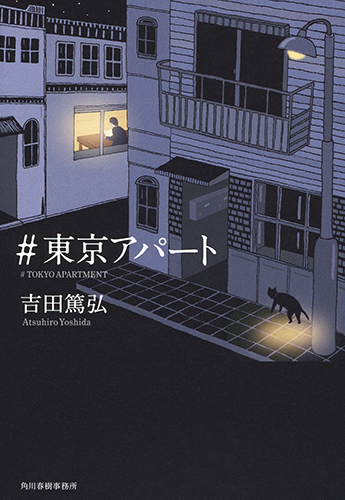
Atsuhiro Yoshida’s 2025 short fiction collection #Tokyo Apartment brings together 21 stand-alone stories about people living in and around Tokyo. The characters are usually living on their own, almost always in retro buildings removed from the city center. There’s very little wealth or glamor in these stories, but their protagonists nevertheless manage to become swept up in the magic of a densely populated megacity.
A representative story is Tokage-shiki gomuin kaisha (“Lizard-style rubber stamp company”), whose narrator recalls a time when he lived in a building that was once famous for being the largest apartment complex in Japan. The building had multiple floors of businesses, and the narrator worked at one of them as an apprentice to an artisan who took commissions for document signature seals. While dining at his favorite pubs in the same building, the narrator grew friendly with a woman who also worked there. He courted her by sending letters to her apartment – which was naturally in the same building. This story perfectly captures the flavor of the comfortably chaotic retro spaces of the old business/residential complexes of West Tokyo.
Not all of the stories are so cozy, however. Sutorei kuriketto (“Stray cricket”) is about a young man with no money, no friends, and no real prospects for finding a decent job. For the time being, he washes dishes in a small diner. He doesn’t have much room in his life for hobbies, but every night he brings back scrabs of cabbage to feed to a cricket that has entered his tiny apartment through a ventilation shaft. While listening to the cricket chirp in the darkness, the narrator is inspired to help the tiny creature find its way back outside. He might have nowhere to go in his own life, but at least the cricket can be happy and free.
Many of the stories end on a more ambiguous note. In Heya o kimeta hi (“The day we decided on an apartment”), two single fathers become online friends as they swap stories and advice with one another. In time, they become real-life friends and begin sharing childcare responsibilities. They mutually arrive at the conclusion that their lives would be easier if they lived in the same apartment building, so they hire a realtor to find a suitable property. There’s something about this sort of housing decision that feels final, however, and this causes the two dads to wonder if they’re really ready to take such a momentous step into the beginning of middle age.
For the most part, the stories in #Tokyo Apartment are fairly mundane, but there are occasional touches of magical realism. In Yūrei no denwa (“Ghost telephone”), the character Moriizumi returns from Yoshida’s novel Goodnight, Tokyo. Moriizumi manages a service that helps people dispose of their old telephones, which often have too much sentimental value to throw away. In a conversation with a crow who makes nightly visits to her balcony, Moriizumi reflects on how analog technology can feel haunted by the ghosts of people with whom our connections have faded. The crow, who is a connoisseur of the unused objects people dispose of on their balconies, agrees with Moriizumi but prefers to focus on making new connections.
A word I often see in reviews of Atsuhiro Yoshida’s writing is yomi-yasui, or “easy to read.” Yoshida has spent more than a decade carefully cultivating a light and precise writing style, and #Tokyo Apartment is indeed a relaxed and chill reading experience. It’s entertaining to encounter such a wide range of variations on the theme of “apartments in Tokyo,” especially since the narrative voices of these stories are so distinct – which is no mean feat when accomplished within the simplicity of the author’s characteristic style.
As an aside, I might recommend the stories of #Tokyo Apartment to people studying Japanese language. Any one of them might be good for inclusion on the syllabus of an upper-level Japanese language class. In particular, the first and final stories of the collection are short, amusing, and easy to understand from context clues, and I imagine that either of them would be a nice treat for anyone just starting to read Japanese fiction.


 Contemporary Japanese Literature